
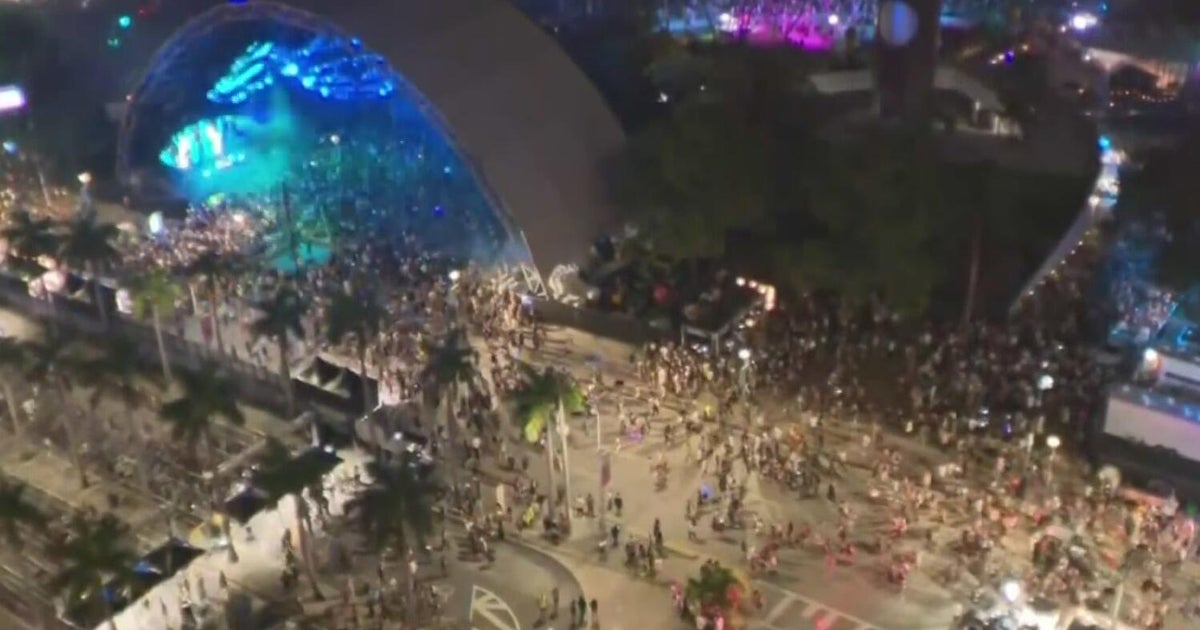
City commissioners voted Thursday to grant the Ultra Music Festival a renewable five-year contract, which keeps the annual event in Bayfront Park under new terms and language.
The new contract incorporates noise decibel limits established in a 2021 settlement agreement between Ultra and the Downtown Neighbors’ Alliance. City commissioners also added language requiring the festival to hold two community meetings each year.
“It is a small win,” said James Torres, president of the Downtown Neighbors Alliance. Both sides appeared satisfied after the vote.
“This is where [the Ultra Music Festival] started, and Miami is in our DNA,” said Ray Martinez, Chief of Security for Ultra Music Festival.
The commission vote followed extensive lobbying during public comments. The commissioners had initially considered a proposed 20-year contract with Ultra.
During Thursday’s city commission meeting, a woman described the matter as “truly one of the few whose side are you on issues,” while another resident said the initial proposed agreement’s terms were “balanced and fair”.
Supporters of the 20-year proposal considered it a “no-lose” money maker that annually generates millions of dollars for the city of Miami and local businesses.
The electronic music festival attracts crowds from around the world.
Realtor Charles Rattner said the festival also helps him attract customers.
“I don’t live downtown,” he said. “So I certainly don’t poo-poo the impact that physical noise has on neighbors, but by the same token, many of those same people bought their units knowing what was there, and they bought them maybe because of what was there”.
The Downtown Neighbors’ Alliance (DNA) filed a lawsuit against Ultra management on Wednesday, accusing Ultra leaders of repeatedly violating the 2021 settlement focused on noise levels.
The groups had planned to meet in May to discuss a resolution. However, the DNA’s lawyer and members asked the commission to stall their planned vote on Ultra’s future on Thursday. The group felt the initial contract terms would give Ultra no incentive to change its noise management practices.
“Allow us to let the legal process play out, number one,” said Adam Cervera, lawyer for the DNA. “Allow us to sit down with the folks at Ultra who already reached out to me and see if we can reach some resolution”.
Torres added that while the festival should be part of Miami’s history and legacy, “they should be held accountable”.
Hours later, the city commissioners agreed on the revised contract that both sides accepted.