
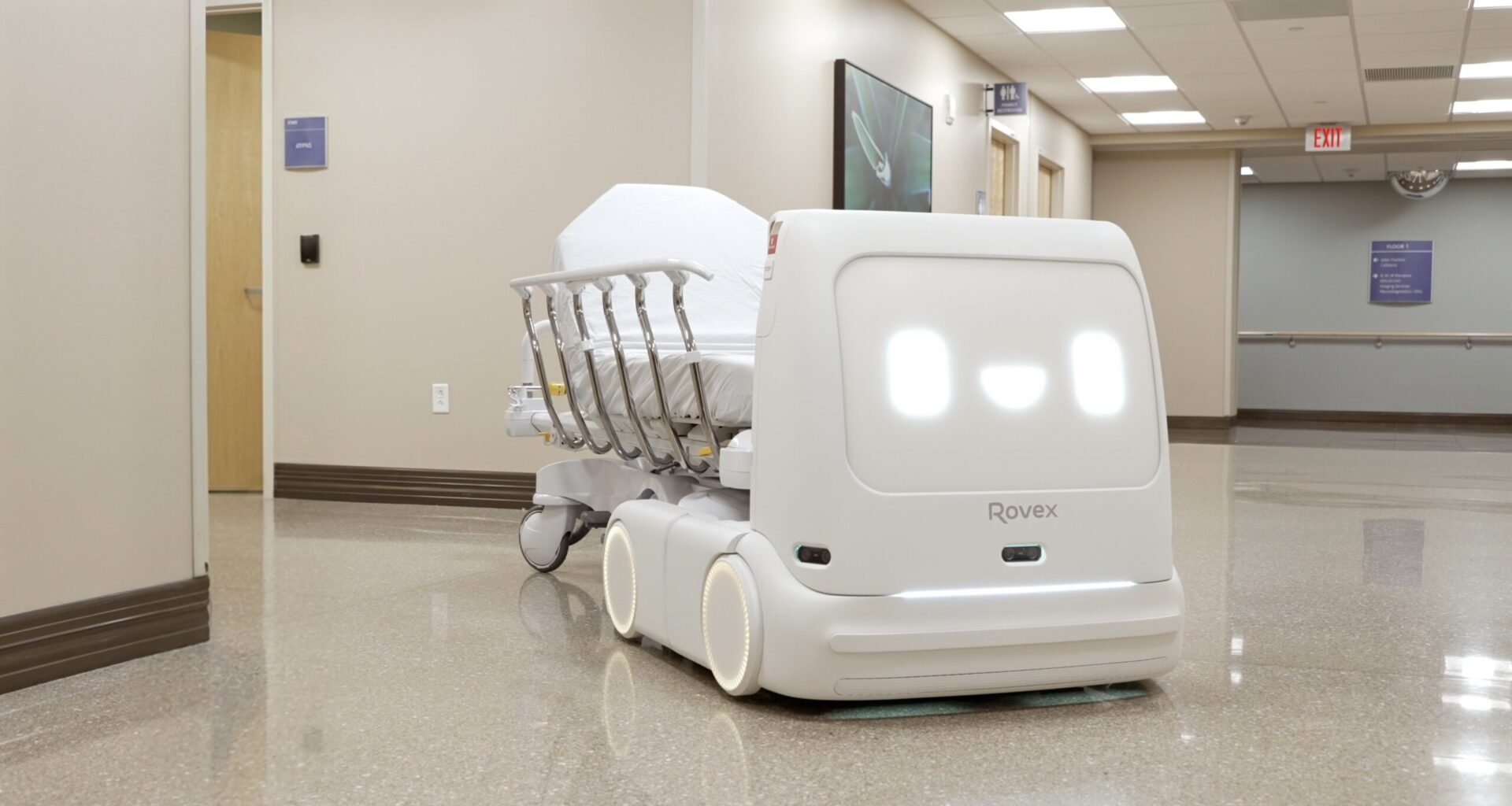
Rovex Technologies Corporation is one of the member organizations at St. Petersburg-based incubator spARK Labs by ARK Invest. The Gainesville-based autonomous robot company opened an office in February.
According to Rovex founder and CEO David Crabb, the startup began a pilot program with BayCare Health System this month. Rovi, a device that can carry stretchers, will be implemented at Morton Plant Hospital in Clearwater.
“It’s a really exciting moment,” he said. BayCare “is pushing towards this concept of using autonomous robots to offload work from our health care workers so that they can focus on the patient.”
For Crabb, developing a solution was personal. He previously was an emergency room physician. The medical professional saw hospital logistical challenges first hand.
Crabb explained that the seven-month pilot program will take place in phases. Currently, Rovex is analyzing the state of BayCare’s patient flow and operations. This will allow Crabb and his team to discover optimization opportunities and determine where robotic technologies “fit in.”
Rovi will first move in “simple patterns” in a “non-patient facing area.” The device will then be utilized in “active clinical environments.” It will eventually perform empty stretcher transportation tasks.
Rovex and BayCare began to have discussions about a pilot in mid 2025.
“Health care systems are big and complex,” Crabb said. “What’s impressive about BayCare is that the organization is innovative, nimble, future-oriented and willing to move operations forward in ways that mean a lot to patients and staff.”
This first pilot is pivotal, he added. The Rovex team wants to integrate autonomous robot technologies into health systems around the country. Conservations with other hospitals are in the works.
Rovex’s goal in the future is to move patients autonomously, Crabb said. The company is progressing towards the necessary regulatory measures to achieve this.
Designing Rovi was challenging. Crabb and his team needed to make sure that the robot could be attached to any stretcher or bed with free spinning caster wheels. Space requirements were another concern. Rovi can fit into elevators and other confined areas.
Prototypes were tested at Rovex’s Gainesville headquarters. The company even developed its own mock hospital, Rovex General. According to Crabb, it was was created based on the same Facility Guidelines Institute standards that healthcare facilities use.
The office at spARK Labs by ARK Invest has been essential in the pilot process, he said. “It’s part of the reason why we are working with BayCare.”
Crabb explained that the facility serves as a local base, especially on the “integration side.” Additionally, the Rovex team uses the space as a hub for traveling. This can help foster discussions with additional health care systems in the Tampa Bay area and around the country.
The incubator’s community has had a key impact. Crabb added that he speaks with other founders on a weekly basis to “exchange ideas and connections.”
“This pilot reflects BayCare’s interest in helping shape emerging technology that can deliver meaningful value for both our academic health system and the broader health care industry,” said BayCare vice president of innovation Craig Anderson in a statement prepared for the Catalyst. “Rovex stood out for its physician‑led approach, strong leadership team and clear focus on supporting care teams and improving hospital operations, particularly patient transport workflows.”