
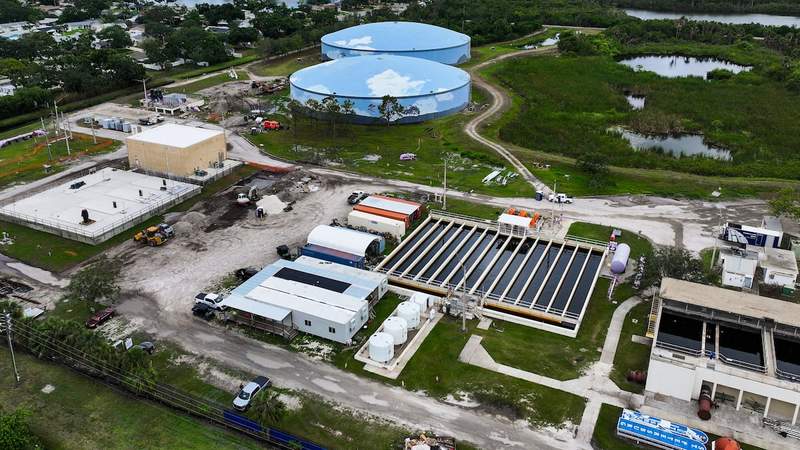
St. Petersburg leaders want to accelerate storm, waste and drinking water system upgrades in the face of more intense storms and rising sea levels.
So the city is readying a referendum for the November ballot to help make it happen. It would ask voters to approve issuing bonds to finance up to $600 million for those projects. The money would be repaid through a new annual property tax over 30 years.
Property owners would pay $96 for every $100,000 of taxable property value.
The city currently pays for water and sewer work with money collected through utility bills. If the city stuck with funding the projects through utility bill increases, it would cost customers an additional $486.12 annually.
City officials said adding a property tax spreads the cost around between property owners and renters who may be paying utility bills. They said it would be a better deal for properties valued at $500,000 or less, which is 89% of all properties.
The city has a priority list of $2.7 billion drainage and water projects that would take 24 years to finish using current utility rates. With a $600 million infusion from a new property tax, that timeline would shorten to 19 years.
But it’s not clear yet which specific projects would get done first. At a committee meeting Thursday, City Council members got a better sense of what kinds of projects would be funded by the extra property taxes. City officials said they’re still doing work to determine which projects are realistic and feasible.
Council members expressed concern over the referendum’s language and the city’s messaging to residents and voters. They will discuss a communication plan with city officials on May 14. The council will need to hold a vote to approve the official ballot question.
“I think it would be helpful to be clear and use examples of things we’re already doing and get away from talking about what we might do,” council member Gina Driscoll said. “The more prescriptive it can be, the more restrictive it can be, the more accountability we show that will be there, the better chances are of getting this passed.”
Stormwater and wastewater projects would each get 42% of the money. The remaining 16% would go toward drinking water system improvements. The proportions of those categories, city officials said, are subject to change.
To reduce flood risks from heavy rains, possibleinvestments include upsizing pipes and culverts, widening ditches, creating new bypass routes and adjusting road grades for improved drainage. The city would look at expanding capacity in canals, creeks and ditches, increasing storage through interconnected ponds and adding stormwater pump stations.
For flood-prone areas affected by high-tide flooding or flooding on sunny days, the city is looking at installing flood gate systems. They would use engineered and natural barriers to prevent tidal backflow from nearby water bodies.
To avoid sewage backups, the city would add capacity to tanks to prevent groundwater and surface water from entering the city’s collection system during heavy rains. The city would consider elevating wastewater collection plants to avoid flooding and installing permanent generators in case power goes out.
Seeking to lessen the need for residents to boil water following storms, the city would consider repairing or replacing pipes for drinking water. Power generators would be installed at pumping and treatment facilities, increasing capacity in water storage tanks and elevating facilities to be safe from flooding.
“These … are improvements that we can accelerate so that in the event of a storm or natural disaster, we can recover quickly and be able to bring our city back,” said Water Resources Director John Palenchar.