
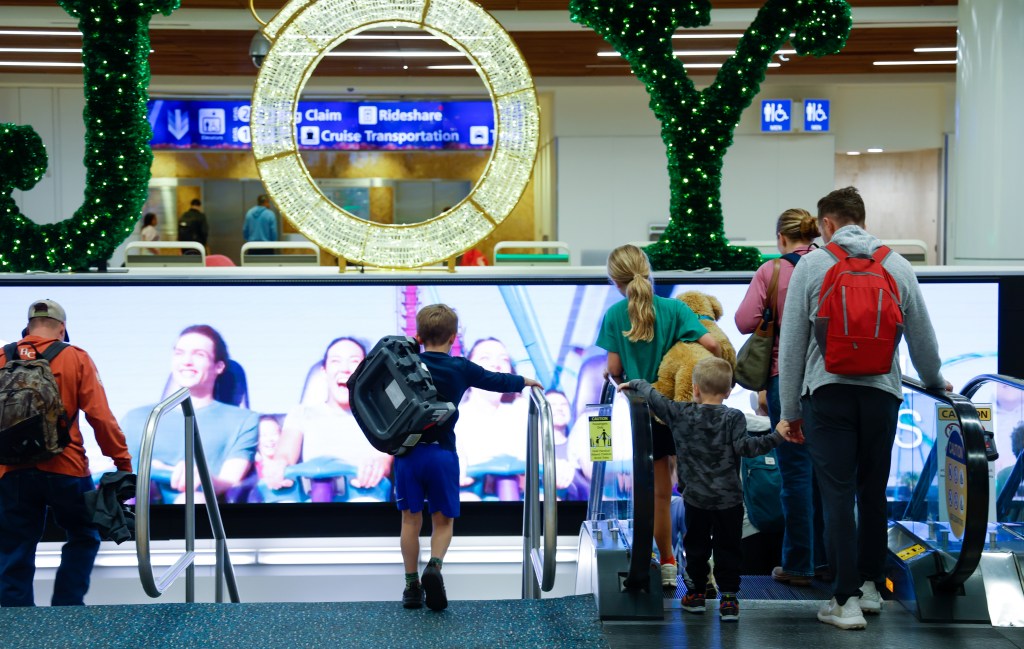
During the past several weeks, in the rush of spring break, Orlando International Airport (MCO) welcomed more than 7.9 million travelers during the 46-day travel period — that’s about 172,000 passengers a day, more than our typical average of 159,131. It is a reminder of how much our local residents embrace travel and how attractive Central Florida is to tourists. The airport is more than infrastructure. It is the door to our region.
MCO is the first impression for millions of visitors who come to the Orlando area and the last impression they will take with them. It is also the gateway through which our businesses connect with the world and so much more. Both Orlando International and Orlando Executive are your airports and prime community assets. That is why the Greater Orlando Aviation Authority (GOAA) is embracing a plan that focuses on enhancing customer service while addressing critical infrastructure needs.
Thanks to visionaries, GOAA has always been forward-thinking. The Intermodal Terminal Facility (Train Station) that now serves Brightline is an example of that. This plan will shape the future of our airports and help to expand what’s known as The Orlando Experience, in which travelers arrive at the airport amidst ample skylights, water and plants. Even our carpet, for those who love it, marks the arrival and departure process. But we are evolving.
The vision is ambitious, yet detailed. It endeavors for a clean and beautifully maintained airport in which guests receive excellent customer service and enjoy the airport experience in a predictable, hassle-free manner with unique and thoughtful amenities.
Built around four foundational pillars — Customer Experience, Community, Infrastructure, and People — the plan sets a clear and measurable course to better serve passengers, strengthen the airport’s role as a community partner, expand capacity and upgrade key systems, and foster an environment where our people feel engaged and supported.
Let’s start with what matters most to the people walking through our terminals: their interaction with the airport itself. The vision commits the Aviation Authority to pursue a 5-star Skytrax rating, which signals investment in cleanliness, service quality, passenger flow and amenity standards that travelers will feel.
With Florida growing, and Central Florida being designated one of the fastest growing regions in the U.S., our airports must grow with it. Timely baggage arrival, ample parking, and clean, comfortable restrooms are on every traveler’s must-have list. Here’s a brief overview of how we plan to meet those expectations:
 Implement a new baggage handling system for Terminals A and B by 2030; and install a common-use self-service bag drop pilot program at all Terminal C ticketing counters by 2028.
Add 8,000 public parking spaces by expanding Garages A and C, along with rental car improvements, by 2030.
Upgrade and add more restrooms in Terminals A and B while renovating Levels 2 and 3.
Help move passengers and improve mobility in Terminal C’s post-security area, selecting the concept and systems within fiscal year 2026.
These are the things that shape the experience of every single passenger.
By 2030, we will complete an expansion of Gates 100-129, adding approximately seven new gates to allow more airlines to serve more travelers; and by 2035, we should see the end of construction for Terminal C, Phase 2. At Orlando Executive Airport, by 2035, we will activate 60% of the airport’s current vacant real estate assets while maximizing revenue.
The plan also embraces the future of flight itself. We are working with the Federal Aviation Administration, the Florida Department of Transportation and other partners to approve an on-airport Advanced Air Mobility vertiport designed for multiple commercial operators. Planning for this infrastructure positions Florida at the leading edge of how people will travel in the decades ahead.
We hope to fulfill these goals, but hope is not a strategy. The “how” is rooted in quarterly and annual goal setting in which we start with the end in mind and work backward.
It is right and proper for the public, elected officials, and stakeholders to hold the Aviation Authority accountable to every milestone in our plan. But accountability starts with awareness — and that’s why it is so important to share these plans with you. We appreciate your support, and safe travels.
To learn more about the airport authority’s Elevating Vision, visit flymco.com/airport-business/investor-relations/mco-and-orl-vision.
Lance Lyttle is the chief executive officer of the Greater Orlando Aviation Authority, which operates and manages Orlando International Airport and Orlando Executive Airport.