
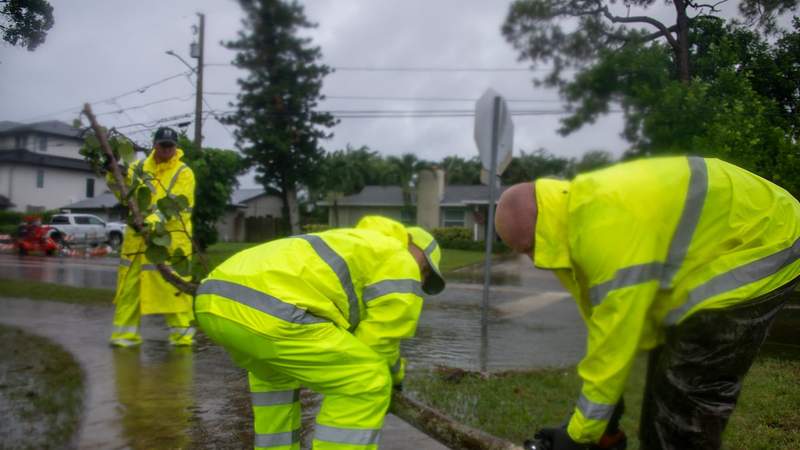
After an unprecedented dry season, the rainy season will soon be upon us, bringing an elevated risk of storms and flooding. It reminds us of a stark truth: Florida’s future hinges on the health of our water. Our economy, as well as our quality of life, all flow from the same source. But Florida’s waters are more than an economic asset; they are living systems. For millions of years, rivers, springs, estuaries and coastal reefs have sustained life, long before the first road was paved or the first canal was dug.
Today, those living systems are under threat from something hiding in plain sight: the decades-old stormwater infrastructure woven through our own neighborhoods, weaving across public and private land. Stormwater runoff is now the fastest growing source of water pollution in the country. Without modernization, this infrastructure will lead to ever worsening flooding and pollution in our state.
The ponds, pipes, ditches and canals lining our subdivisions were originally designed to drain water when it rains. Modern pressures including more intense storms overwhelm the infrastructure in place, causing flooding and pollution to be carried directly into Florida’s waterways.
Floridians don’t need convincing that we have a water problem. We’ve all seen the fish kills, the beach closings; seen the headlines of excess nitrogen and phosphorus fueling harmful algal blooms and degrading the seagrass beds that countless species depend on. Many of us have witnessed streets flood or watched water creep toward front doors during storms that weren’t supposed to be that serious.
The root cause behind most of this? Currently, rainwater in Florida no longer soaks into the ground the way nature intended it to. It hits the pavement and rushes down streets, into drains and canals, picking up everything in its path: fertilizers, oil, trash and excess nutrients. By the time it reaches our natural waterways, it carries a chemical signature of our development. Today’s stormwater is pollution in motion. And as Florida grows, the problems compound, unless we change how we manage it.
The answer to the problem can be learned from nature. Nature already knows how to handle water. Wetlands slow it, soils filter it, roots absorb it. We can mirror this process with technology, right in our neighborhoods. Retention ponds fitted with sensors and release valves, constructed wetlands, and vegetated buffers can all work in tandem to capture and purify water before it ever reaches a river or bay. These same features buffer communities against flooding, holding more water on-site and reducing the surge that overwhelms drainage systems during heavy rain. These are the proven tools that we need to scale, together, from utilities to public agencies to residents.
For example, homeowners’ associations are a surprisingly powerful place to begin. We know them for their rules about paint colors and lawn heights, but they also own much of the land, ponds and drainage systems at the front lines of Florida’s stormwater problem.
The Indian River Lagoon — after years of seagrass loss, manatee die-offs and degraded waters — is where it proves itself. The Nature Conservancy’s Brightstorm program works with local homeowners’ associations to link existing neighborhood ponds into coordinated filtration networks. This is an exciting, scalable blueprint for converting Florida’s outdated drainage systems into a proactive defense for our communities and ecosystems.
The path forward is infrastructure that works with nature, not against it, especially during the rainy season. That means citizens and local leaders alike must start thinking about and collaborating on solutions that are inclusive of public and private properties. Communities can start by talking with neighbors, attending local meetings, and engaging their representatives. Meanwhile, municipal and state planners should weave private-property solutions into stormwater, watershed, land-use and capital planning alongside technological upgrades. Protecting Florida’s water for the long term is a shared responsibility, and it starts with all of us.
Greg Knecht is the executive director of The Nature Conservancy in Florida.