
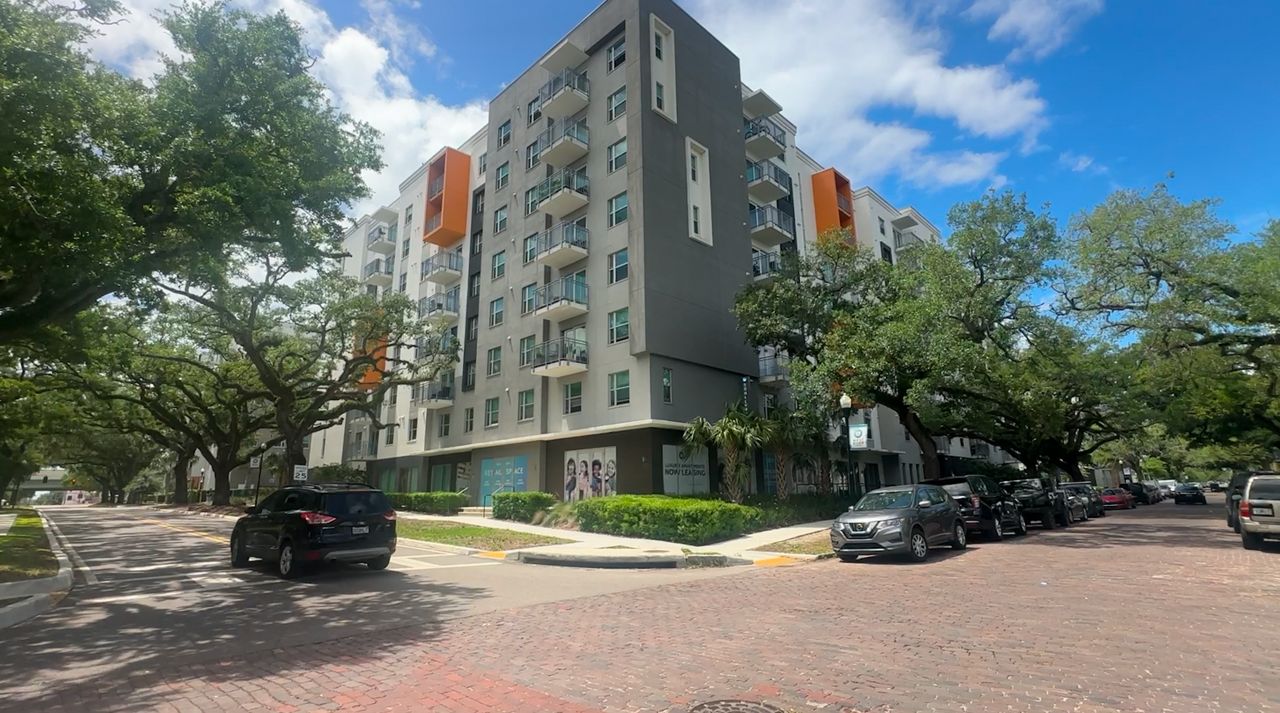
TAMPA, Fla. — A surge in affordable housing development is underway across Hillsborough County.
From East Tampa to Sulphur Springs, many affordable housing developments are concentrated in historically underserved communities, while higher-income neighborhoods across the city are seeing fewer projects.
County leaders say the pace of development is steady. Hillsborough County Commissioner Gwen Myers, who serves on the Affordable Housing Advisory Board, says new projects are consistently moving forward.
“Every two weeks, the Board of County Commissioners approve ideas for affordable housing, whether it’s through renovation, or new construction,” said Myers.
In recent months, that has included multiple groundbreakings, with some developments designed for seniors and residents with special needs.
“When we talk about affordable housing, we’re also looking at those … with special needs, our seniors and those who just want to own their own house,” said Myers.
Myers says the effort goes beyond construction — with programs aimed at helping residents stay housed or become homeowners.
“Lot of times we criticize about with developers, but developers are the ones who build the affordable housing for the county,” said Myers. “They come in with very good projects … We are building a lot right now that [are] 80% below the median income.”
But at the city level, officials say the story is more nuanced than it may appear. Many affordable units are part of mixed-income developments, making them difficult to distinguish from market-rate housing.
“Most of them are in affordable market mix with 80% affordable units and 20% market, because you really want to have that integration,” said Director of Development and Growth Management, City of Tampa Abbye Feeley. “You cannot tell the difference. It looks and feels exactly like a market rate. It’s just that the individual in that unit is income qualified.”
City officials say that means residents may be passing affordable housing every day without realizing it.
“I think the great thing about affordable housing is today’s affordable housing looks exactly like market rate housing. So you might be driving by and you might think that’s not an affordable project, but there could be a likelihood that it is or it has units within it that are,” said Feeley.
Projects are underway across Tampa, including in South Tampa and along the urban core, with major redevelopments continuing to rise. Some include long-term affordability commitments to ensure units remain accessible for decades.
“We just worked on 356 units at the old Funlan drive-in that’s on Hillsborough and 22nd. And those are units that are going to remain affordable for 99 years,” Feeley said. “So it’s not just about getting them built, but it’s about keeping them as part of our inventory to ensure that they’re available for our residents.”
Some other projects Feeley highlighted include one at 7400 Interbay Boulevard, and another called the Rome Yard in Central Tampa, which officials say will consist of “three mid-rise, mixed-income, mixed-use, multi-family buildings, totaling 1,138 residential units.”
Still, geography plays a major role in where development can happen. City leaders point to zoning and land-use policies as a key factor shaping the map.
“New Tampa is a part of the city that is planned for lower density,” Feeley explains. “It actually has a land use of six units [per] the acre. So you wouldn’t typically see a multi-family residential in an area that only has an allowance of six units [per] the acre. That would be more single family or maybe some smaller scale type of apartments, but not the kind of density you would see here more in the urban core.”
As leaders work to expand the housing supply, they say the goal is not just to build more units — but to expand access across more communities.
“When you can own the largest asset, which is a home, this is what we’re trying to do is help more people become homeowners here in Hillsborough County,” said Myers.
Tampa Mayor Jane Castor has set a goal of creating 10,000 affordable housing units by 2027.