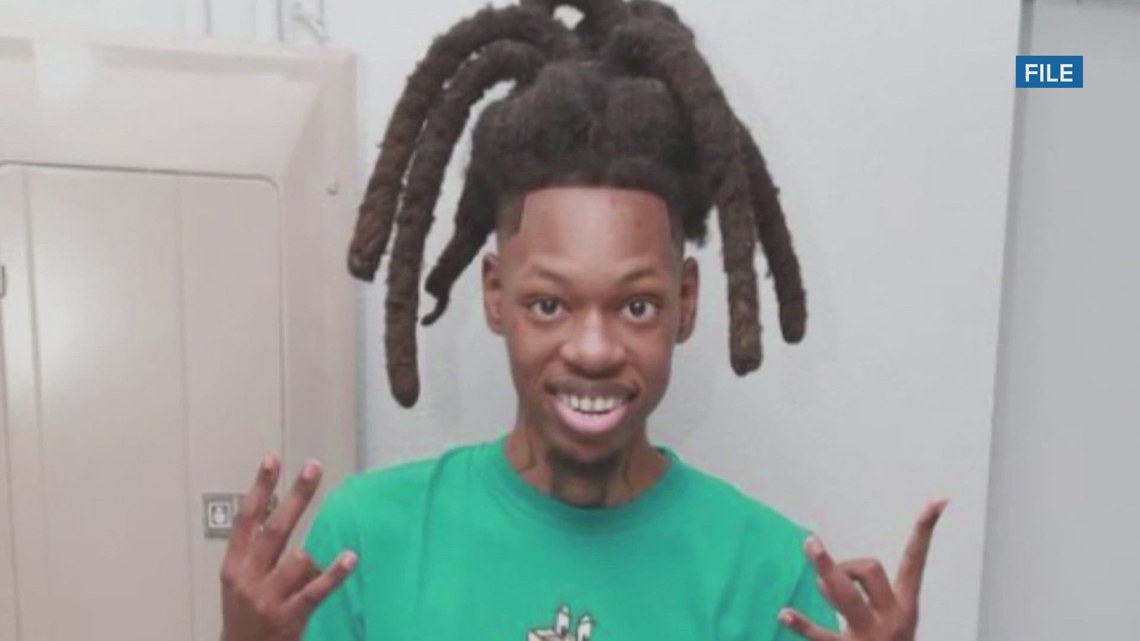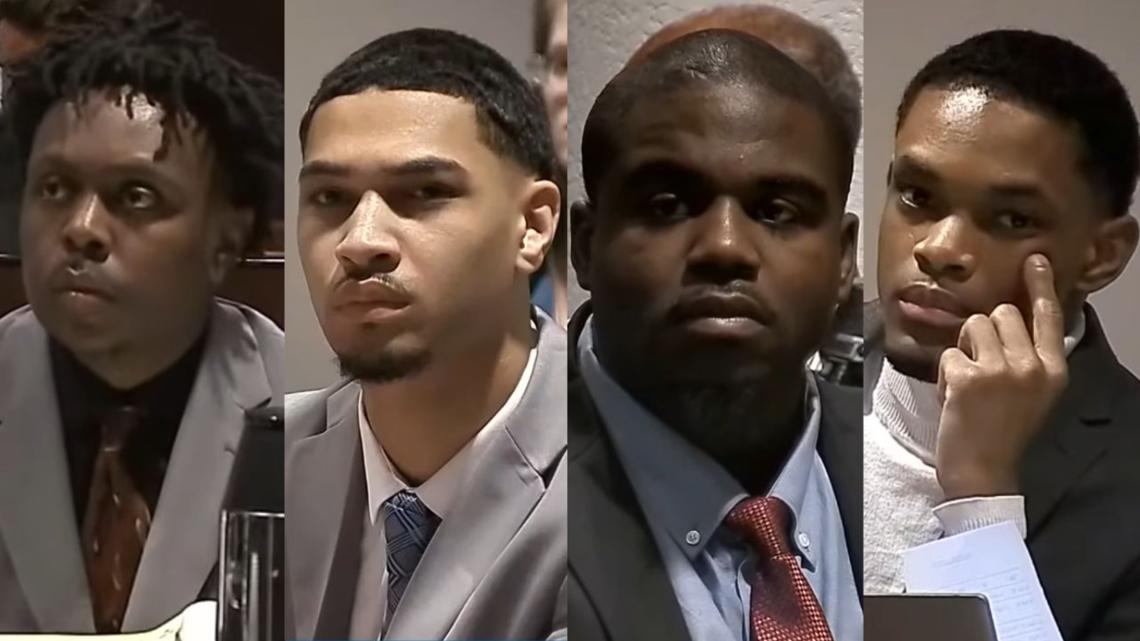
Four men face first-degree murder charges in connection to Jacksonville rapper Foolio’s death, which is part of an “ongoing gang war,” according to prosecutors.
JACKSONVILLE, Fla. — Testifying on day five of trial, a Jacksonville Sheriff’s Office detective detailed how suspects in Jacksonville rapper Foolio’s murder escaped and allegedly shared celebratory posts online in the hours that followed.
Isaiah Chance, Sean Gathright, Davion Murphy and Rashad Murphy each face a premediated first-degree murder charge, among other offenses, in connection to the rapper’s death.
Foolio, whose real name was Charles Jones II, was shot and killed in front of a Holiday Inn hotel in Tampa on June 23, 2024.
Prosecutors say Jones’ murder was the result of an “ongoing gang war” in Jacksonville, and that Chance and the Murphys are members of gangs that rival Jones’.
Christopher Drabek, a JSO Gang Unit detective, testified that in the hours following Jones’ death, he believed Rashad Murphy was celebrating Foolio’s death through Instagram posts. One post, he said, showed Tom Brady and Bill Belichick celebrating after a Super Bowl, while another read, “Hate me kindly.”
Drabek said the posts were made on accounts believed to belong to Rashad based on prior intelligence gathered and information shared from other detectives.
Drabek also testified that when interviewing Rashad following his arrest, the defendant repeatedly denied ever visiting Tampa before later saying he had been, but couldn’t remember when.
“The beginning of the interview I would describe was me offering Mr. Rashad Murphy an opportunity to share his side of the story truthfully,” Drabek said. “Once I afforded him that opportunity, I began to share actual facts in reference to this, which began to pivot his story.”
Prosecutors allege that Rashad, whom they claim is one of three shooters in the murder, fired a fully-automatic Glock when Jones was killed in a barrage of gunfire. They showed jurors multiple pictures from a Tesla video capturing the moments before the shooting, noting that the shooter with the Glock was holding it in their left hand.
Drabek said that during his interview with Rashad, he noticed the defendant struggling to write with his right hand while filling out a consent form, describing the writing as “not at all” legible.
“It was so apparent to me in the moment that he was struggling and having a hard time, that I asked him if he was OK,” Drabek said. “And he asked me to hold the piece of paper so he could try writing on the form, which I thought was strange, but it didn’t occur to me later what he was attempting to do.”
According to Drabek, Rashad told investigators he traveled from Jacksonville to Tampa on June 23, 2024, with a man identified as Darious Beals, leaving sometime between 5 and 6 a.m.
However, Drabek testified that data downloaded from one of Beals’ phone did not place him in Tampa on June 22, 23 or 24, 2024. He said phone records also do not reflect Beals traveling between Jacksonville and Tampa during that timeframe.
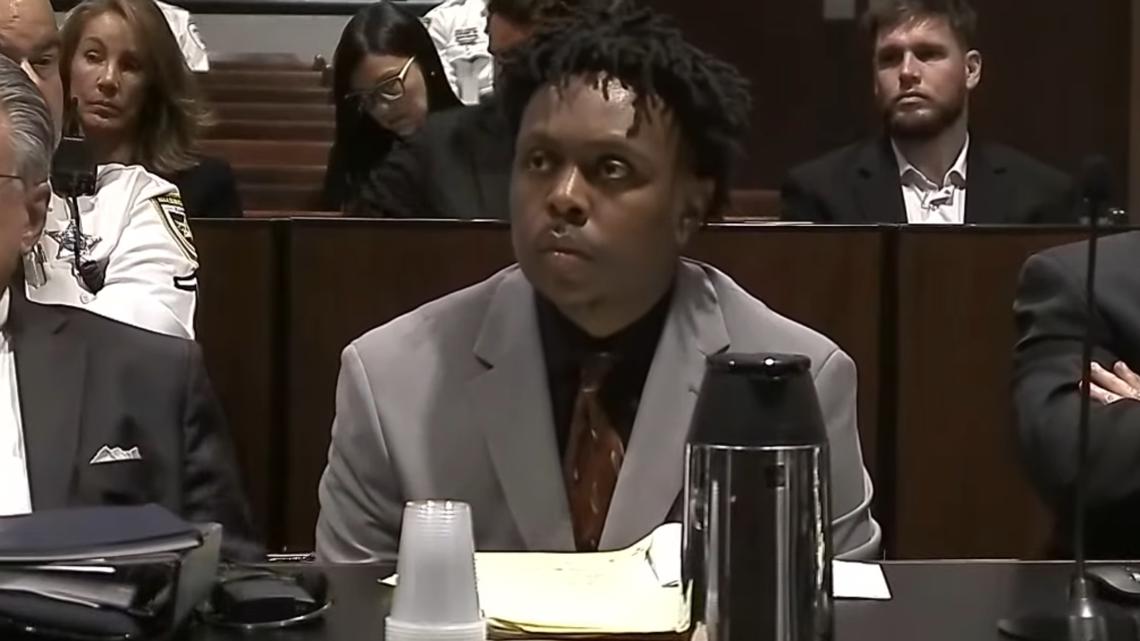
Jurors also heard testimony Wednesday about Davion Murphy’s behavior following his arrest. Drabek said Davion was captured on video in an interview room making hand gestures simulating a shooting and later flashing gang signs at the camera.
Drabek testified that Davion also applauded himself during the interview for evading law enforcement for months before his arrest.
In additional testimony, Bernardo DeJesus, a Tampa Police Department officer and firearms expert who responded to the scene, said a rifle recovered from a safe inside Sean Gathright’s home was “consistent” in appearance with one of the rifles used in the shooting.
Day six of the trial is set to continue Thursday with prosecutors calling more witnesses to testify, including more members of the Jacksonville Sheriff’s Office.