

WASHINGTON, D.C. — Today, Florida A&M University (FAMU) is among a group of 15 Historically Black Colleges and Universities (HBCUs) to launch
the Association of HBCU Research Institutions (AHRI), a national coalition designed to accelerate world-class research, expand institutional
capacity, and elevate HBCU leadership in addressing society’s most pressing challenges.
The organization will elevate the contributions of HBCUs in cutting-edge, interdisciplinary
research, expand policy influence, and accelerate transformative discoveries at scale.
AHRI will do so by increasing research capacity, strengthening institutional infrastructure,
boosting funding opportunities, enhancing faculty recruitment, and expanding student
access to research and career pathways.
 President Marva B. Johnson, J.D.
“Florida A&M University is proud to be a founding member of the Association of HBCU
Research Institutions — because R1 is not just a designation. AHRI gives FAMU and
our fellow HBCUs the collective infrastructure, shared resources, and national platform
to accelerate that journey together,” said President Marva B. Johnson, J.D. “Achieving R1 Carnegie Classification is central to FAMU’s strategic vision, and this
coalition — backed by the Association of American Universities — signals to the world
that HBCUs are not waiting to be invited to the table of research excellence. We are
building it.”
Member institutions will also collaborate to increase the number of HBCUs achieving
Research One (R1) Carnegie Classification, which is the highest designation for research
activity. AHRI is supported by a strategic partnership with the Association of American
Universities (AAU), where its offices will be co-located, and a three-year, $1 million
grant from the Harvard & the Legacy of Slavery (H&LS) Initiative. Harvard University’s
Office of the Vice Provost for Research will also provide technical assistance.
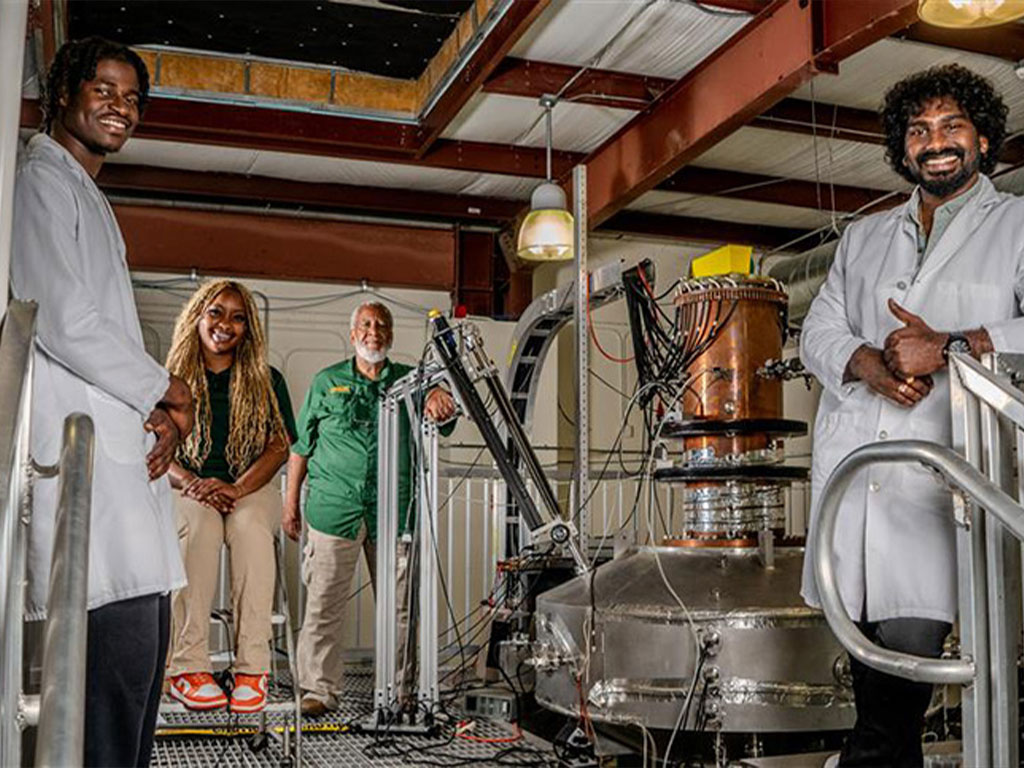 The Center for Plasma Science and Technology (CePaST) at Florida A&M University trains
a highly-skilled scientific workforce in plasma and materials science and technology.
(Photo special to FAMU)
“Today is not just an announcement, but a declaration that HBCUs are not only contributors
to research and innovation, but also leaders shaping a new era of discovery, reimagining
both the solutions and the systems that drive research,” said Wayne A. I. Frederick, M.D., MBA, Howard University interim president, president emeritus, and Charles R. Drew Professor
of Surgery.
Frederick serves as AHRI interim president. David K. Wilson, Ed.D., president of Morgan
State University, serves as board chair, and Tomikia P. LeGrande, Ed.D., president
of Prairie View A&M University, serves as board vice chair.
AHRI’s founding members include 13 partner institutions classified as R2: High Research
Activity: Clark Atlanta University, Delaware State University, Florida Agricultural
and Mechanical University, Hampton University, Jackson State University, Morgan State
University, North Carolina Agricultural and Technical State University, Prairie View
Agricultural and Mechanical University, South Carolina State University, Southern
University, Tennessee State University, Texas Southern University, Virginia State
University, and Howard University — an R1 institution and the only HBCU to have achieved
that designation. The University of Maryland Eastern Shore is also a member.
Collectively, AHRI institutions account for 50% of competitively awarded federal research
funding among HBCUs and drive solutions in health, science, education, justice reform,
and economic development.
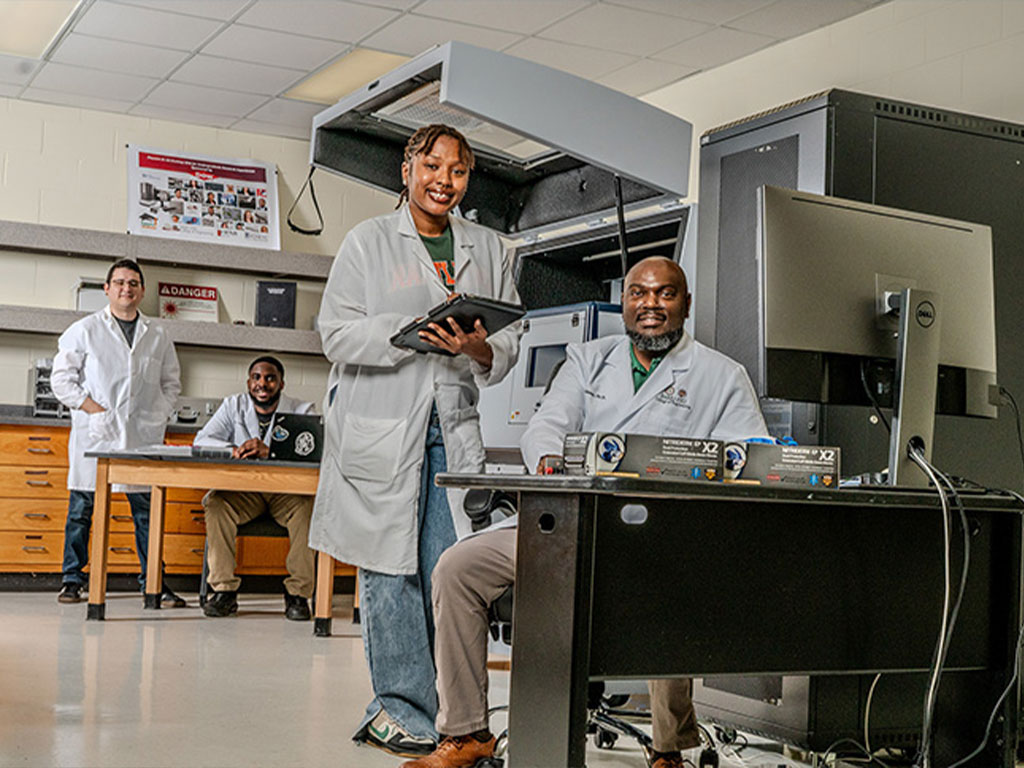 FAMU is aiming to achieve Carnegie R1 Status in the not so distant future. (Photo
special to FAMU)
The launch coincides with AHRI’s inaugural research symposium, “Expanding the Research Mission of HBCUs,” convening higher education leaders, policymakers, and industry partners to explore
strategies to strengthen research infrastructure and expand collective impact.
“AHRI gives the FAMUly something powerful: proof that our moment has arrived. We have
the talent, the mission, and now the coalition to compete at the highest levels of
American research. FAMU’s R1 pursuit is not a distant goal — it is the work already
underway, and AHRI accelerates everything,” said President Johnson, J.D.
For FAMU, AHRI’s launch marks more than a milestone — it marks a mandate. As the University
advances its strategic plan and accelerates toward R1 Carnegie Classification, the
coalition provides the infrastructure, peer collaboration, and national visibility
that no single institution could build alone. FAMU brings to AHRI a legacy of excellence,
a growing research enterprise, and an unwavering commitment to producing graduates
who transform industries, communities, and the nation. Through AHRI, FAMU will deepen
partnerships, expand doctoral production, attract competitive federal funding, and
demonstrate what is possible when the HBCU mission meets world-class research ambition.
This is not aspiration. This is the next great chapter of the FAMU story.
AHRI leaders also issued a call to action for government, corporate, and philanthropic
partners to invest in the future of HBCU research and innovation.
About AHRI
The Association of HBCU Research Institutions (AHRI) is a coalition of leading Historically
Black Colleges and Universities dedicated to advancing research excellence, innovation,
and public impact. In partnership with the Association of American Universities, AHRI
is amplifying the collective voice of HBCU research institutions—elevating their national
presence, strengthening policy influence, and accelerating transformative research
that addresses society’s most pressing challenges at scale.
About Florida A&M University
Founded October 3, 1887, Florida Agricultural and Mechanical University (FAMU) is
a public, historically Black university located in Tallahassee, Florida. What distinguishes
FAMU from other universities is its legacy of providing access to a high-quality,
affordable education with programs and services that guide students toward successfully
achieving their dreams.
FAMU is part of the State University System of Florida and is accredited by the Southern
Association of Colleges and Schools Commission on Colleges. In addition to the main
Tallahassee campus, FAMU has several satellite campuses across Florida. These include
the College of Law in Orlando and the College of Pharmacy and Pharmaceutical Sciences,
Institute of Public Health, which has sites in Crestview, Tampa, Jacksonville, and
Miami.
Media Contact
Alonda Thomas, Ph.D.
alonda.thomas@famu.edu