
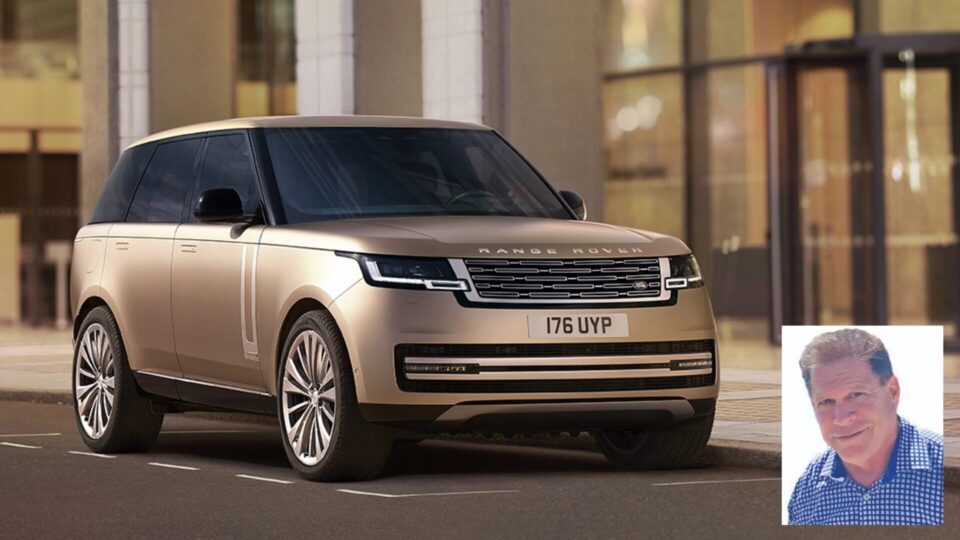

In Miami, you can hear money before you see it. It shows up at intersections, valet lines, driveways where SUVs sit like they’re waiting to be judged. Everything here is built to be noticed, and too many vehicles are designed like rolling announcements instead of transportation. That’s why the 2026 Range Rover Sport 2026 stands apart—not because it tries to, but because it doesn’t. It doesn’t compete with noise in a city that specializes in it. It doesn’t escalate to be seen. It simply arrives, controlled and complete, and lets everything else adjust around it.
This is still a city where image is treated like currency and first impressions are mistaken for final verdicts. Vehicles are not just machines here—they are positioning tools, status signals, and identity statements rolled into metal and glass. Most SUVs lean into that fully. They are built to be read instantly, understood immediately, and remembered loudly. This one refuses that entire approach. It sits outside the performance of attention without commenting on it, which in Miami is its own form of defiance.
Inside, the same discipline carries through without interruption. There is no clutter pretending to be innovation, no design language fighting for relevance, no unnecessary complexity added to justify price. It feels built for someone who has stopped needing constant stimulation from their environment. Not minimal for aesthetic approval, but minimal for control. And control, in a city that rarely slows down, is what luxury has quietly become.
The starting price for the 2026 Range Rover Sport 2026 in the U.S. is expected to be around $85,000–$90,000 MSRP depending on trim and destination fees.
Traffic in Miami is not movement, it’s interruption—constant stopping, starting, cutting, reacting, recalculating. Most vehicles amplify that tension by overreacting to it, either through stiffness, noise, or excessive visual distraction inside the cabin. The Range Rover Sport does the opposite. It absorbs the chaos without turning it into an experience. It smooths the edges of the city without disconnecting the driver from awareness. That balance is not accidental. It is the product.
Land Rover has always understood something most competitors still overthink: luxury is not escalation, it is restraint that still carries authority. The Range Rover Sport has lived in that philosophy for years, but in 2026 it feels more committed to it, less interested in chasing whatever direction the market is currently overcorrecting toward. Not trying to win the speed conversation, not trying to win the tech conversation, not trying to win the size conversation. Just refusing to lose its identity inside all of them.
Because the market right now is loud in every direction. Electric performance claims, oversized screens, aggressive styling, constant reinvention disguised as progress. Everything is trying to prove it is the future. But most people don’t live in the future. They live in repetition. Same roads, same traffic, same parking structures, same daily friction that never makes it into advertisements. That’s where this vehicle actually exists—inside the routine, not above it.
There are faster SUVs. There are louder ones. There are more visually aggressive ones built to dominate attention the second they appear. But very few that feel this consistent after the novelty fades. And novelty always fades. What doesn’t fade is how something behaves the tenth, the hundredth time you use it—whether it becomes invisible in a good way or exhausting in a bad one. The Range Rover Sport doesn’t ask for attention each time it moves. It earns trust by never needing to perform for it. In Miami, that’s not just restraint. It’s authority.
Connect To Your Customers & Grow Your Business
