
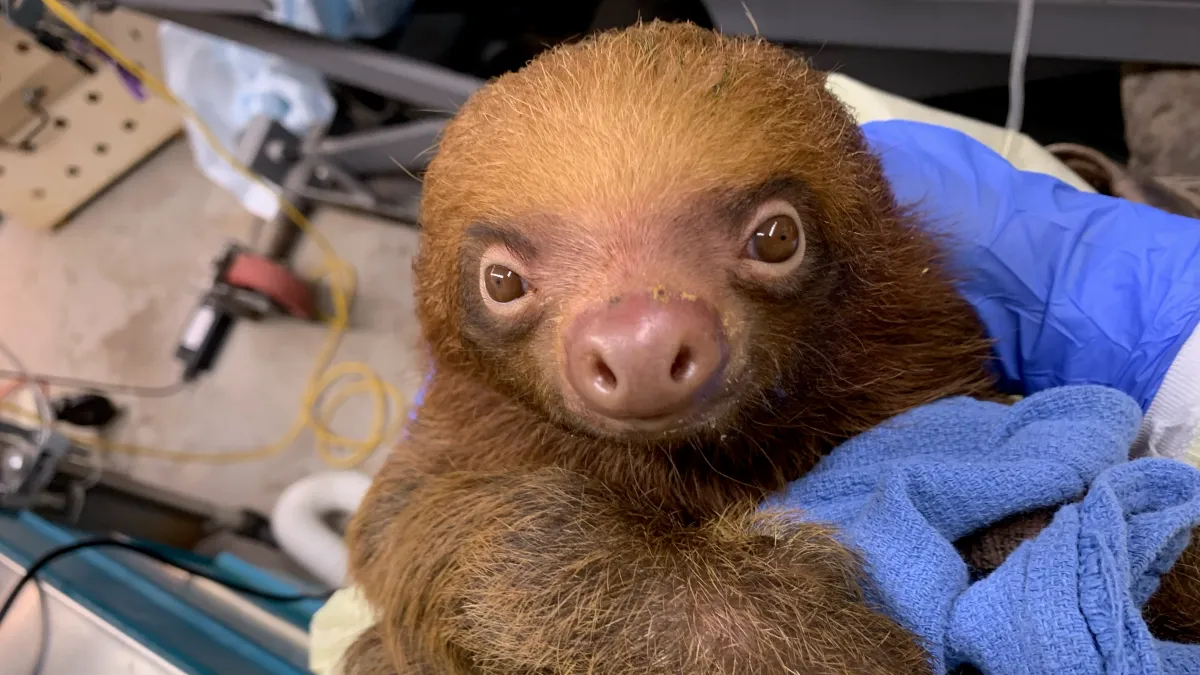
Pitched as an “ethical” attraction focused on education and conservation, Sloth World was heralded as an opportunity for visitors to dial down the tempo in America’s theme park capital.
The planned destination in Orlando, Florida, would have given more than 40 sloths an indoor rainforest habitat in which to take life “at their own slow and steady pace”, supported by “science-informed care”, its owners promised.
Now, with at least 32 sloths dead, 12 under emergency care for severe dehydration and malnutrition, and Sloth World filing for bankruptcy, Florida’s attorney-general has launched a criminal investigation.
 Rehomed sloths attempt to make a recovery
“Our office is unwavering in its commitment to pursuing justice on behalf of those who are unable to protect themselves,” James Uthmeier said on Friday.
Questions are also mounting, however, about how the Florida Fish and Wildlife Conservation Commission, the state regulatory agency, failed to step in.
Sam Trull, co-founder and executive director of the Sloth Institute, one of the organisations that blew the whistle, said: “This is such an egregious thing that’s happened and we need consequences. What’s the point of a permitting or oversight body if they didn’t prevent cruelty on such an extreme level like this?”
Sloth World slipped through gaps in the regulatory framework for importing and owning exotic species, said Dr Rebecca Cliffe, founder and director of the Sloth Conservation Foundation, which, with the institute, led the push against the attraction.
The commission opened an investigation into Sloth World last year but concluded that there was “no legal basis for enforcement action or closure”.
“They saw a bunch of sloths died and just let them import more,” Trull alleged.
Sloth World, on Orlando’s International Drive tourist strip, was under development as an “expert-led rainforest experience for all ages” where visitors could take an hour-long tour for $49 a ticket. Its website stated: “Watch natural behaviors up close in a peaceful, no-contact setting designed entirely for their own comfort … Dive into fascinating facts while learning how conservation helps protect displaced sloths and the habitats they depend on.”
It boasted that the furry residents “come from a variety of situations across South America and beyond” and could live to be 55 years old there, compared with the average eight to twelve years in the wild.
“Some arrive from regions affected by deforestation or mining,” it claimed. “Others are rehomed from private individuals who can no longer care from them [sic] and some come from facilities that lack the resources or expertise to support their needs.”
But sloths are highly complex animals. Wrenched from their natural habitat, they rarely thrive in captivity; their chilled appearance and lack of a “fight or flight” mechanism belies internalised stress.
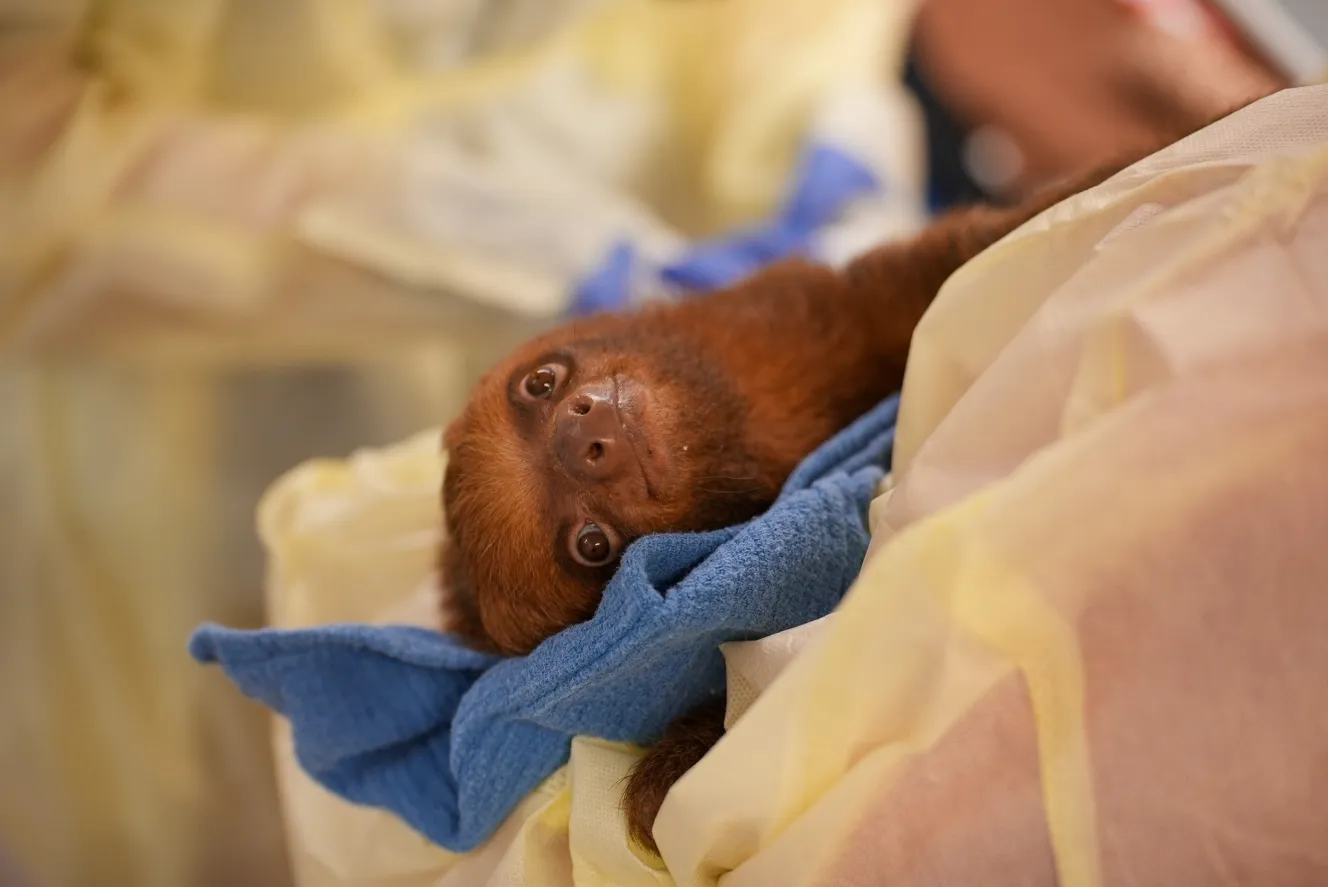 One surviving animal undergoes veterinary careCENTRAL FLORIDA ZOO
Within days of arriving in Florida from Guyana in December 2024, 21 sloths died at a warehouse in Orlando owned by Sloth World’s president, Benjamin Agresta, and vice-president, Peter Bandre, according to Florida’s wildlife commission. Both Agresta and Bandre are exotic species importers.
The facility did not have a permit for housing animals and had no heating, electricity or running water, the commission alleged. In a cold snap, plug-in heaters were run from a neighbouring building using an extension cord but the fuse tripped and temperatures fell to 8C (46F). With no one there overnight to notice, the animals died of “cold stun”, Bandre told an investigator from the wildlife commission.
He said Agresta had told him the building was ready and that when he found out this was not the case, it was too late to cancel the shipment.
In February 2025, disease killed ten sloths imported from Peru, two of whom were dead on arrival. More are unaccounted for: records show the owners imported 61 of the animals, the commission alleged.
Thirteen were handed over last week to the Central Florida Zoo in Sanford, suffering from severe dehydration and malnutrition. Staff are working around the clock to save them but on Wednesday, Bandit, a sub-adult male, died. A female companion, Habanero, remains in critical condition.
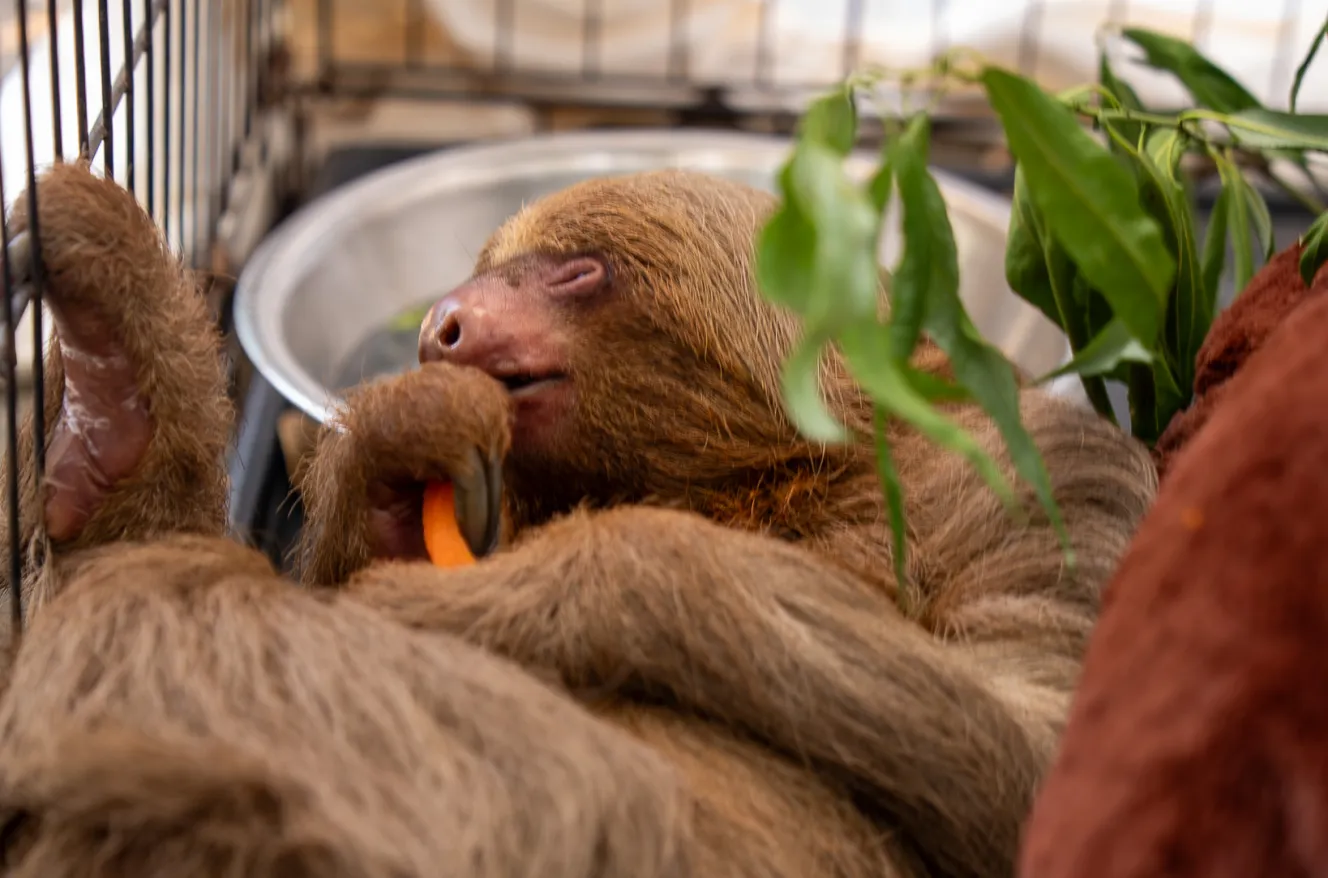 Bandit, one of 13 sloths rescued from a warehouse in Orlando, died after being taken to Central Florida Zoo for careCENTRAL FLORIDA ZOO
“The other 11 are stable-ish,” said the zoo’s director, Richard Glover. “Dealing with Bandit’s loss — we’re sad, but we don’t have time to stop and grieve because we’ve got 12 others to save and more than 400-plus other animals in the zoo … People are having a very hard time keeping going, but they’re keeping going.”
The commission said that Sloth World held an import permit for the exhibition of Class III wildlife in captivity. A Class III permit, which covers sloths, requires holders to report only escapes, biting incidents and transfers, not deaths. It also requires owners to maintain inventory records, though not to submit them for inspection unless asked.
The commission conducted an unannounced inspection of Sloth World’s facilities in August last year, but found that the climate-control problems had been corrected and that “the owner’s actions did not meet the legal standard for animal cruelty”.
US newsletter
A balanced, fair and fact-checked take on global news and culture for our US readers.
Sign up with one click
“Deaths relating to zoonotic disease were referred to the US Department of Agriculture and the investigation concluded without citation or written warning,” Arielle Callender, a spokeswoman for the commission, told The Times. “There was no legal basis for enforcement action or closure, and while the deaths of these animals are tragic, subsequent inspections found the facility compliant with care and housing standards.”
Bandre severed his partnership with Agresta last year. Agresta told Fox 35 Orlando television channel that “there is so much false and inaccurate information out there” and denied Bandre’s statement that 21 sloths had died of “cold stun”. Agresta and Bandre did not return requests for comment from The Times.
Trull said: “Most people realise that it’s pretty cruel and messed up to do this to another living creature and there is no place for the exotic animal industry. For a long time, it’s felt like we were just shouting into a void.”