
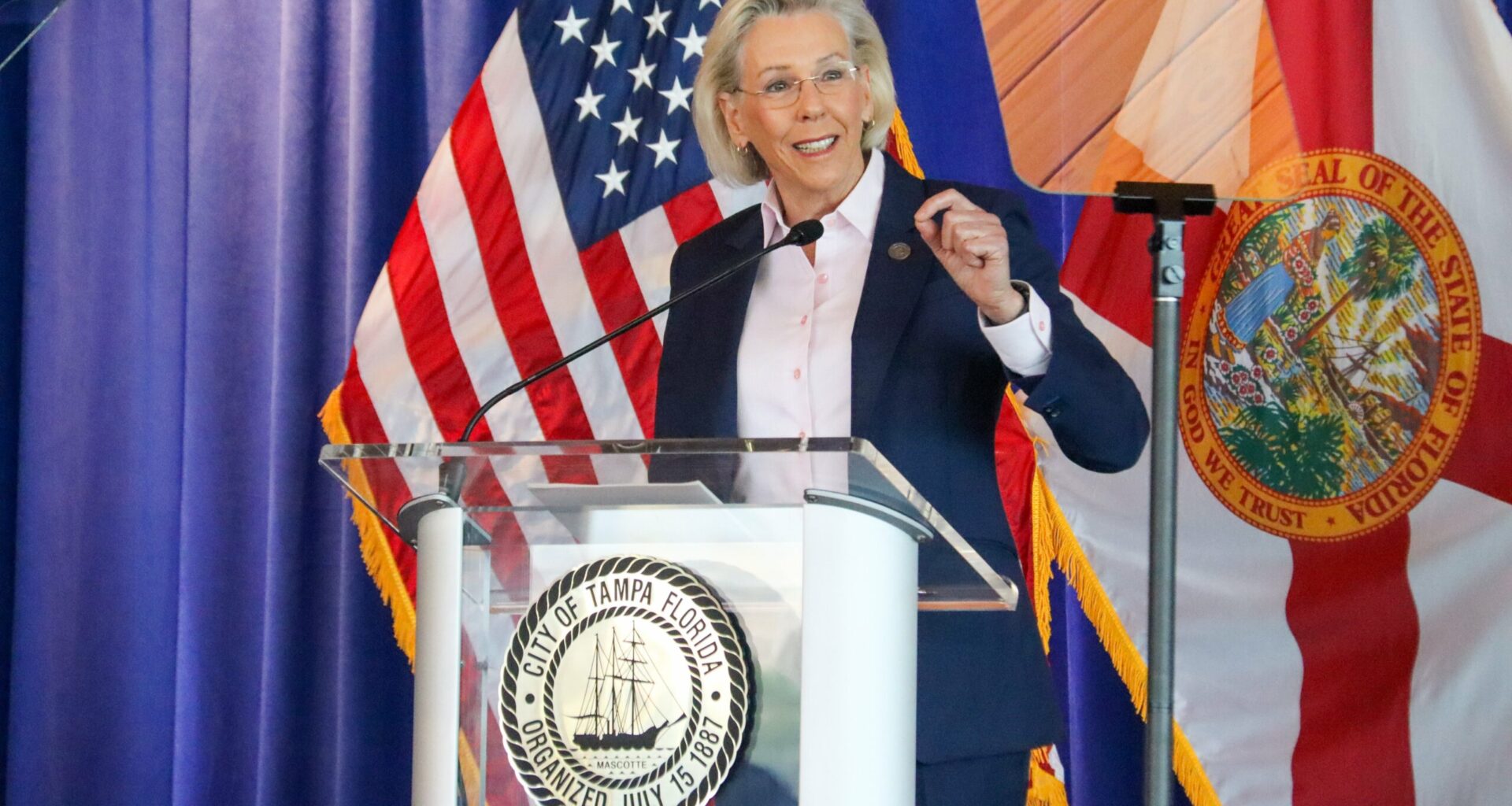
Tampa Mayor Jane Castor has no shortage of priorities to highlight during this year’s State of the City address, from the possibility of landing an MLB franchise to progress on infrastructure, housing and resiliency efforts shaping Tampa’s long-term growth.
The talk of the town in recent months has been a proposed ballpark for the Tampa Bay Rays, a project that would relocate the team from St. Petersburg to Tampa that could carry a public price tag exceeding $1 billion. Beyond stadium politics, Castor is expected to highlight investment in community neighborhoods and address how Tampa is managing rapid growth, affordability needs and maintaining a high quality of life.
The address itself will be held Tuesday at the $34.7 million Fair Oaks Recreation Complex in East Tampa. In her weekly newsletter, Castor described the new complex as the largest recreation center in Tampa — noting that she chose the venue for the State of the City address as a show of the city’s investment directly into local neighborhoods.
“With this investment comes opportunity,” Castor wrote in her newsletter. “A grandmother who finally has a senior center in walking distance. A kid with a real football field and a gymnasium in his own neighborhood. A family that can spend a full Saturday at the splash pad, the playground, and the walking trails without ever leaving East Tampa. This was built for the people who live right there, by a city that was paying attention.”
No neighborhood investment comes close to a proposed ballpark for the Tampa Bay Rays at the Hillsborough College Dale Mabry campus that includes plans for a surrounding entertainment district envisioned in the mold of The Battery in Atlanta.

The proposal has emerged as a focal point for local leaders who are weighing major economic benefits promised by the project up against the risk of $1 billion in public funds requested by the team from the city and Hillsborough County. Castor has publicly supported the proposal and the team, but has also preached mindfulness with taxpayer dollars at the same time.
If approved, the investment would transform the Hillsborough College campus into a major economic driver located near the airport and other major league sports teams. Castor is not likely to address the elephant in the room — potential competition for funds between the Rays and the Tampa Bay Buccaneers, which are eying major stadium renovations that would require public funds themselves — but could make her pitch for why residents should invest in space for a third major league team.
Beyond ballpark talks, the city is also expanding other community amenities. The West Riverwalk extension includes 2 miles of new Riverwalk along the west side of the Hillsborough River, as well as 3 miles of road upgrades in surrounding neighborhoods. The Pinellas Suncoast Transit Authority (PSTA) is also moving forward with a plan to relaunch cross-bay ferry service, adding another way for visitors to access businesses and other amenities in the area.
Castor will likely highlight other transportation and mobility efforts aimed at addressing congestion tied to population growth. The city has steadily expanded road resurfacing, sidewalks and multimodal infrastructure while advancing longer-term transit conversations that include multimodal options like the ferry.
During last year’s address, Castor noted a sharp increase in street paving since 2019, including hundreds of miles of resurfaced roads and expanded bike infrastructure, along with continued momentum behind the TECO Line Streetcar that includes an extension into Tampa Heights.

Over the course of Castor’s tenure, the city has directed billions toward water, wastewater and stormwater upgrades, replacing aging systems and expanding capacity to keep pace with development.
In last year’s address, Castor said those investments are meant to prevent system failures and support future growth. Efforts include Tampa’s PIPES program — through which the city has replaced more than 270 miles of aging infrastructure and thousands of stormwater structures since launching in 2019 under Castor’s leadership, according to last year’s figures.
Tampa’s rising cost of living continues to put pressure on residents, prompting significant investment in workforce and affordable housing initiatives. In 2025, Castor pointed to roughly 20,000 housing units added or in development — many of them designated as affordable — a benchmark she could revisit as those projects continue to take shape. Affordable housing will likely remain a central pillar of this year’s remarks.
Although residents are now further removed from Hurricanes Helene and Milton, resiliency remains a central concern for a coastal city. Castor has consistently emphasized stormwater system upgrades, flood mitigation projects and proactive maintenance efforts designed to reduce risk during major weather events — themes that are expected to carry into this year’s address.
The address comes at a pivotal moment for Castor, who is entering the final year of her term. Alongside reflecting on progress made during her administration, the speech is expected to offer a forward-looking view of how Tampa is being positioned for continued growth — and how the city will carry those priorities forward beyond her time in office.