
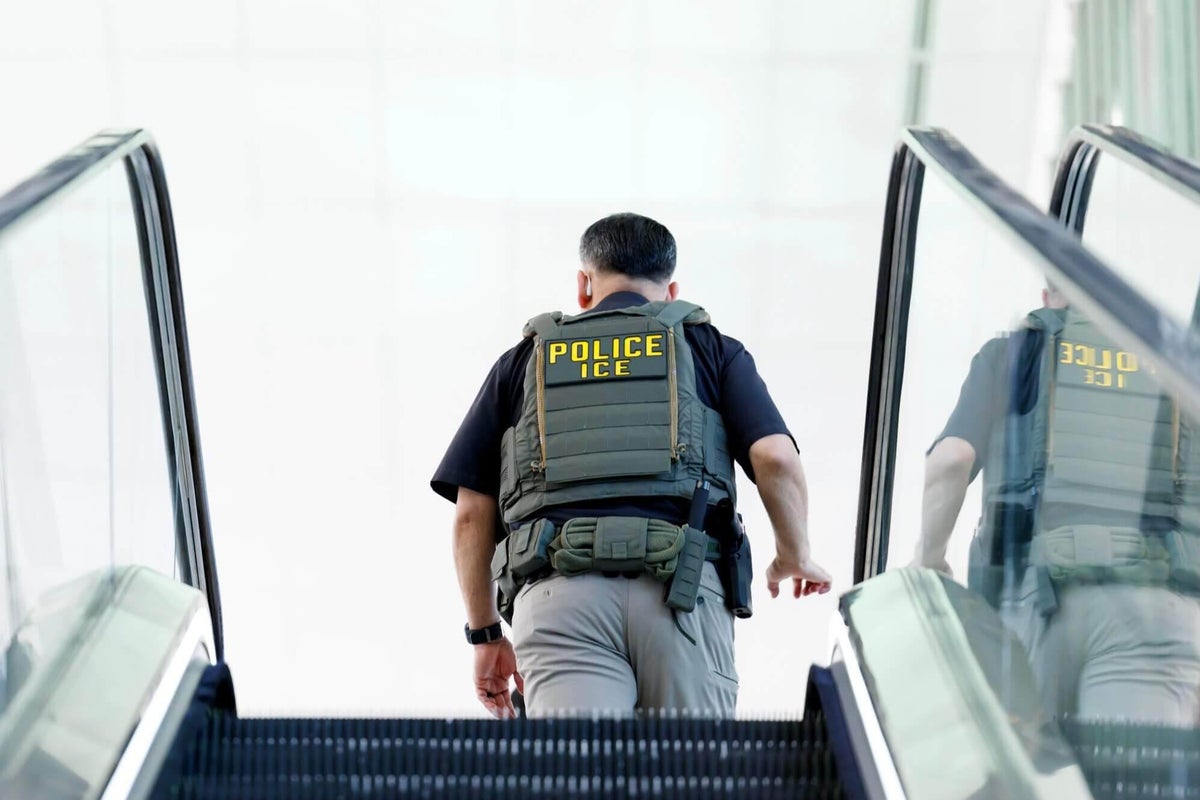
The head of Miami’s host committee for the FIFA World Cup says that he received personal assurances from the United States’ secretary of state Marco Rubio that ICE will not be present at stadiums this summer.
Questions about U.S. Immigration and Customs Enforcement’s (ICE) role in the World Cup being largely played in the United States during June and July have been prominent since President Donald Trump began a second term in power last year. Upon returning to the White House, Trump immediately set about fulfilling a campaign promise of mass deportations.
Earlier this year, the ICE acting director, Todd Lyons, said the organization would play a “key part” in ensuring security during the World Cup. He said ICE’s primary role, as is common at sporting events, would center on Homeland Security investigations, but labor unions and members of the U.S. Congress have raised concerns that the involvement of ICE may extend to immigration-enforcement raids close to World Cup events.
The Athletic has previously reported that some of FIFA’s member federations, particularly European nations, also privately relayed concerns to soccer’s global governing body from their fans about potential ICE activity during the tournament.
Senior FIFA management also discussed with its president, Gianni Infantino, the possibility of him making a direct request to Trump for a moratorium on ICE raids across the United States during the World Cup — but it is not known whether he ultimately did so.
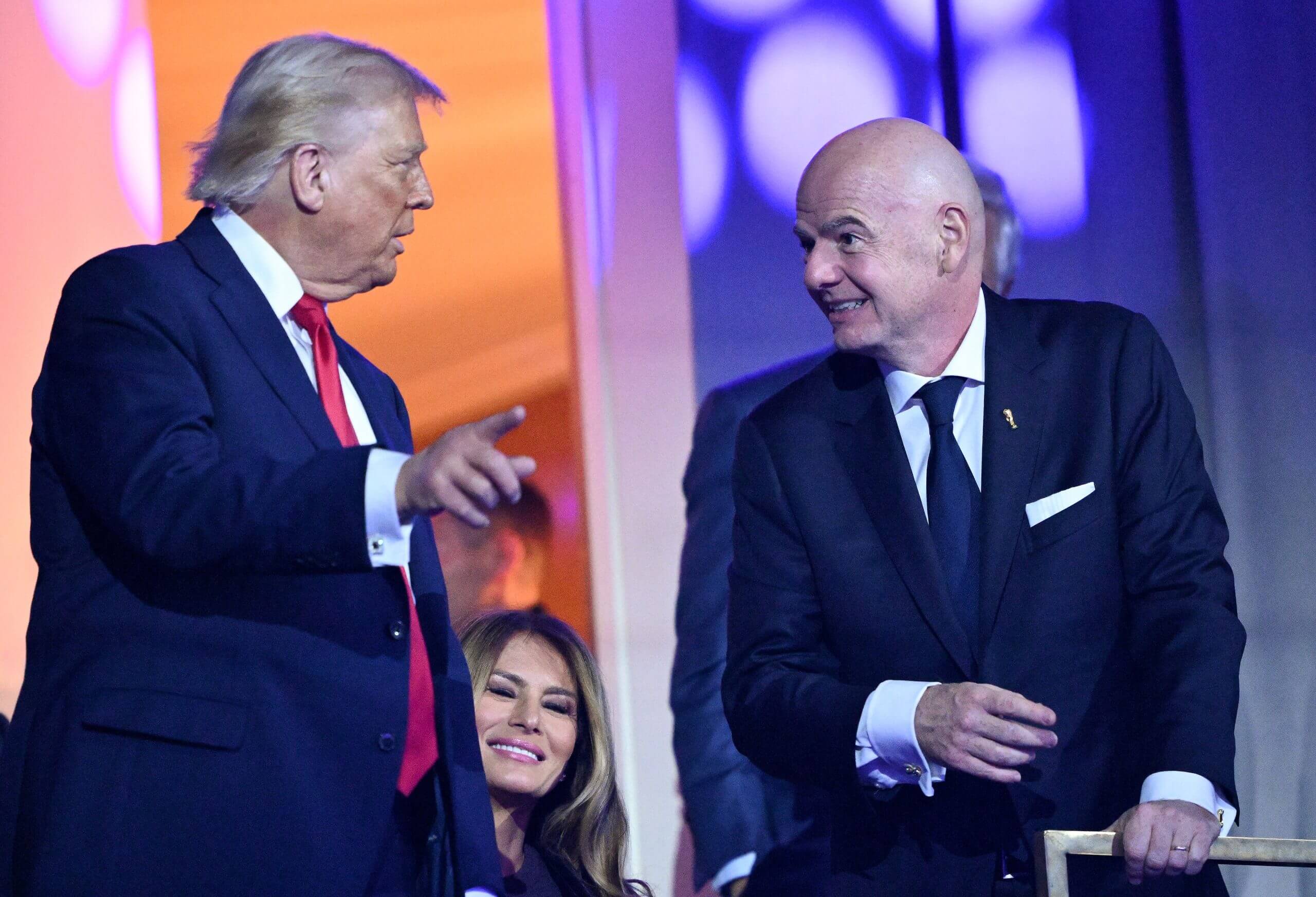
President Donald Trump speaks with FIFA’s Gianni Infantino at the World Cup draw in December. (Mandel NGAN — Pool/Getty Images)
In an interview with The Athletic, Rodney Barreto, co-chair of the Miami host committee, said: “A lot of people are talking (and saying), ‘Well, ICE will be at the stadium’. I talked to Marco Rubio. ICE is not going to be at the stadium. This is not going to turn into some ’round them up’ type of thing. That’s not the purpose of this.
“It’ll be a great experience for everybody. I think that we’re lucky that we do have a president who loves sports and has given us the resources to reimburse the cities for their police protection.”
The U.S. State Department were approached for comment by The Athletic but did not respond prior to publication.
The 11 U.S. host cities were recently awarded $625 million (£460m) in federal security funding by the Trump administration. While Barreto noted that the president is “very vocal with his thoughts”, he said Trump is a “big sports fan” who has put money in the budget for host cities, which makes Barreto feel “real comfortable”.
Barreto also said he received assurances that the administration will assist with visa processing for World Cup participants and other attendees.
He added: “I spoke to Marco and, first of all, he’s going to make sure that the passports get processed and people can get here and there is an orderly process so people won’t be held up. It’s going to be a major undertaking by the federal government to do that. We feel very comfortable that we’re going to be in good hands.”
Regardless, as it stands, four of the World Cup’s 48 competing nations remain subject to travel bans, with fans from some countries subject to visa bond payments of up to $15,000 per person.
Barreto was speaking shortly after Miami’s host committee collaborated with Miami Lighthouse for the Blind and Visually Impaired, as well as the Children’s Trust, in order to secure funding to support a soccer program for blind and visually impaired children and teenagers in Miami-Dade County.
The program includes soccer training developed by coaches certified by the US Association of Blind Athletes (USABA) and will serve 115 participants in weekly or bi-monthly sessions, increasing to 140 participants in the summer months, when sessions are held twice a week.
Amid the flurry of concerns that haunt the build-up to this World Cup, it is a reminder of the positive influence that development programs and legacy investments can have when sporting competitions arrive in a region.
“If you were there, you would have tears in your eyes to see the kids,” Barreto said, having attended the session. “The technology is (very clever), the way the ball makes a noise so they can hear the ball. Then, if it goes out of bounds, it makes a different noise. That’s going to be a legacy so that they can pursue an opportunity to enjoy the outdoors and enjoy playing soccer.
“But then we’ll also be doing several fields throughout the community.”
As Miami prepares to host its World Cup games next month, preparations are now afoot. The Florida city has announced a 23-day FIFA Fan Fest between June 13 and July 5 at downtown Bayfront Park, which will be free to attend, broadcasting tournament matches and with live musical acts performing across three stages. Miami on Thursday added Hard Rock to its host city sponsor roster for the Fan Fest.
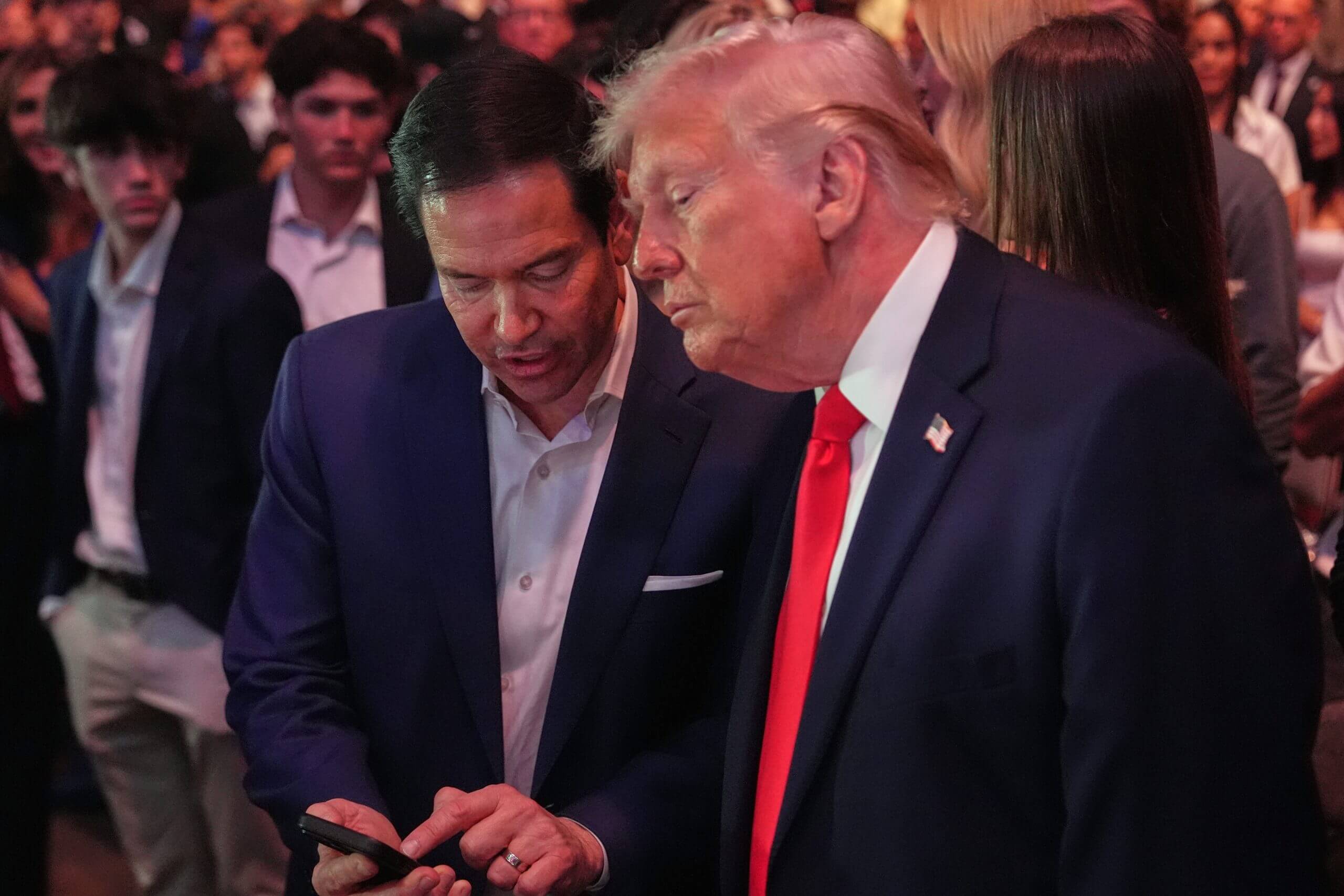
President Donald Trump and U.S. secretary of state Marco Rubio during a UFC event in April. (Julia Demaree Nikhinson — Pool/Getty Images)
With a month to go, Miami is still finalizing its full transportation plan, but Miami-Dade County will provide complimentary game-day shuttles exclusively for match-ticket holders traveling to Hard Rock Stadium. The county told The Athletic in late April that the four confirmed shuttle hubs will be the Dr Martin Luther King, Jr Metrorail station, Brightline Aventura rail station, Golden Glades intermodal station and the Seminole Hard Rock Hotel. Fans must make their own way to the selected hubs.
Miami is also working hard on its security plans, after being scarred by its hosting experience of the Copa America final at Hard Rock Stadium in 2024. The venue came perilously close to disaster that July day as supporters were pressed against the entrance gates ahead of the match between Argentina and Colombia. A combination of poor organization, ticketless fans and sweltering weather combined to create dangerous circumstances for those in attendance, with some supporters requiring treatment from paramedics. The game itself was delayed by 80 minutes.
“We took the position that we didn’t want to be critical of the planners of that event,” said Barreto, once a police officer himself, almost two years on. “It wasn’t our event. But now that time has passed, I would tell you that where the failure was, which was that there were no perimeters.
“People without tickets should have been nowhere near the entrance ways of that stadium. It didn’t take much to overrun an entrance. But listen, you learn from all these events, and you learn to do it better and come up with different scenarios which mitigate this from happening in the future. So that’s where we’re at.”
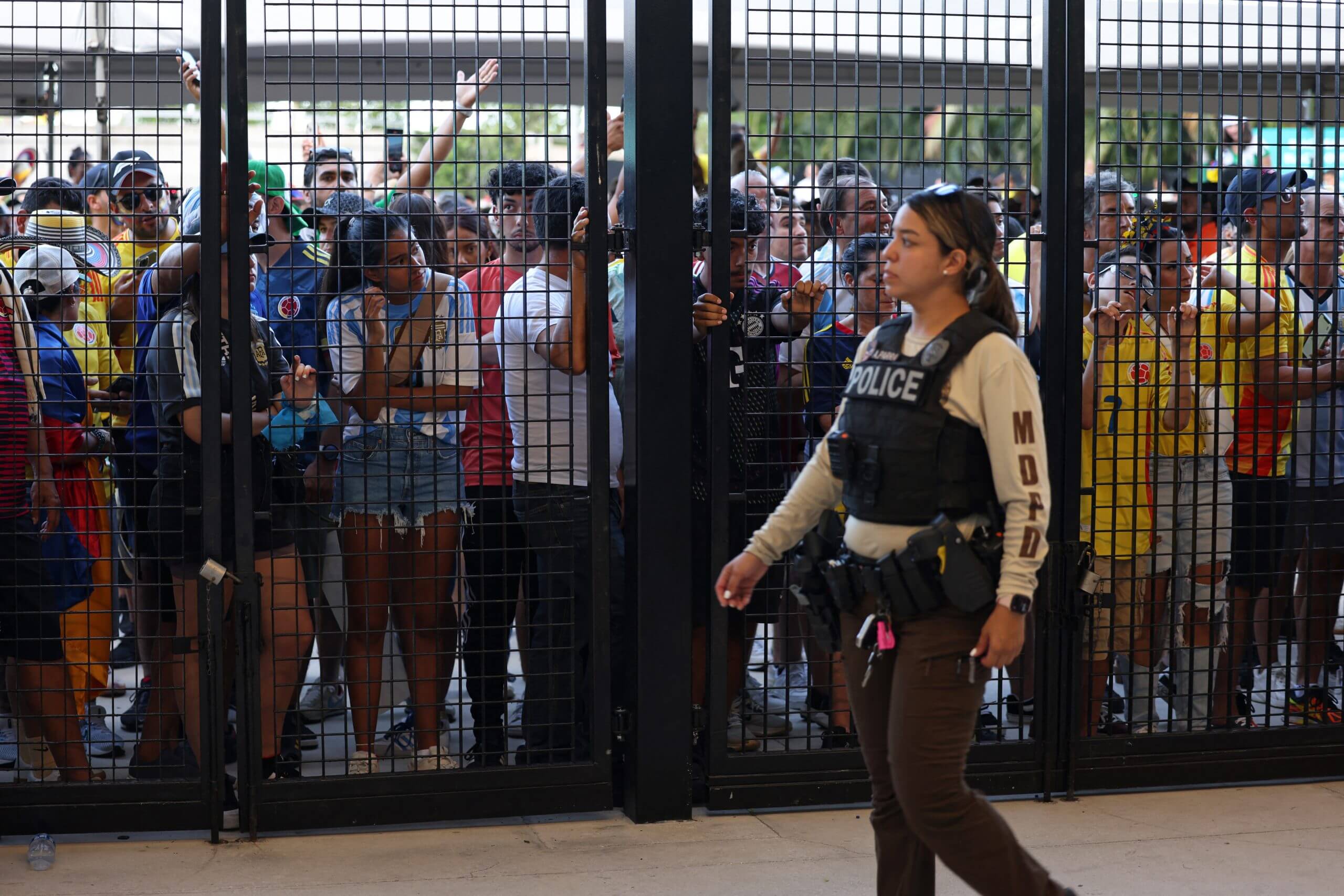
Fans wait to be admitted to the 2024 Copa America final at Miami’s Hard Rock Stadium. (Charly Triballeau /AFP via Getty Images)
This week, many World Cup host cities were unnerved by an American Hotel and Lodging Association report which claimed a majority of hotels in the U.S. host cities are reporting underwhelming demand for stays during the tournament. Miami, however, had the most encouraging member feedback from the association within the report.
Hard Rock Stadium will host seven World Cup games, including eagerly-anticipated group-stage fixtures between Colombia and Portugal, and Brazil against Scotland, a round of 32 game, a quarter-final and the third-place play-off.
“With respect to the hotels, June and July are dead months in Miami,” Barreto said in an interview which took place prior to the hotel report being published. “The trend is up, the numbers are way up. Airbnb — the numbers (are) off the chart. It’s up 200 per cent. So a lot of people are renting homes.”
Barreto has previously stated that the host committee estimates $1.3 billion in economic impact from the seven games in Miami. With the World Cup now five weeks away, does he remain confident of that?
“I say that that we’re going to be hosting seven Super Bowls over a five-week period,” he said. “Not all the people who come here come with a ticket. A lot of people are just going to come to party and to support their team and check out Miami. We experienced that with the Super Bowl.
“If the stadium holds 65,000, we usually get about 125,000 people here — an additional 60,000 people come just for the parties.”