
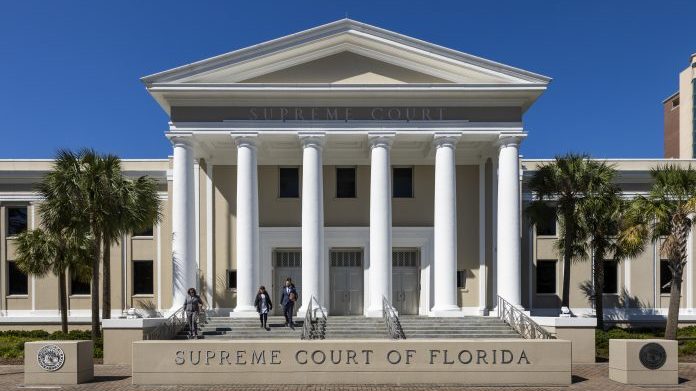
Supreme Court orders circuits to create technology governance committees
The goal is to promote ‘consistent practices and procedures across the state,’ encourage coordination among justice system partners, and reduce the risk of technology disruptions affecting court operations

‘The structure will effectively manage technology initiatives and issues related to electronic access to the courts in each circuit,’ the approved template states.
Florida’s judicial circuits will be required to establish formal technology governance committees under an administrative order issued May 7 by the Florida Supreme Court.
In AOSC26-10, the court directed each circuit chief judge to establish a local technology governance committee no later than December 30.
The action stems from recommendations developed by the Judicial Management Council’s Workgroup on Trial Court Technology Strategies, which was created in 2021 to study long-term technology needs and case management strategies in Florida’s trial courts.
The workgroup’s final report, submitted in 2023, recommended that the court require each judicial circuit to create a formal technology governance structure and directed the Florida Courts Technology Commission to develop a statewide template circuits could follow.
The Supreme Court said the goal is to promote “consistent practices and procedures across the state,” encourage coordination among justice system partners, and reduce the risk of technology disruptions affecting court operations.
“The structure will effectively manage technology initiatives and issues related to electronic access to the courts in each circuit,” the approved template states.
Under the order, each circuit’s governance structure must acknowledge the requirement to implement a single Court Application Processing System, or CAPS, throughout a multi-county circuit, prioritize local technology initiatives, develop technology training programs, and coordinate with the Florida Courts Technology Commission on statewide initiatives and reporting requirements.
The court noted that while it has adopted the policy that multi-county circuits should use a single case management system, implementation will depend on available resources.
The approved template calls for committees to include the chief judge or designee, judges, judicial assistants, trial court administrators, court technology officers, case management designees, and clerks of court or their designees.
At the discretion of the chair, committees also may include representatives from justice system partners such as state attorneys, public defenders, sheriffs, the Department of Corrections, The Florida Bar, or any other agency designee as directed by the chair.
The committees will be responsible for addressing issues that may include:
Budgetary requirements per initiative
System and data integration issues
Electronic document workflow issues
Interagency technical issues
Interagency business process opportunities
New statewide technology initiatives
Strategic technology planning
Automation and innovation opportunities
Technology training needs
Cybersecurity and security standards
Disaster recovery planning
The order also requires each circuit to collaborate with the Florida Courts Technology Commission on process improvements and technology updates and to submit annual reports.
Circuits unable to meet the December 2026 implementation deadline must provide quarterly progress reports to the Florida Courts Technology Commission until implementation is complete.