
As The Florida Bar marks its 75th year, the News continues its look back at moments that shaped the profession Florida lawyers know today.
In 1966, The Florida Bar undertook its first-ever economic survey of the legal profession — a data-driven effort designed to better understand how lawyers practiced, what they earned, and how they could improve both client service and their own financial footing.
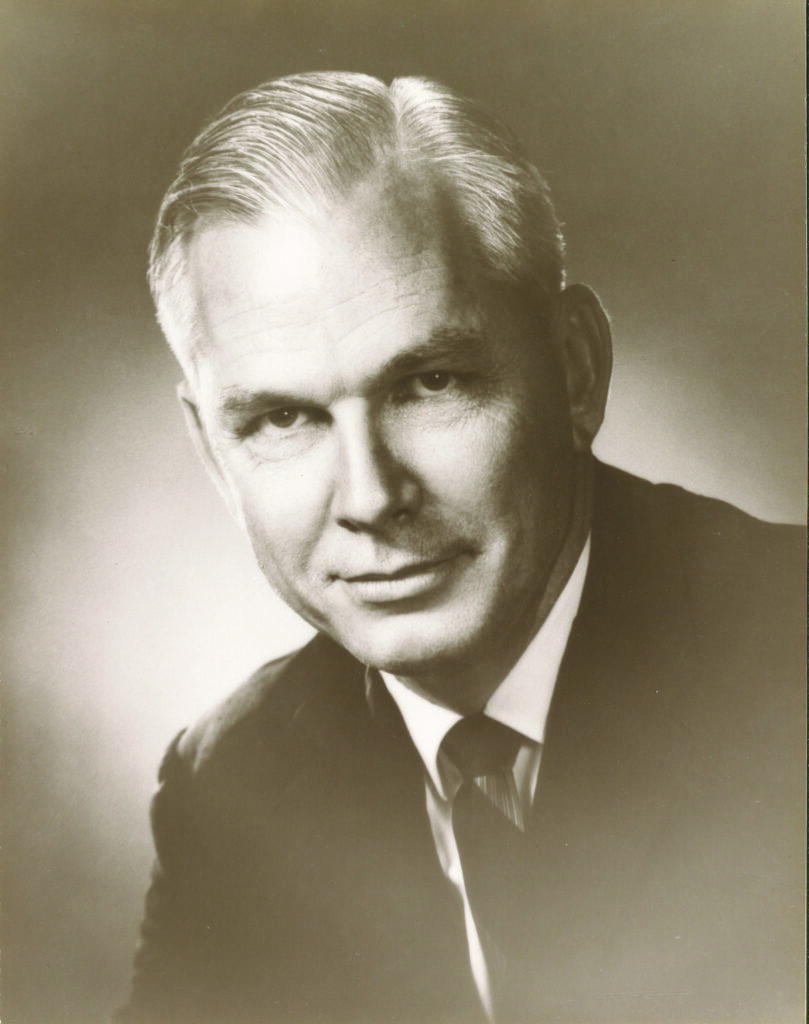
Announcing the initiative in the March 1966 Florida Bar Journal, then-President Robert M. Ervin described the survey as a “new and important venture” aimed at two central goals: helping lawyers “render better and greater legal service” while also improving their economic position. Participation was voluntary and anonymous, and Bar leaders emphasized that the survey’s success would depend on broad cooperation from lawyers statewide.
The results, published later that year, offered a snapshot of Florida law practice in the mid-1960s, from income levels and billing habits to workload and areas of specialization.
The survey also highlighted structural differences within the profession, including disparities in income by geography, firm size, and practice setting, while pointing to opportunities for greater efficiency and professionalism.
What follows is a summary of that 1966 report.
Florida Law Practice
This is a brief summary of the comprehensive report resulting from the 1966 economic survey of Florida judges and lawyers. Forty-six percent of the active lawyers and judges in practice in the State participated in the study. The income and expense information reported pertains to the year 1965. Statistics on such information and the other practices reported reflect the conditions in effect at the time of the survey in April and May of 1966.
The response of partners in firms more than doubled the participation in the survey by individual practitioners, thus the results are biased in some areas to the practices in partnerships. The management consultants to the legal profession who were retained by The Florida Bar advised, however, that the excellent response to this project has provided a sampling more than sufficient to assure the integrity of this report.
The Individual Practitioner
The typical individual practitioner practices alone in his office, though a number of individual practitioners share space and office arrangements with other lawyers. His 1965 net income from law practice was $14,000.
Sole practitioners new in practice typically earn $5,400 during their second year, $8,300 during their third year. Earnings rise to a peak of $17,000 between the 15th and 19th year in practice, and decline thereafter.
The highest incidence of sole practitioners with earnings of $10,000 and less is in Jacksonville and Miami, where average partners’ income is the highest in the State. Statewide, 32% of all sole practitioners earned $10,000 or less in 1965. Twenty-five per cent of sole practitioners in practice 20 to 29 years fall into this income category. The number increases to 30% for those in practice 30 to 39 years. Space sharers follow a similar pattern.
He employs a secretary, though one-tenth of his fellow sole practitioners do not. He has not trained his secretary to draft routine documents or to prepare estate accountings for him.
The sole practitioner typically disburses 40% of his gross receipts for various items of overhead, the largest of these being 14% for the compensation of his secretary. Those sole practitioners with the smallest income tend to spend a proportionately larger share of gross receipts on overhead expenses than those with a more substantial income.
The Florida lawyer typically works 2,000 hours per year, of which he spends 225 hours in free legal work and community service, the equivalent of more than five weeks a year. The Florida sole practitioner has not learned to maintain time records or to use them in the computation of his fees. His principal areas of practice are real estate, probate, domestic relations, and negligence-plaintiff. He is heavily in favor of promulgating a statewide advisory fee schedule for the benefit of all of the lawyers of the state. However, his present local fee schedule is generally not his primary consideration in the setting of fees.
The Florida sole practitioner typically charges the same fees for such standard services as the forming of a corporation, real estate work or the drafting of a will as do his colleagues in law firms. However, for those matters where fees are computed on a time basis, such as appearance in court or in the setting of hourly rates, his charges tend to be less than those of law partners. There is a two-to-one likelihood that the sole practitioner has established an hourly rate to assist him in determining fee charges. This hourly rate is typically $25.
Six out of ten sole practitioners in Florida spend half or more of their
time working in a particular area of law practice. However, they spend a considerable amount of time in several other types of legal work outside their primary specialty.
The sole practitioner has not generally developed a very precise method for arriving at his fees. Most often, he considers the responsibility, the results achieved, the skill required and the custom of his community in arriving at the amount to be billed. Only one in four sole practitioners gives time expended as his first consideration in setting charges. While less than 10% of sole practitioners first consider the minimum fee schedule in arriving at a fee, one in four reports this as a factor given the second greatest consideration. However, the sole practitioner discusses his basis for billing with new clients during the first interview, and is likely to have an established office policy for following up on his bills. Typically, he will send out a follow-up statement 30 days after the first bill. Five percent of his gross billings go unpaid.
The Lawyer Practicing In A Firm
Law partners typically earned $22,700 from their practice in 1965, more than half again as much as the typical sole practitioner. The median associate earned $8,400.
Law partners located in judicial circuits including Jacksonville, Miami, Pensacola, Tallahassee, Palm Beach and Fort Lauderdale typically earned higher incomes than the statewide median figure. Partners in the Fourth Judicial Circuit, including Jacksonville, topped the state with a median of $29,900.
The annual net income of a law partner typically rises throughout his years of practice, reaching a peak of $40,000 for the 20th to 39th years in practice.
Partners in firms with nine or more lawyers have a median income more than twice as great as members of two-lawyer partnerships. There is a distinct relationship between the partners’ earnings and the number of lawyers in his firm. A reversal in the upward trend in median income is shown at the seven-member firm level. This phenomenon is caused by difficulties in operational procedures and the same reversal has occurred in other state bar economics surveys.
There is only one chance in three that the typical partner is in a firm with a written partnership agreement, unless he is in one of the few firms with ten or more lawyers.
Expense ratios of Florida law firms range up to 37% and as low as 24% for certain size offices (excluding compensation of associates). The larger offices, those with ten or more lawyers, have average net expense ratios of 35%.
The typical lawyer in a firm works the same number of hours as his colleague in sole practice. He, too, devotes better than five weeks a year to free legal work and community service activities. However, he spends somewhat less time on office management and consequently has that many more hours for legal work productive of income. Unlike the sole practitioner, there is a more than 50% likelihood that he systematically maintains time records. He uses these records in the billing process and typically bills his time at $30 per hour.
He overwhelmingly supports the promulgation of a statewide advisory fee schedule, as do all the lawyers and judges of Florida.
His customary fee charges for standard services are the same as those of individual practitioners. However, where time or skill is a major consideration in determining the fee to be charged, he tends to charge somewhat more than lawyers in sole practice. For example, his typical charge for a day in court in connection with a civil matter is $200, while that of his sole practitioner colleague is $150. For a day in criminal court, he typically charges $250 as compared to the $200 charged by sole practitioners. His primary source of legal income tends to be probate or real estate, but a substantial number of lawyers in firms named negligence – plaintiff, negligence – defense, corporations, trial work (except negligence), banking/savings and loan and commercial law. Two out of three lawyers in firms spend half or more of their time in a single area of specialization.
In determining the amount of his fee, it is most likely that the time expended will receive first consideration, and if not first consideration, will be considered as the second most important factor. The lawyer in a Florida firm is most likely to discuss his fee during the first interview with the client. He has an established policy for following up on his bills and generally sends a reminder 30 days after the first bill was mailed.
Judges, Law Teachers And Corporate And Government Lawyers
Florida judges typically earn $20,000 a year, somewhat less than law partners. They are most likely to have graduated from the University of Florida Law School from which more than half of the state’s judges have graduated.
The typical law teacher in Florida earned $14,000 in 1965, including any income from outside practice or consultation. His counterpart working as a corporation employee earned $13,000. Among government lawyers in Florida, those working for local and county governments have the highest median income, $12,000, followed by federal employees with $10,800 and those employed by the State of Florida with $10,500.
In Florida, 41% of the lawyers employed by state and local governments earn $10,000 or less.