
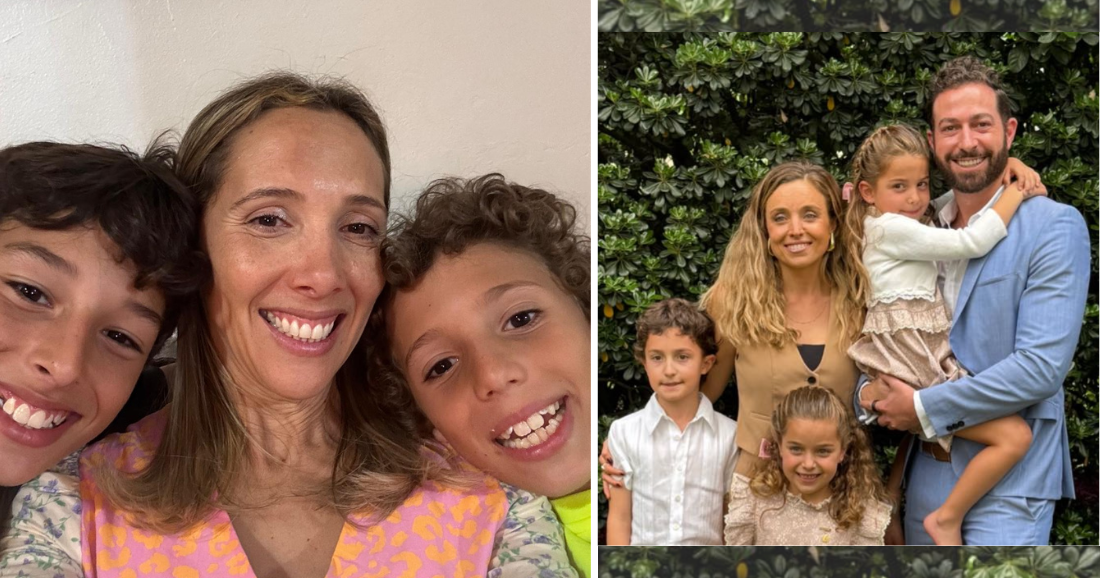
In classrooms across Key Biscayne, motherhood starts at home but doesn’t end there, it’s ingrained into the very fabric of local education.
For Laudy Ibarra, one of Key Biscayne’s most known (and loved) teachers, the line between teaching and parenting has almost never been existent. As a fifth-grade teacher and now mother of two, Ibarra has always been passionate about children.
“I always knew this is what I wanted to do,” she said. “I started babysitting when I was 12 and have wanted to work with kids since I was little.”
Since Ibarra earned her Bachelor’s in education at La Universidad Catolica Andres Bello in Caracas, Venezuela, she has spent years getting to nurture not only her own children, but also generations of students she treats “as if they were my own.”
She laughs as she describes her classroom dynamic.
“I scold them the same and I love them the same too,” she said.
That motherly instinct extends far beyond school walls. Her home has become what she calls “la casa del pueblo,” a place where children from the neighborhood feel they can come and go freely. “I have much more than two kids,” she says. “They come from everywhere.”
Ibarra kept up this purpose even through the pandemic, acting as one of the leaders of small learning groups for local families, so kids could feel both connected and supported during that time.
For Ibarra, motherhood has been a catalyst for her teaching style, but in subtly powerful ways. “Once you teach after becoming a mother, you start to handle situations more like a mother would,” deepening empathy and having more patience in the classroom.
Naturally, this approach invites children to feel even safer and closer with her, which she says happens quite often in her classroom.
“They come in early and sit beside me for what they call ‘confessions with Miss Ibarra,’” she said.
Across the island at the Key Biscayne K-8 Center, Luz García brings a completely different, but just as maternal, approach to education.
As the ESE (Exceptional Student Education) coordinator and mother of three kids, García works with a variety of students across different grade levels who deal with learning and developmental challenges. Her role is hyper-individualized, adapting lessons to students, supporting them in class, and guiding families toward understanding their children’s uniquely valuable needs.
Though she works with many students, like Ibarra, García finds that her connection to her students is deeply personal. “It’s like a community, like a giant family,” she says. “Some of my students tell me, ‘You’re like my second mom.’”
García has been purpose-driven throughout her career, seeking out the studies of psychology and later education to find their overlaps, and now finding herself working in that unique overlap. But her perspective as a parent now informs everything she does.
“When you live it from the side of being a mom, you understand the challenges at home,” she says.
Her experiences at home help her guide both students and their parents–especially in situations that require setting boundaries, building sustainable routines, and advocating for students who may otherwise go unnoticed.
“It’s not that they don’t want to learn,” she says. “It’s that they need the right tools.”
Both Ibarra and García feel encouraged by Key Biscayne’s close-knit nature, which they consider essential to their work and role in the community.
Here on the island, teachers are not just educators–they are neighbors, mentors, friends, and constant figures in their students’ lives.
In the words of García: “it truly does take a village.”