
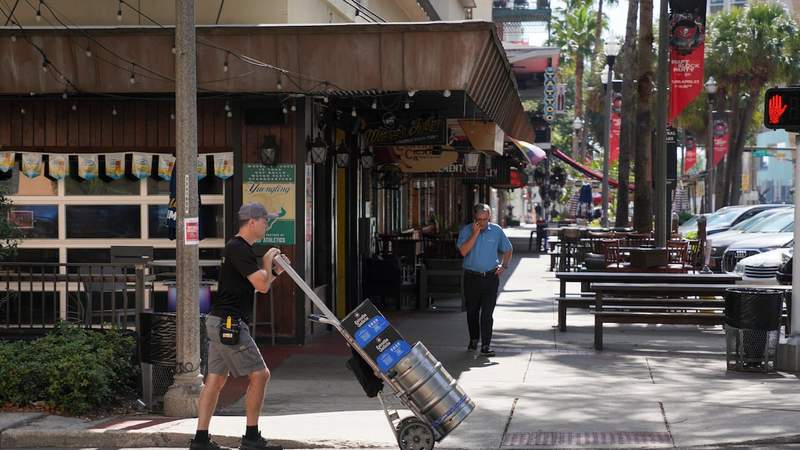
Seventy-five miles, 90 driving minutes and two counties separate downtown St. Petersburg and Arcadia, a city of around 8,000 deep in the state’s rural interior.
Welcome to the new District 16, one sprawling puzzle piece of Florida’s new congressional map, which Gov. Ron DeSantis signed into law last week. Expected to expand Republicans’ electoral advantage, it means a single U.S. representative must try to balance the interests of this area with vastly different needs.
Before the overhaul, Tampa Bay’s five congressional districts covered the greater region’s seven counties, from Citrus County in the north to Manatee in the south.
District 16 now goes much further. Its next leader will serve a chunk of Florida’s fifth-largest city, barrier islands in Pinellas and Manatee counties, growing suburbs like Parrish, and an inland swath filled with cow pastures that stretches into DeSoto, Hardee and Polk counties.
Before the redraw, the district included southeast Hillsborough and all of Manatee County, two hubs of fast-growing suburban expansion in Tampa Bay. Southeast Hillsborough got redrawn into District 14 alongside South Tampa, making Democratic Rep. Kathy Castor’s seat red-leaning.
To explore the reworked district’s competing priorities and lifestyles, the Tampa Bay Times drove a slice of the new District 16 this month, from downtown St. Petersburg, to Bradenton and Palmetto, to Arcadia and Wauchula — more than an hour east.
With stops for interviews, gas and lunch, the trip took about 11 hours. It covered only a fraction of the district’s 2,700 square miles.
Some in the district are adamant that the issues in a place like Wauchula — a proud hub for cucumbers and citrus — are very different from those in St. Petersburg.
“I don’t have anything in common with those rural areas that are nowhere near the water,” said St. Petersburg City Council member Richie Floyd.
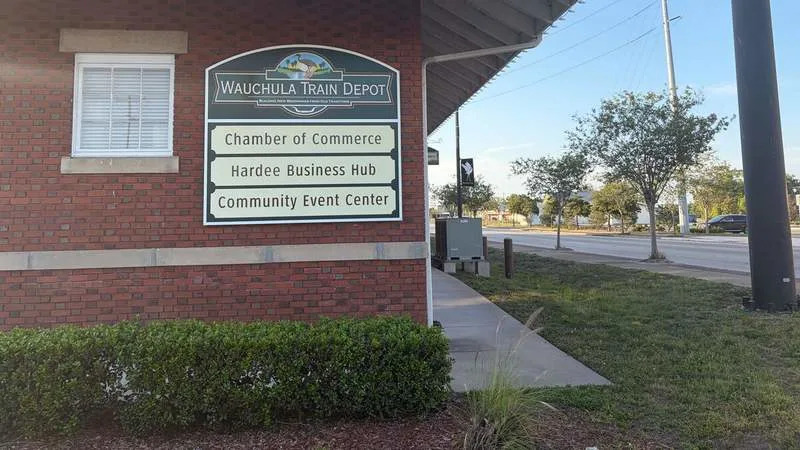
Wauchula native Tim Bryant paused before naming one similarity between his hometown and a place like southern Pinellas County.
“Both have human beings in them,” he said.
“It’s night and day.”
City living in downtown St. Petersburg
A strip of downtown St. Petersburg’s Central Avenue, surrounded by high-rises and home to bars with pride flags and $15 cocktails, hummed with life on a recent Friday morning. People zipped by on Lime scooters amid the beeps of delivery trucks backing into parking garages. Three men greeted the morning with tobacco smoke outside the aptly named Central Cigars.
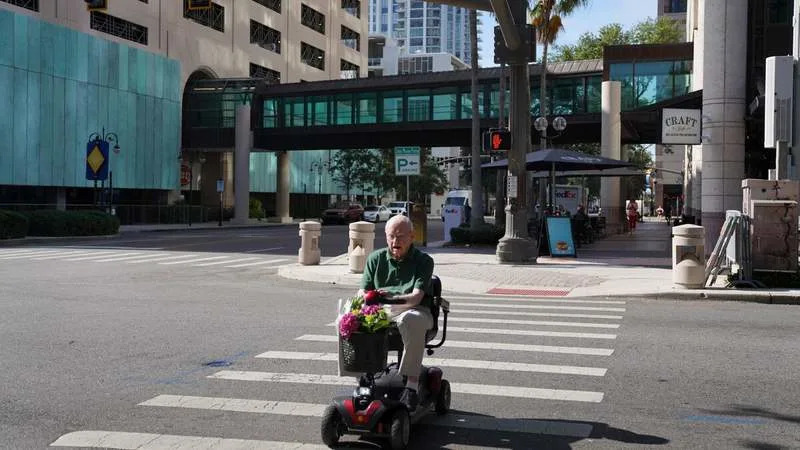
St. Petersburg, a hub of Democratic votes in Tampa Bay, was already split in two, Floyd noted. Before, the line ran east-west. Now it’s split north-south between districts 13 and 16. The new boundaries also steer many of St. Petersburg’s Black voters into 16.
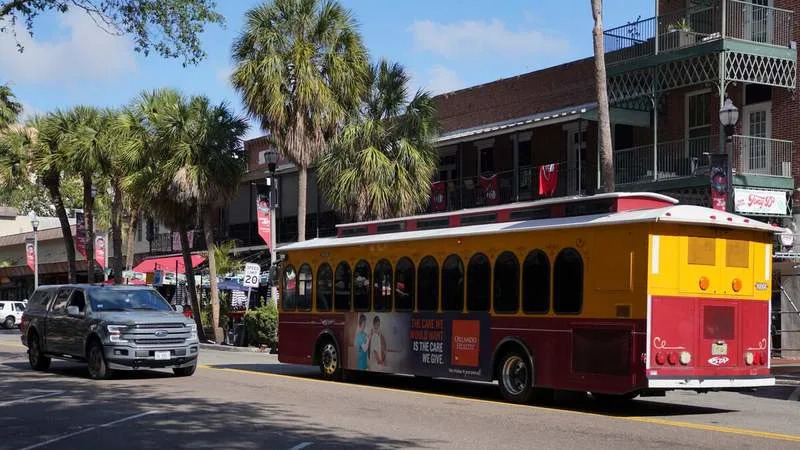
Floyd ticked off issues unique to St. Petersburg. Residents crave public transit and bike lanes, he said. The roads can’t get much wider. Most of the city has been built up, so the city is engaged in redevelopment, which has different rules compared to the brand-new suburbs shooting up in Manatee.
None of the candidates vying to represent District 16 live in Pinellas. Sydney Gruters, the Republican with President Donald Trump’s endorsement, lives in Sarasota County, which is partially in the district.
Candidates have less than six weeks to qualify for the ballot. Floyd said that time crunch could prevent a Pinellas candidate from stepping in.
Whoever represents the district, “I’m going to make sure that that individual is held accountable and that St. Petersburg has a strong voice in D.C.,” state Sen. Nick DiCeglie, a St. Petersburg Republican, told the Times.
Lawsuits against the new map note how Tampa Bay’s blue cities have been sliced across districts. Tampa would be represented by three members of Congress. Florida’s constitution, meanwhile, requires the state to prioritize keeping communities together where possible when drawing district maps.
Suburbia in South Bradenton
Next on the journey: a strip mall south of downtown Bradenton, which ranked No. 2 among U.S. cities for net growth in 2021. Signs of rapid development were everywhere, marked by mounds of dirt, cleared lots and the skeleton frames of apartment complexes.
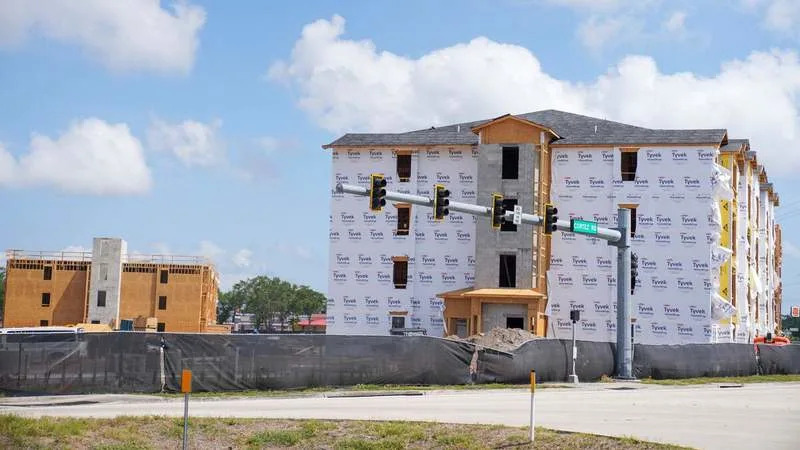
The Manatee County Democratic Party has office space inthis strip mall off a busy four-lane road, home to salons, a gelato shop and a mini-mart.
Republicans outnumber Democrats in Manatee by a more than 2-to-1 ratio among active registered voters. The Manatee County Commission is entirely GOP, and Rep. Vern Buchanan trounced his Democratic opponent in District 16 by nearly 20 points.
The new district, with Democratic St. Pete votes included, is slightly less red — though it still would have gone for Trump by almost 14 points in 2024.
Christine Kennedy Meier, chairperson for the Manatee Democrats, tried to assuage the concerns of Pinellas voters who are frustrated they’ve been grouped with Manatee.
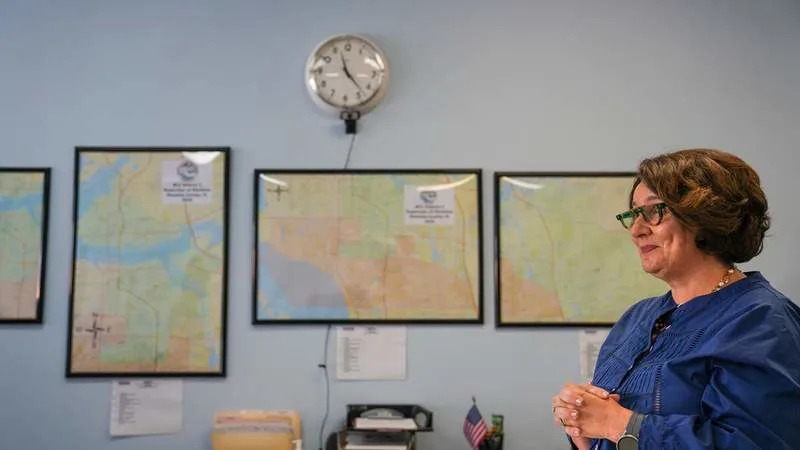
The county “is full of really good people, and we’re cooler than they think,” Meier said. “We’re happy to share a representative with them, because it brings more diversity to our political discourse, and it brings more interesting ideas.”
The areas have plenty in common, Meier said: hurricane threats, skyrocketing rents and gas prices surging to $4.50 per gallon.
Retirement haven in Palmetto
The area around Terra Ceia Bay Country Club is a classic coastal retirement haven. Residents in waterfront condos can catch a balmy breeze, while others, mostly retirees, lope around a tranquil golf course.
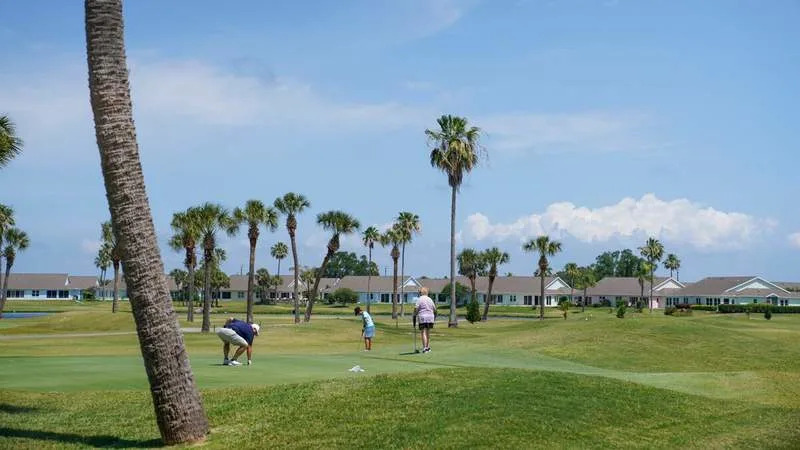
Inside was a luncheon hosted by the Women of Manatee County Republican Club. Not everyone was cheering on state Republicans’ redistricting plan.
Kevin Wright, southwest region director for the Republican Liberty Caucus of Florida, argued the map was designed for partisan gain. That undermines the intent of the Fair Districts Amendment, he said.
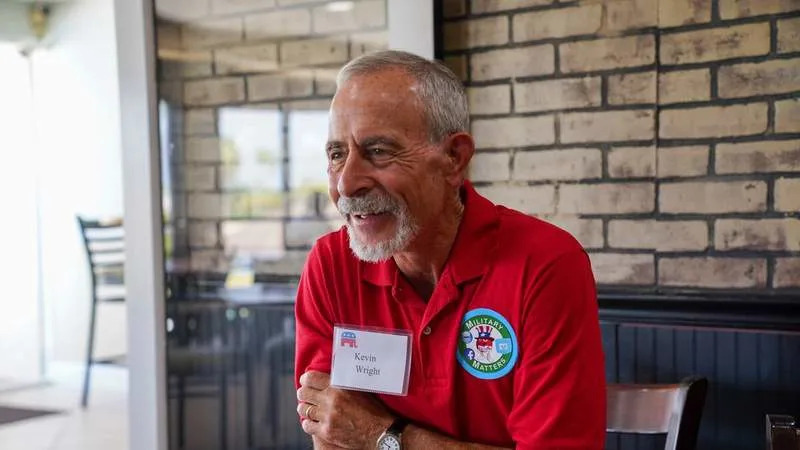
“As a principled Republican … I’m sorry. I can’t make my mouth say, ‘Hey, this is great news, a good thing,’” Wright said. “I think a lot of Republicans going into this were really thinking, ‘Why are we messing with this at all?’”
The new district may look compact, Wright said. But he said he’s sympathetic to people in St. Petersburg wondering what priorities they have in common with small towns more than an hour east.
Pasture land around Arcadia
State Road 70, like many east-west roads running through Tampa Bay, shows the extent of the region’s sprawl. It cuts through parts of Lakewood Ranch, a master-planned suburban community in Manatee with thousands more homes planned. County officials have sparred over how quickly those subdivisions should go up, given past flooding from hurricanes.
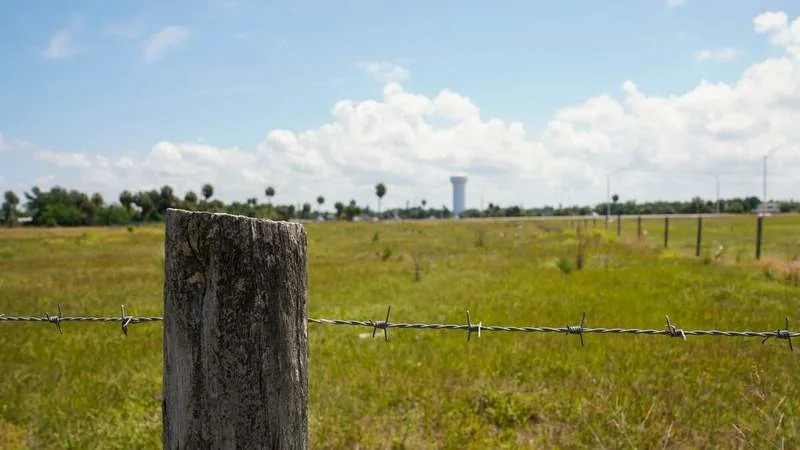
Development is marching inland, even as some residents of the state’s rural interior wish it wouldn’t. But much of District 16 still looks like Old Florida.
Along the drive east, first came the hallmarks of an up-and-coming bedroom community: a freshly built strip mall with a huge Publix, next to luxury apartment communities a parking lot away. The roadway is undergoing a mileslong widening project.
Then the gated subdivisions became more sparse, separated by thickets of pines, until signs of suburban development faded about 50 minutes from St. Petersburg. Off the main road, horses trotted across open pastures. Cicadas trilled.
Arcadia was still 28 miles away.
Downtown Arcadia had little foot traffic on a Friday afternoon. Historic storefronts sat empty as mating lovebugs blanketed the air. One vacant shop window had “Happy Birthday” etched into a layer of dust.
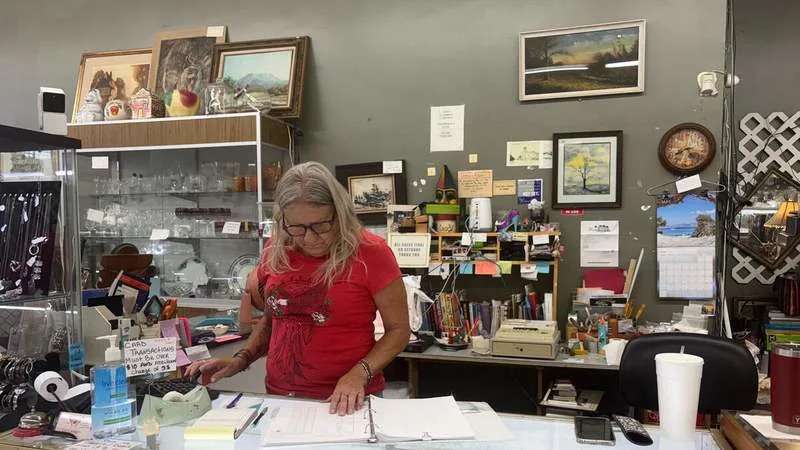
Carolyn Strong worked the register at Cory’s Antiques, grousing about how slow the day had been. Drainage work on the main drag is deterring visitors, she said.
Strong moved to a mobile home park in Arcadia five years ago from Colorado. The retiree said her monthly rent keeps going up. At neighboring parks, she said, her friends have been priced out after corporate owners jacked up the rents. Strong said she’s considering leaving Florida altogether.
Arcadia and Wauchula, the largest cities in ruby-red DeSoto and Hardee counties, previously belonged to a largely rural inland district that spanned eight counties. Now that swath of the state, a hub for cattle ranching, agriculture and phosphate mining, has been split into three. Their interests, too, risk being crowded out in a district that’s anchored 50 miles away.
Strong said she’s a Republican and a Trump supporter. But still, she said, the new district she’s in seems “kind of weird.”
Strong has only visited St. Petersburg once, to pick up some friends from the airport. She remembers sitting in bumper-to-bumper traffic.
“It was a nightmare,” she said with a laugh. “I’m from Arcadia, I’m not used to all this s—.”
Times/Herald staff writer Lawrence Mower contributed to this report.