
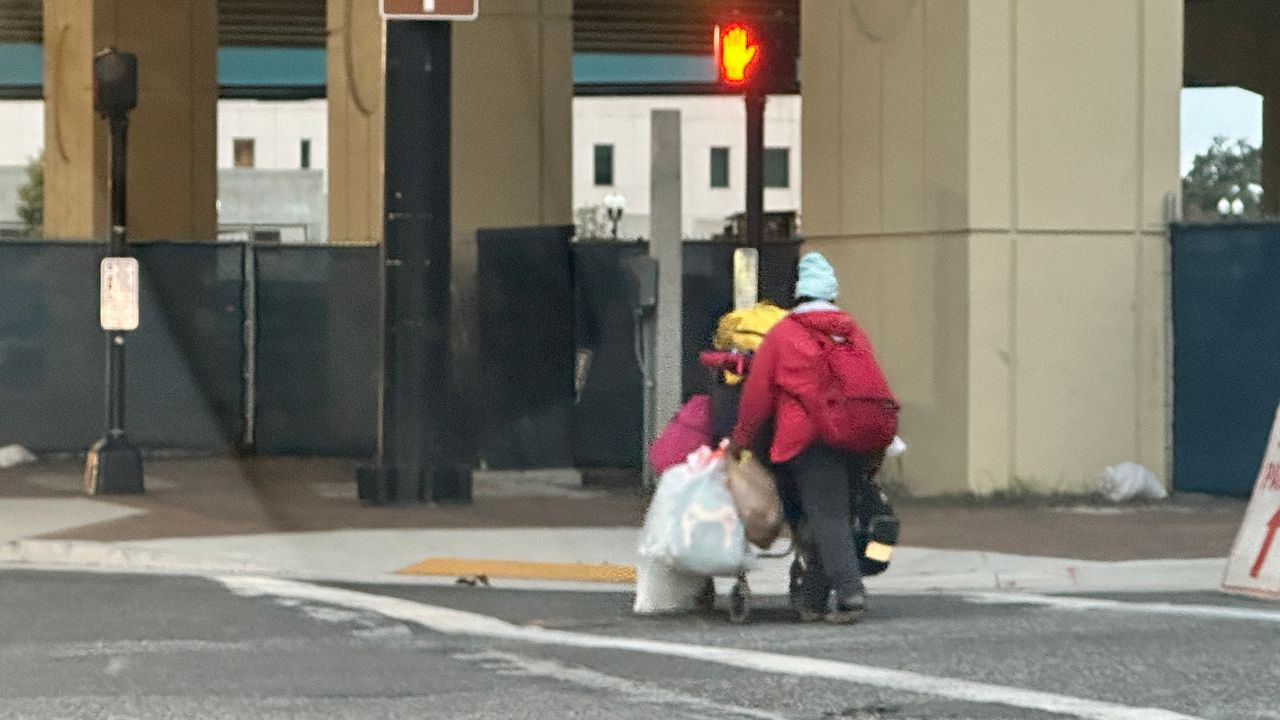
ORLANDO, Fla. — For the second consecutive year, the population of people experiencing homelessness has not increased, according to the 2026 Homeless Services Network’s annual point-in-time count in Orange, Osceola and Seminole counties.
However, the demographics of the homeless population are changing, and many of the unsheltered are spreading out to suburban areas and also areas north, south, east and west of downtown Orlando, the report said.
From 2022 through 2024, the numbers had been on a steady path forward, jumping from 2,151 total people counted in that year to 2,258 people in 2023. In 2024, the number rose again, by more than 500 people. But in 2025, the numbers dropped by 50 people, and this year, the numbers hit a stalemate, with only two fewer people counted in 2026 compared to last year. Orange and Osceola counties saw slight increases, but Seminole’s homeless population declined by 17% from a year earlier.
BOTTOM OF PAGE: Read the State of Homelessness report (PDF)
Martha Are, Homeless Services Network of Central Florida chief executive officer, said that the work is far from over but it is also clear that efforts to get more people housed are working.
“There’s no doubt that these partners and these agencies and organizations and their work and our work with them has absolutely helped keep the numbers from spiking the way that they could have otherwise,” Are said.
More of the results from the count indicate that the total number of people experiencing homelessness in the tri-county area has not risen, but the number of people experiencing homelessness for the first time has. When asked how that’s possible, officials said it’s because more beds and housing opportunities have been provided.
While people who have been experiencing homelessness for a while are now transitioning into housing options or shelters, there are people who have not experienced homelessness prior to this count. However, Are said that the housing market in Orlando is not great and with the cost of living consistently on the rise, personal failures don’t contribute to the numbers as much as housing and affordability have in recent years.
“Our housing market is incredibly tough,” Are said. “The National Low-Income Housing Coalition just produced a report a month or so ago, and listed the Orlando area, and the Las Vegas area as having the worst housing markets in the country for extremely low-income households,” she continued. “We only have 13 units for every 100 extremely low-income households.”
Other trends suggest that women, seniors and children are being largely affected by homelessness at this time. More than a quarter of the people counted who are unhoused are women, Are said, most sleeping in their cars. One in five of those women reported being domestic violence victims, and many of them reported physical disabilities, she said.
“We know that seniors in the 55-and-older and the 65-and-older populations are probably one of the fastest growing sub-populations in the homeless community across the country, but we’re definitely seeing it here,” Are added.
More than 700 people included in the count were seniors 55 and older, and 449 children under the age of 18 were counted this year, making up about 16% of the total number of people experiencing homelessness, Are said.
Rollins College business professor Mark Johnston shed light on the affordability concerns in Central Florida, reiterating some of the points made by Are. Although progress is being made with access to shelters and additional beds, rising costs still contribute largely to the new people counted, he said.
“While we have seen rates drop slightly in Orlando compared to where they were two or three years ago, they’re still quite high,” Johnston said. “The opposite part of that is that people’s incomes haven’t necessarily gone up.”
Previous point-in-time count results can be found on the HSN of Central Florida website.