
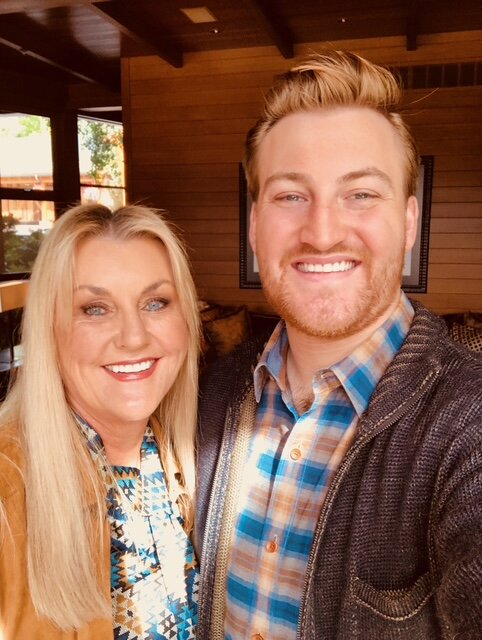
CLAY COUNTY—At 27 years old, Wyatt Wheeler had everything to live for. A student at Texas Christian University, he was preparing for his final semester of business school.
He was genuine. Kind. Caring. And full of life — with much more to live. But that all ended abruptly in 2022, when Patti Wheeler said her son lost his life to what she calls the “liquid killer.”
It’s called Kratom. A leafy plant derived from southeast Asia that can produce opioid and stimulant-like effects, often leading to addiction.
It’s widely unknown with only 19% of U.S. adults familiar with the substance, according to the American Psychiatric Association (APA). Patti said Wyatt took it as an over-the-counter supplement. While on vacation with him, she discovered it.
Eighteen days later, he was dead.
The 2023 National Survey on Drug Use & Health estimates that kratom has 1.6 million annual users in the U.S. And the National Drug Early Warning System reported that, between January 2023 and April 2025, there were more than 4,200 EMS encounters with kratom overdoses.
Once processed, it’s in powder form. However, it could be pressed into a tablet, chewed, brewed or added to a liquid.According to Mayo Clinic, in low doses, the herbal substance acts as a stimulant. At higher doses, it tends to become a sedative, often helping reduce pain and anxiety.
Wyatt had been taking it as a concentrate to help subside his drinking.
“He thought [it] was all natural and really did not realize that it had any kind of harmful effects. It didn’t have any kind of dosage. There was no warning, nothing on the label to indicate that it was something that would take his life.”
Although kratom has been noted by the U.S. Drug Enforcement Administration as “one of concern” and the U.S. Food and Drug Administration has warned of its dangers, according to the Mayo Clinic, the product still remains stocked on the shelves of gas stations and vape stores with no clear labeling. She said this leads to improper dosing.
And despite long-standing reports of opioid activity, according to the APA, it remains widely accessible and restrictive enforcement has been inconsistent.
While concentrated 7-hydroxymitragynine, a natural alkaloid in kratom, is banned in Florida, kratom remains legal for adults 21 and older. Sarasota County is the only in Florida with a kratom ban.
“They don’t belong in a gas station. We should not be putting our gas station store operators in pharmaceutical lab coats, and we should not be managing other people’s addictions.”
Patti said Wyatt began using kratom powder around 2015, before switching to concentrate.
“Things have accelerated at such a rapid pace and that’s why I say we are in such a crisis a very big crisis in our country, because the addiction rate and the demand for higher dosing is doubling and tripling right in front of our face.
“I want them to be able to understand what Wyatt didn’t know when he started taking the concentrate,” she said. “He had no way of knowing that it was 50 to 100 times more powerful than powder. “
Patti said she is making it her mission to make sure others are aware of the potent substance and its consequences. A Beautiful Life Stolen, a foundation she began in Wyatt’s honor, aims to raise public awareness of kratom’s risks, provide support to those who’ve lost a loved one, champion legislation and demand rigorous FDA research.
“Kratom: Side Effects May Include” is also set to show at the historic Ritz Theatre in Jacksonville on Saturday, May 16, at 6 p.m. Produced by Patti, the documentary aims to put names and faces to the dangerous effects associated with kratom. Patti said that she wanted to channel her grief into something that helps others avoid the same heartbreak she faced.
“We hope that this is the conversation that continues forward once the screen goes dark. We want that conversation to definitely continue with everybody.
Wyatt, she said, was a kind soul whose life was taken way too soon. And she’s committed to make sure others don’t fall into the same fate.
“Family should not find out after something has come to market that it isn’t safe, and they have to find out their loved one died of something that they bought in a gas station.”