
Broward could undergo its most dramatic round of school closings next year, with more than 10 schools possibly shutting down in 2027, Superintendent Howard Hepburn said.
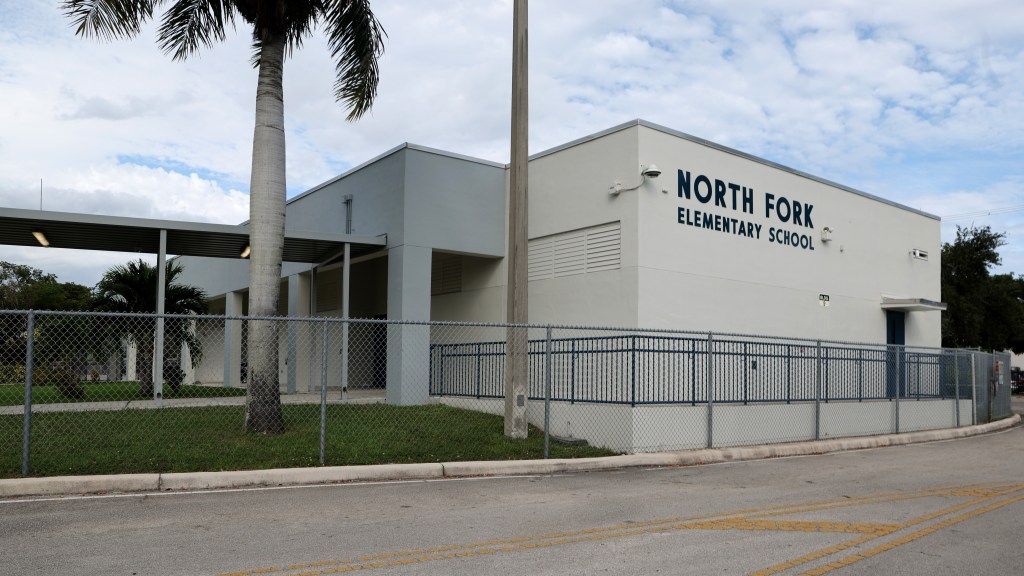
That would be more school closures than the past two years combined. The district shut down one school in 2025, Broward Estates Elementary in Lauderhill, with six more set to close after the school year ends in June, including North Fork Elementary in Fort Lauderdale, Panther Run Elementary in Pembroke Pines and Plantation Middle.
The district also could be in for other major changes in the coming years, including the opening of a few new schools to replace multiple decaying, underenrolled schools. A big change planned for this fall is an overhaul of the four Nova schools, using an artificial intelligence curriculum to return schools to their roots as places for cutting-edge learning.
The efforts are all part of Year 3 of the district’s “Redefining Broward County Public Schools” initiative to deal with 15 years of declining enrollment that has left the district with more than 50,000 empty seats in schools.
The district’s enrollment declines started with the explosion of charter schools but are now mostly attributed to declining birth rates, the growth of private school vouchers and immigration issues, officials have said.
The district hasn’t revealed which schools might close next year. Hepburn was asked at a workshop on Tuesday how many closures he might recommend.
“I don’t want to scare the public, but I would say definitely above 10,” he told the board.
In addition to school closures, the effort also has led to converting schools into K-8 or 6-12 models and changing the focus of some schools to try to win back families.
The School Board is expected to start reviewing the latest options in July with final recommendations expected to be approved by December. Most changes would start taking effect in the 2027-28 school year.
Valerie Wanza, chief strategy and innovation officer, told the South Florida Sun Sentinel that the district plans to get plenty of public feedback, but the method will be modified this year, with possibly fewer meetings than in the past.
“We had 13 meetings at schools, and we’d like to bring that to more of a regional approach, but still realizing that we do have to have a broad community conversation as well,” she said.
A district boundary advisory committee, which reviews the school closures and recommends attendance zones for affected students, also will be pared down.
Last year, the district had a committee of about 60 people, including multiple representatives from every school that was facing closure, reconfiguration, or a boundary change. Wanza recommended, and the School Board accepted, forming a 17-member committee, consisting of appointees from the School Board, superintendent and area advisory groups.
“It truly takes out the emotion,” Wanza said. “No one wants their school to close.”
Some Broward School Board members voiced fatigue about the district’s efforts to close schools and questioned whether this needs to continue to be an annual exercise.
“We can’t keep closing schools every year,” Board member Rebecca Thompson said. “I’d like to wrap this up this year so that people can heal and see our great work coming to fruition.”
Hepburn told the board the district is in the process of securing a consultant for a long-range master planner to look at enrollment projections, development and other factors to help the district develop a long-term strategy.
That could involve identifying areas where several decaying and underenrolled schools could be closed and replaced by one new facility to serve area students.
“The master planner may say, ‘Hey, you guys have closed this school and consolidated, but this school (where students moved) is so old and needs tens of millions of dollars of renovations,’” Hepburn said. “We’re going to be very strategic about what we bring forward.”
Board member Jeff Holness said he’d like to see a greater focus on trying to recruit students now attending elite private schools by creating more academically rigorous high schools that students could apply to get into.
“I am growing increasingly tired of looking at closing schools, reacting to student declines, and I’m also growing impatient and am not fully convinced that we have a robust plan to increase enrollment,” Holness said at Tuesday’s workshop. “I want us to put an equal or greater attention to how can we increase student enrollment, and I believe we are not doing enough.”
District administrators say they are closing and improving schools simultaneously. Last year, the district converted the underenrolled Pines Middle into a 6-12 collegiate campus. This year, Hallandale High will switch to a more academically rigorous four-day-a-week schedule modeled after the high-performing Pompano Beach High.
And district officials have new plans for the Nova campuses in Davie, which were at one time so popular that parents were signing their newborns to a waiting list to get in.
The four schools — Nova High, Nova Middle, Nova Blanch Forman and Nova Eisenhower — started in the 1960s with a grant from the Ford Foundation. The schools focused on research and innovative instruction models, including team teaching and combined classroms and grade levels.
But as grant money dried up, the schools started offering the same curriculum as most other schools but still required families to apply to get in. It’s led to some criticism in public meetings that the district shouldn’t be paying to bus students from all over the county to a school that is similar to other high schools.
Wanza said the school remains popular and has a waiting list for some grades.
“The one thing that we know about Nova is that it has never lost its mystique,” Wanza told the School Board. “It has never lost its claim to being the Harvard of the South. But we really want to look at rebranding that school back to its original purpose around innovation and cutting-edge research.”
The focus will be on research and technology, particularly artificial intelligence, Wanza said. She said the schools’ proximity to Broward College, Florida Atlantic University’s Davie campus, Nova Southeastern University and a University of Florida extension office make it a great location for the concept.
“The intent is to implement a nationally recognized, scalable K-12 model that really integrates immersive technology and workforce pathways,” she said. “We’ll look at having some true industry partnerships, but more importantly, continuous teacher innovation in a future-ready system.”
The program, which is expected to begin this fall, creates a great opportunity for the district, School Board member Debbi Hixon said at Tuesday’s meeting.
“I’ve been pushing this, and am really happy to see that it’s moving forward, ” she said. “There’s I think going to be some fantastic business partners. There are people very excited about the AI. Not just because we’re using AI, but how we can train our students to be workers in an AI world.”
School Board members say another idea to win back students is to use savings from school closures to ensure every elementary school has music, art and a full functioning library. Some of these have been cut at smaller schools.
“This would fundamentally change the brand of Broward County Public Schools,” Board member Allen Zeman said at a Tuesday workshop. “The perception of schools is far lower than the actual value we deliver.”