
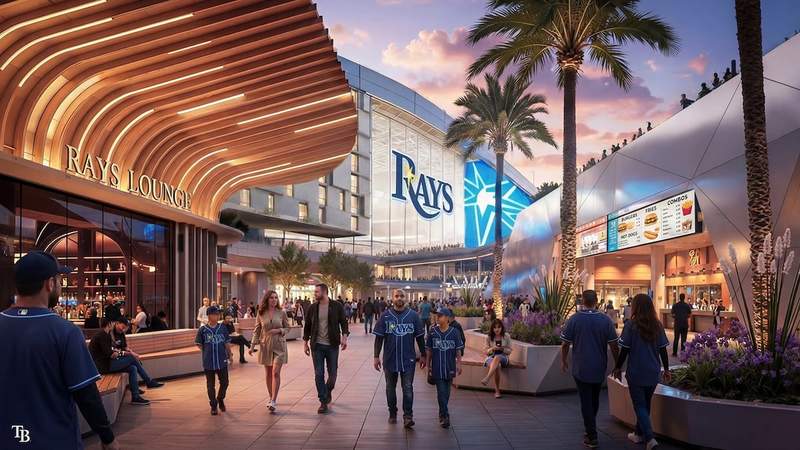
Let me start by saying this Tampa Bay Rays deal is not like the Buccaneers deal in the 1990s. Back then, the Bucs owners did not contribute one penny toward the original construction of Raymond James Stadium. That deal was also only for the construction of a stadium, which has limited activation year-round. Even though it’s one of the most successful NFL stadiums in the country, most days it sits underused, surrounded by empty parking lots with very little adjacent economic activity.
Taxpayers also financed all of the original construction of George M. Steinbrenner Field, which serves as the spring training home of the New York Yankees. We love the organization, but as a standalone spring training facility, it has limited activation year-round.
Downtown Tampa’s Benchmark Arena was funded through a partnership between the city of Tampa and the Tampa Bay Lightning ownership group. The city contributed approximately $84 million toward construction, while ownership contributed roughly $53 million. Today, the arena hosts more than 40 home hockey games each year, along with concerts, graduations and major events that bring hundreds of thousands of people downtown annually.
None of this is meant to diminish the contributions of any of these public facilities. Each of them contributes to the economy, quality of life, and the fabric of our community. I simply wanted to put this Tampa Bay Rays deal in perspective alongside the other three.
What Hillsborough County, the city of Tampa, and the Rays organization have agreed to is an expansion of that successful public-private model to an entirely new level.
The Rays ownership group is projected to contribute approximately 58% towards the $2.3 billion project and will also be responsible for all cost overruns. The public contribution is projected at roughly $976 million, or about 42%.
From Tampa’s perspective, we are being asked to contribute approximately $80 million directly from the city, about 3.5% of the total project cost. Another $100 million would come from community redevelopment area revenues generated by the stadium district and the associated 120 acres of redevelopment. In other words, revenue that would not exist without the approval of the project itself.
The city’s $80 million investment is primarily for infrastructure: sidewalks, bike lanes, water lines, sewer improvements, and other public upgrades. It transforms 120 acres of asphalt, aging buildings and largely underused property into a vibrant, high-energy neighborhood with diverse businesses, a brand new urban-style college campus, housing, entertainment, and of course, a baseball stadium. Our $80 million investment will contribute to a return of up to $75 billion — that’s billion with a B — in direct and indirect economic impact and nearly 10,000 new jobs paying an average of over $80,000 a year.
Honestly, I think I’m most excited about the college component. I love urban colleges and universities. When Hillsborough College is rebuilt, I believe it will become one of the most desirable higher-education and workforce-training environments in the region. I can absolutely envision a future where Drew Park evolves into a thriving mixed-use neighborhood filled with apartments, condominiums, homes, restaurants and businesses supporting both the college and the surrounding development generated by this transformational project.
On top of all that, this level of density and year-round activation finally creates the opportunity to better connect the stadium district with the airport, Westshore, Midtown, the University of Tampa, and downtown through meaningful transit options.
I understand people are skeptical. We’ve been burned before. But this is not the same kind of deal.
This ownership group is paying a substantial share. They are committing to a community benefits agreement that will support programs and needs that are currently underfunded throughout our community. The project is projected to create tens of thousands of jobs and generate new tax revenues that can help improve parks, roads, infrastructure and future transit opportunities.
Change can be difficult, but if you look at the project structure and the financial breakdown, you’ll see this is not another “stadium deal.”
This is a city building deal.
Alan Clendenin is the chair of the Tampa City Council. He is a retired air traffic control professional who was elected citywide to the council in 2023.