
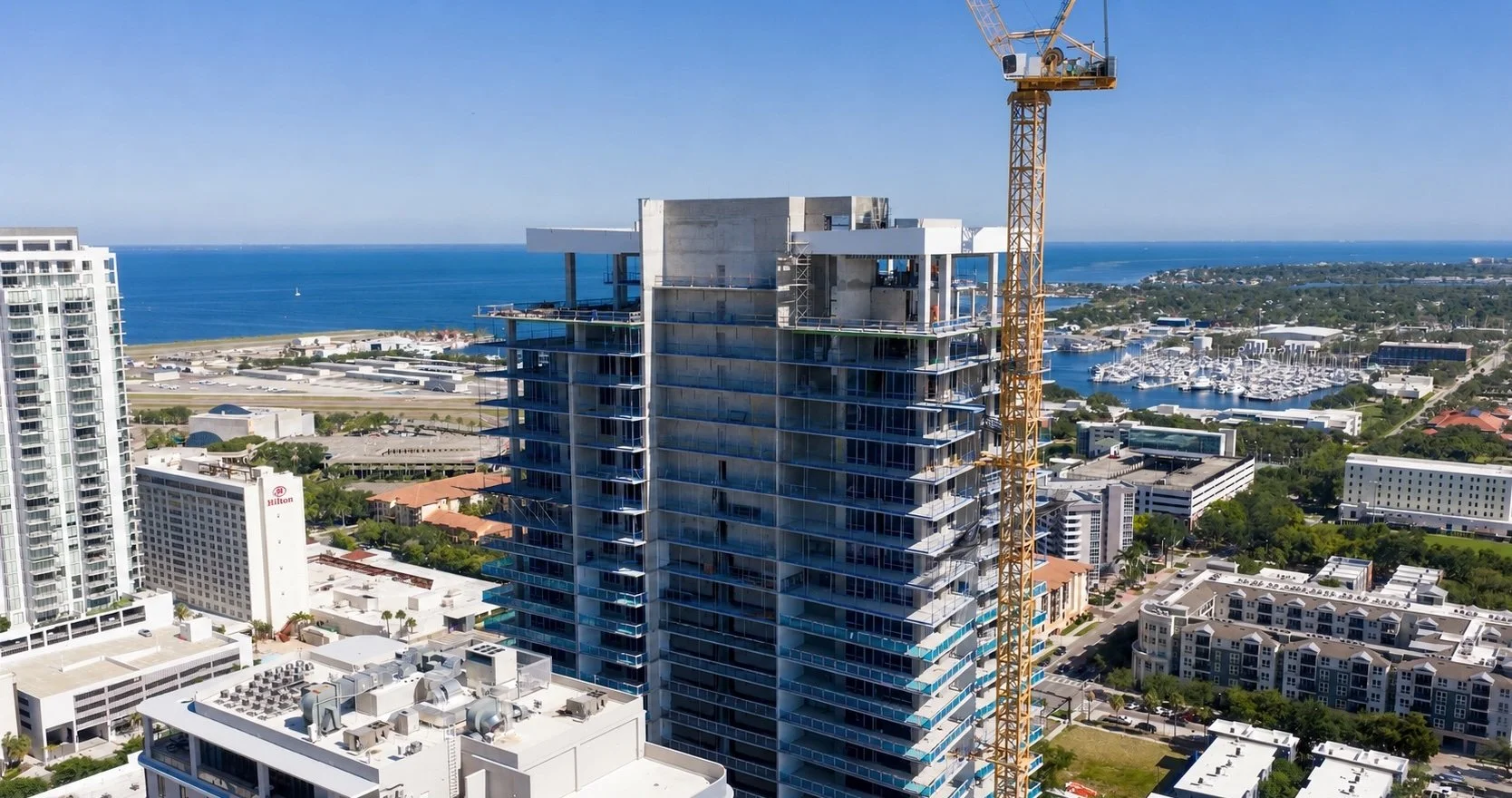
Councilmember Gina Driscoll, who originally requested the crane safety discussion, said the committee wanted updates not only on regulations but also on how the city plans to communicate with residents living near tower cranes during severe weather events.
“As you all know during Hurricane Milton the crane failed during high winds,” Angela Phillips, a building official with the City of St. Petersburg, said during the presentation. “Luckily nobody was hurt but it did push for more legislation for crane regulations.”
Phillips explained that Senate Bill 180, approved by the Florida Legislature after the storm, now requires hurricane preparedness plans for tower cranes and other hoisting equipment on construction sites.
The law also directed the Florida Building Commission to develop statewide crane safety best practices by the end of 2026.
However, the legislation continues to preempt local governments from imposing stricter crane regulations.
According to Phillips, the city has responded by expanding its own inspection and preparedness protocols.
Those efforts include a new crane hurricane preparedness affidavit requiring contractors and crane operators to document storm preparations with photographs and signed checklists.
Although the state statute prevents the city from mandating the affidavit, Phillips says companies have still been complying voluntarily anyway.
The city also launched updates to its “Prepare, St. Pete” emergency mapping system, which now includes crane impact zones.