Heat exhaustion and heat stroke need to be treated differently. Here’s how to tell the difference.
JACKSONVILLE, Fla. — It is heat safety week, and with temperatures ramping up, let’s go over some heat safety tips.
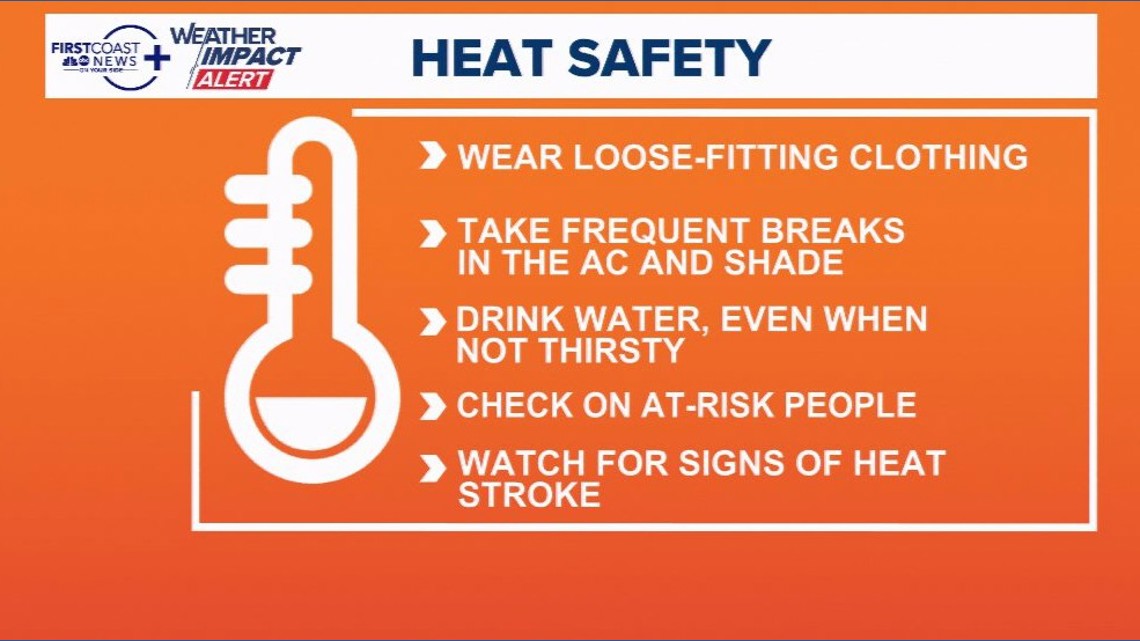
Wear loose-fitting, lightweight clothing. This will help the air circulate around your body and can help keep you cool.
Take frequent breaks from the heat – go into the AC or shade.
Make sure to drink water, lots of water, even when you’re not thirsty. Being thirsty is the first sign of dehydration. It is best to avoid alcohol and caffeine.
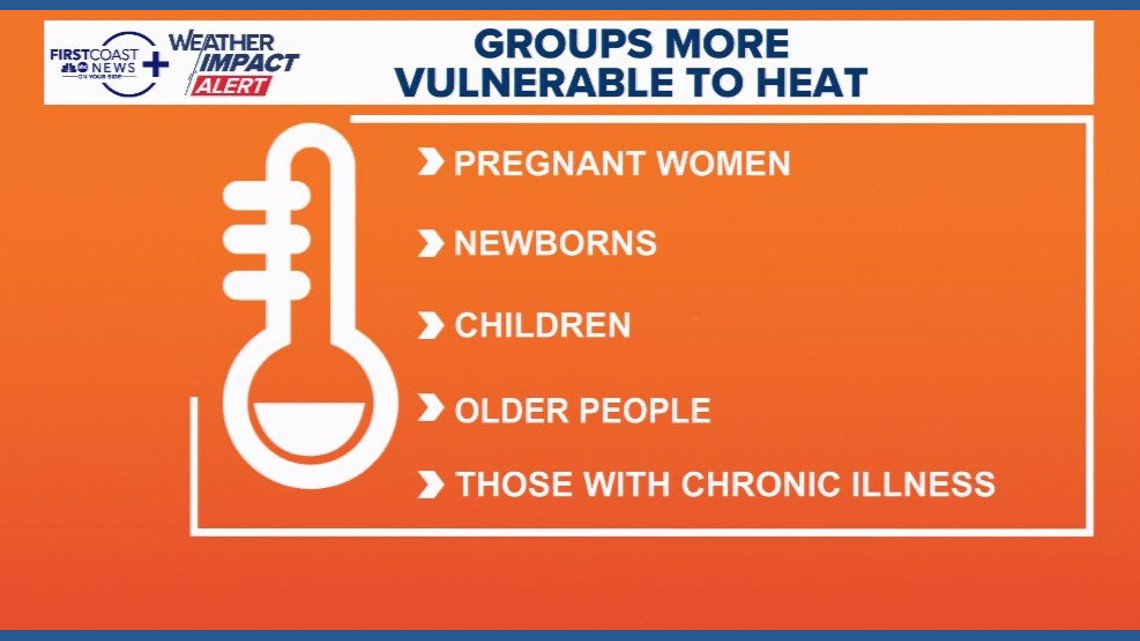
Check on at-risk people. there are some populations that are more vulnerable to the heat than others, including pregnant women, newborns, children, older people, and those with chronic illness.
Watch out for the signs of heat exhaustion and heat stroke.
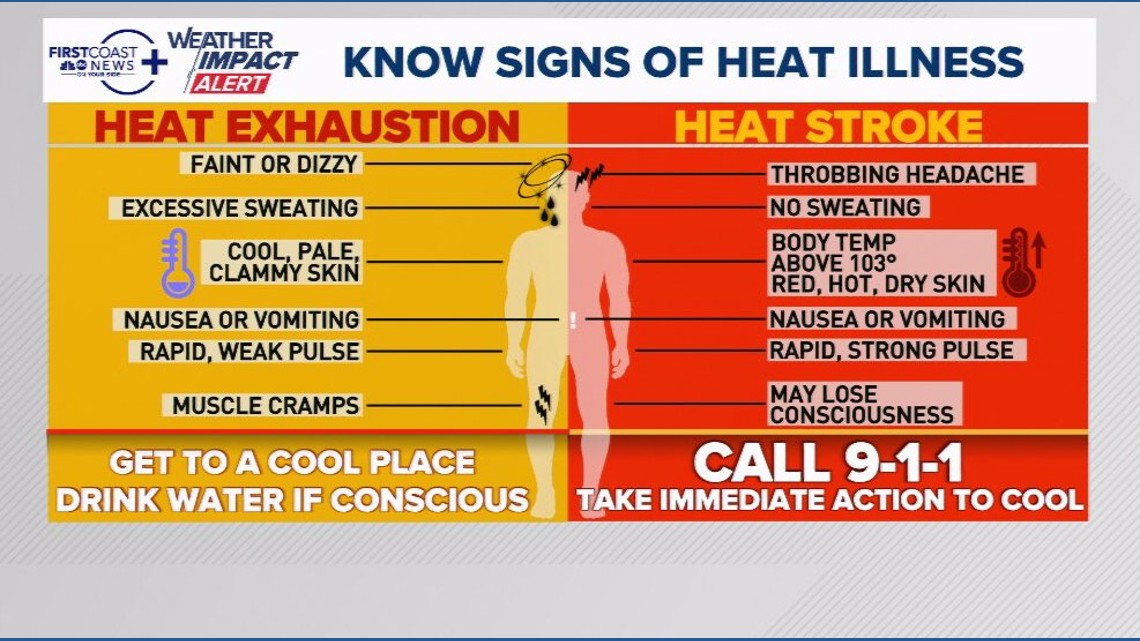
Heat stroke is more dangerous, and 9-1-1 needs to be called if you witness someone experiencing heat stroke Signs of heat stroke include a throbbing headache, lack of sweat, red, hot and dry skin, a strong pulse, and potential loss of consciousness.
Check in with the First Coast News weather team as temperatures get hotter. You can always get the latest forecast here.