
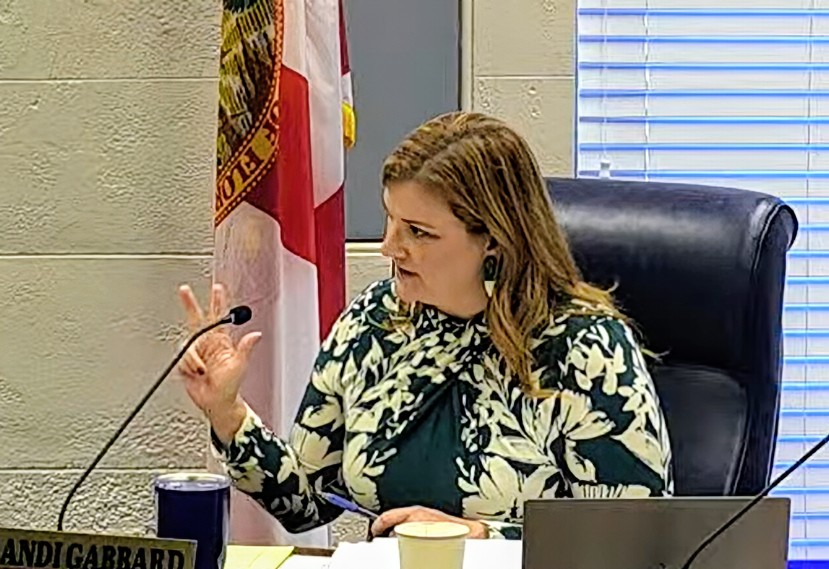
St. Petersburg City Councilmember Brandi Gabbard is rolling out what may be the most expansive policy platform yet in the city’s mayoral race, unveiling a broad vision centered on climate resilience, housing reform, infrastructure modernization and local control.
The platform reflects themes Gabbard has spent years building on City Council, but packages them into a more comprehensive governing philosophy as she positions herself against incumbent Mayor Ken Welch.
The District 2 councilmember has increasingly framed her candidacy around the idea that City Hall has become too reactive, particularly on issues like infrastructure, redevelopment and growth management.
“It’s very important that we bring back the level of collaboration and accountability we are missing in City Hall today,” Gabbard said in a previous Catalyst interview.
Now, as campaign discussions become more policy focused, Gabbard is staking out positions on everything from municipal power exploration to density, transportation safety and food insecurity.
One of the more ambitious concepts emerging from her platform is the idea of exploring municipal power, essentially studying whether St. Pete should exercise more direct control over its energy future instead of relying entirely on existing utility structures.
The proposal aligns with Gabbard’s broader focus on sustainability and resiliency, themes she has championed for years through City Council, and her role chairing the Health, Energy, Resilience and Sustainability Committee.
But the idea also raises significant financial questions. Municipal power transitions elsewhere in the country have often required major infrastructure investment and lengthy implementation periods. Questions remain about how St. Pete could realistically pursue such a shift without first increasing taxes, utility rates or both.
Still, Gabbard contends that energy is tied to affordability: “St. Petersburg residents and small businesses are currently facing some of the highest energy rates in Florida,” the platform states. “For too long, our utility structure has been designed to prioritize corporate shareholders over the people who live and work here.”
Housing policy occupies another major portion of the rollout. Gabbard leans heavily into zoning flexibility, “missing middle” housing, accessory dwelling units and transit oriented development while continuing to support removing parking minimums she argues artificially inflate construction costs.
She previously voted alongside City Council to remove parking requirements along the SunRunner corridor.
But those ideas arrive amid growing resident concerns about congestion, infrastructure strain and overdevelopment in parts of the city already experiencing rapid growth.
Gabbard’s response is essentially that density must be paired with smarter infrastructure and permitting systems. “If we are going to get to the vision of being a resilient city,” she said previously, “we need to be building up, and safely.”
The platform repeatedly references permitting reform as a cornerstone of that strategy, calling the city’s current process overly bureaucratic and too slow for both housing and resiliency projects.
Climate resilience forms another major pillar of the platform. Gabbard proposes fully implementing the city’s Resilient St. Pete Action Plan while accelerating stormwater investments, streamlining post-storm rebuilding permits and strengthening neighborhood response coordination.
“Climate vulnerability is rapidly becoming our newest housing affordability crisis,” the platform states.
The document also highlights policies she has already championed, including EV infrastructure requirements before Tallahassee preempted local authority, urban agriculture protections and sea grass mitigation efforts.
The Historic Gas Plant District remains one of the clearest dividing lines between Gabbard and Welch.
While Welch is expected to select a redevelopment proposal in June, Gabbard continues emphasizing caution, long-term stewardship and maintaining leverage over the 86-acre site, which only recently came under city control, providing a rare opportunity.
“Should we even sell the entire 86 acres?” Gabbard asks. Rather than immediately transferring the land to a master developer, Gabbard proposes exploring phased parcels, long term ground leases and city retained ownership structures.
“I have been very vocal on the need for a planning framework for the Gas Plant,” she said previously. “Before any developer is selected at this point, we must have a community led discussion and implementation plan so we can select the right developer.”
Community discussion around the site has already begun unfolding publicly. Earlier this month, Welch hosted a forum at the Coliseum, where residents heard presentations from the four finalist redevelopment teams competing for the project.
Gabbard’s platform also pushes into areas not traditionally centered in mayoral campaigns, particularly food insecurity and transportation safety.
The document frames access to healthy food as “essential infrastructure,” arguing neighborhoods in South St. Pete have long faced inequitable access to grocery stores and fresh produce. Her proposals include expanding urban agriculture, supporting community owned grocery cooperatives and integrating food access into broader planning decisions.
Meanwhile, as for transportation policy, Gabbard repeatedly cites Pinellas County’s dangerous roadway statistics while advocating for “Complete Streets” principles, protected bike lanes, and transit-oriented development.
“Not everyone has a car, and not everyone wants one,” the platform states.
Public safety proposals largely build off existing city programs, including continued support for the nationally recognized CALL initiative, which diverts certain mental health and poverty-related calls away from police officers and toward specialists.