
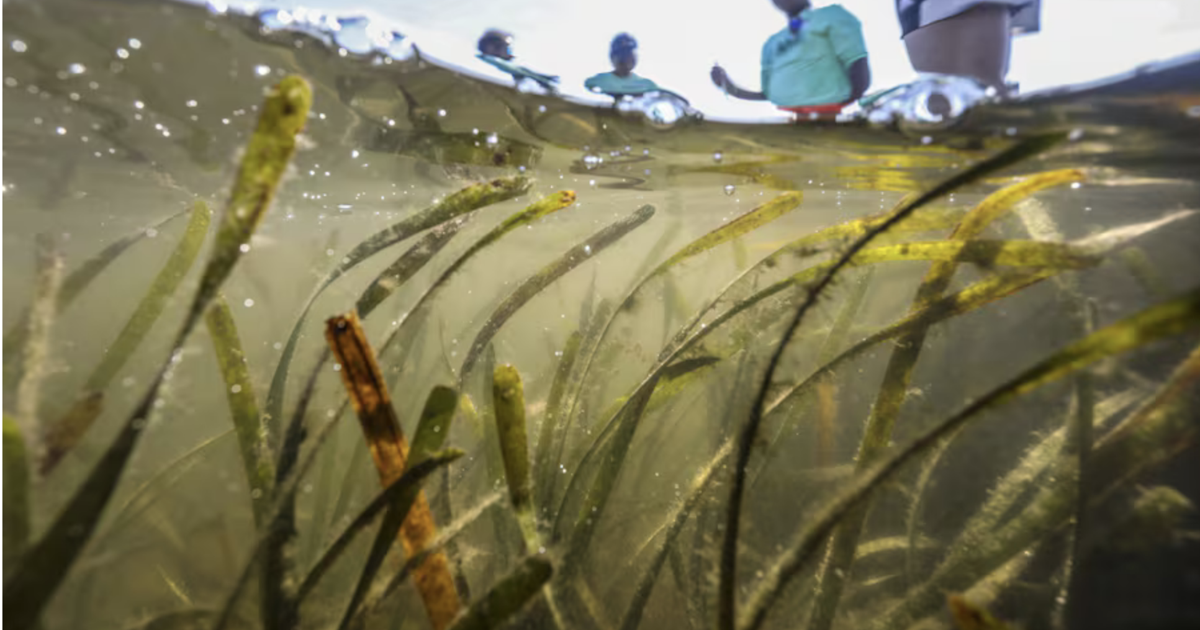
The morning sun shimmered across Tampa Bay as a small group of students leaned over the side of the research vessel Orlando’s Rose, peering into the water where strands of seagrass swayed beneath the surface.
Clipboards in hand, they waded into the grassy shallows to record measurements and identify the plants growing in lush meadows — a hands-on lesson in marine ecology that brought classroom learning to life.
On Oct. 24, the students launched from a Gandy boatyard on the 60-foot floating classroom, joined by marine scientists and volunteers to explore seagrass beds as part of the specialized education program managed by the nonprofit AMIkids.
Instead of planting new shoots, the students from Manatee County focused on identifying manatee grass and turtle grass species.
“I learned seagrasses have snails living on them,” said Ayden Mcnear, 13, who participated with four of his classmates. “I learned the grasses are important for the environment — it could be food for the manatees, it could be a habitat.”
AMIkids is a national nonprofit that helps at-risk youth through hands-on education, adventure and mentorship. Fieldwork is essential to AMIKids’ core mission — empowering young people to believe “I Can.”
“We show them there is a different path in life,” said Roxane Wergin, senior director of marketing and communications at AMIkids. “We give them the tools to explore and to work that path.”
As the students rotated through pre-placed quadrants on the seabed, they used aquascopes to observe seagrass coverage, density and blade growth since the last survey.
The lesson? Seagrass meadows are vital to Tampa Bay’s health, filtering pollutants, stabilizing sediment and serving as nurseries for fish, crabs and manatees.
Tampa Bay has regained thousands of acres of seagrass in recent years thanks to restoration projects and improved water quality.
AMIkids’ marine biology program is one example of how students gain practical, science-based experience. Other AMIkids programs — including scuba diving, whitewater rafting, fishing, kayaking and camping — are used to build students’ confidence, purpose and life skills.