
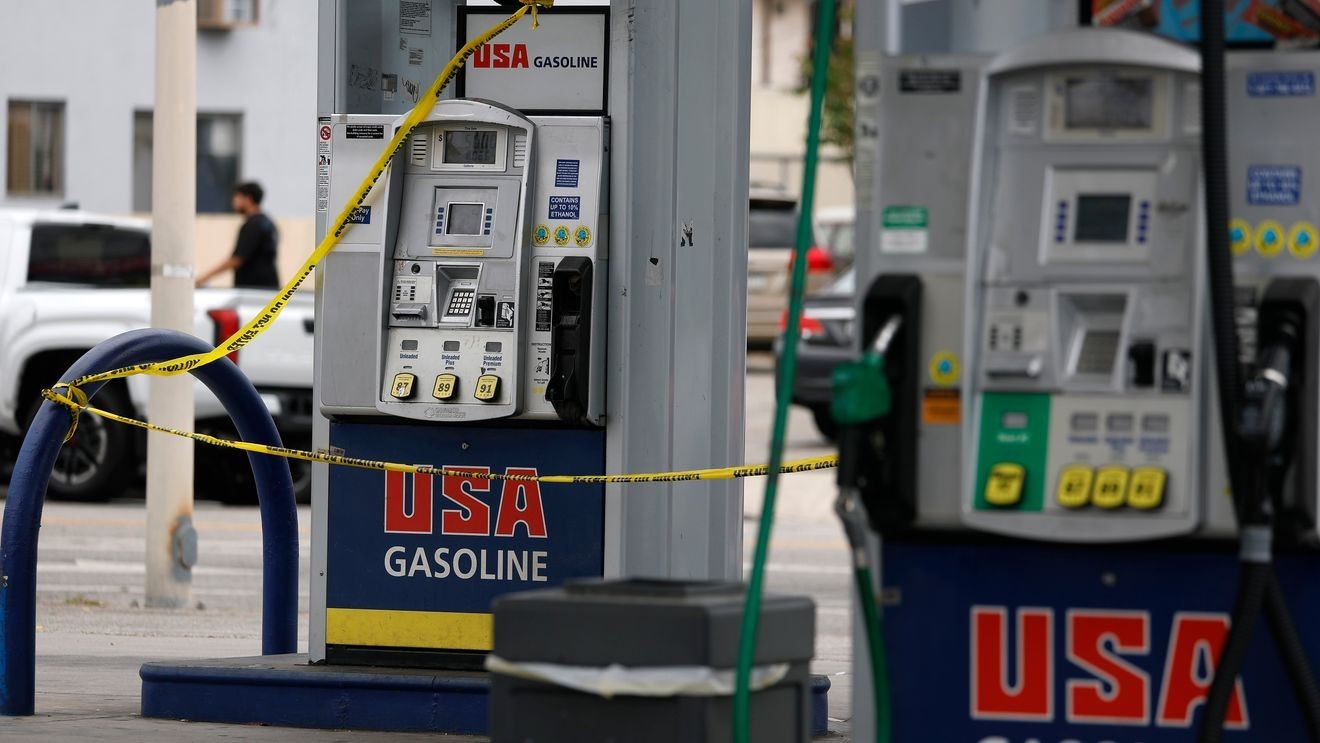
Florida drivers are heading into the summer travel season with gas prices far higher than they were a year ago, adding another cost to road trips, daily commutes and small business operations across the state.
According to AAA, the average price for a gallon of regular gas in Florida was $4.318 as of May 26, slightly below the national average of $4.491. But the relief is limited compared with last year, when Florida drivers were paying an average of $3.057 per gallon. That means regular gas in Florida is about $1.26 more per gallon than it was one year ago.
For a driver filling up a 15-gallon tank, that difference adds nearly $19 more per fill-up compared with this time last year. For families planning longer summer road trips, the extra cost can add up quickly.
AAA says gas prices over Memorial Day weekend reached their highest level in four years, just as holiday travelers began hitting the road in large numbers. The organization reported that the national average for regular gas was $4.56 on May 21, up $1.38 from the same time last year. AAA also said pump prices are likely to remain elevated as the summer travel season gets underway, citing rising gasoline demand and disruptions tied to the prolonged closure of the Strait of Hormuz.
The higher prices come as millions of Americans are still expected to travel. AAA projected 45 million people would travel at least 50 miles from home for Memorial Day weekend, slightly higher than last year’s total.
See also: Tiger Woods breaks silence on Memorial Day following DUI arrest in Florida
In Florida, prices vary depending on where drivers fill up.
Among major metro areas listed by AAA, West Palm Beach-Boca Raton had one of the highest averages in the state at $4.497 per gallon. Tallahassee was at $4.406, Fort Lauderdale was at $4.375, Miami** was at $4.361, and Jacksonville was at $4.331.
Central Florida drivers were paying slightly less, with AAA listing Orlando at $4.255 and Tampa-St. Petersburg-Clearwater at $4.290. Some of the lowest metro averages in Florida were in the Panhandle, including Pensacola at $4.057 and Panama City at $4.095.
Even where prices are lower than the statewide average, they remain well above last year’s levels. In Orlando, regular gas was about $3.08 a year ago. In Tampa Bay, it was about $3.10. In West Palm Beach-Boca Raton, it was about $3.23.
That increase is forcing some families to rethink summer plans. Instead of longer drives across the state or out-of-state vacations, some travelers may choose shorter trips, fewer overnight stays or destinations closer to home. Others may keep their plans but cut back on restaurants, attractions or other spending once they arrive.
The impact is not limited to vacations. Higher fuel prices can hit workers and small businesses especially hard, particularly those who drive for a living. Contractors, delivery drivers, landscapers and service technicians often spend much of the day on the road, making fuel one of their most unpredictable expenses.
See also: Is Florida a good place to raise a family? Study gives state low marks
Diesel prices are also elevated. AAA listed Florida’s average diesel price at $5.337 per gallon, compared with $3.441 a year ago. Diesel is commonly used by truckers and many commercial vehicles, meaning higher prices can increase business costs and potentially affect the price of goods and services.
Nationally, AAA reported that gasoline demand increased slightly in the week before Memorial Day, while domestic gasoline supplies fell. Gasoline production also decreased, averaging 9.3 million barrels per day, according to AAA’s summary of federal energy data.
The current Florida average remains below the state’s record high. AAA says Florida’s highest recorded average for regular unleaded gas was $4.891 on June 13, 2022. The record diesel average in Florida was $5.820, recorded on April 2, 2026.
Still, the year-over-year jump is significant enough to affect summer budgets.
For a family driving from South Florida to Orlando, from Tampa to the Panhandle, or from Jacksonville to the Keys, fuel is now a larger part of the travel equation. And with the summer season just beginning, drivers may have to keep watching the pump before finalizing their plans.