
ST. PETE BEACH, Fla. — St. Pete Beach city commissioners are expected to receive an update Tuesday on a project designed to reduce flooding in a low-lying neighborhood near the iconic Don CeSar Hotel.
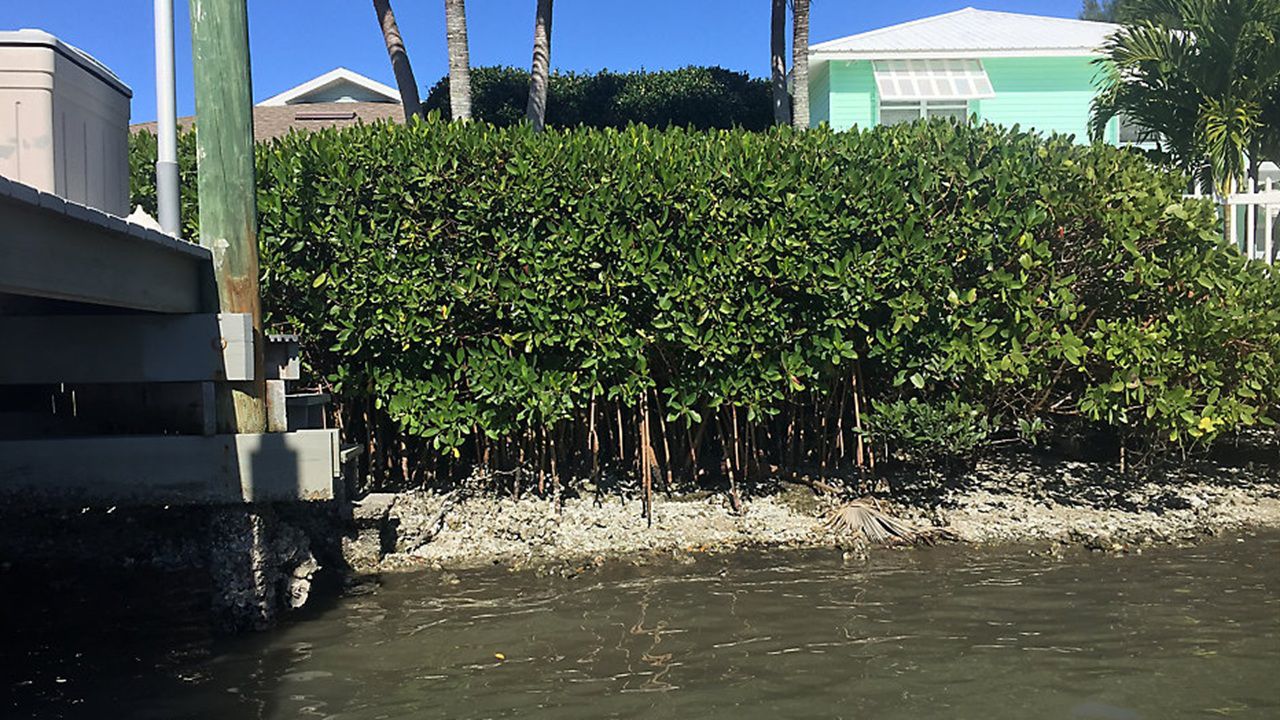
The project would replace deteriorating seawalls behind several homes with “living seawalls,” which is a nature-based approach designed to protect waterfront properties from storm surge and flooding.
Thomas Ries of the Ecosphere Restoration Institute is heading up the initiative.
Ries said unlike traditional seawalls, living seawalls incorporate natural features such as marsh grasses, mangroves, oyster reefs and sediment in front of the structure. Those additions help absorb wave energy and reduce the constant pounding seawalls endure during storm season.
They can also be built higher and last longer, Ries said.
“A lot of these seawalls are sitting at 3.8 feet, and if we can get them all uniformly up to 5 feet, that will take care of all king tides and sea level rise up through 2060,” Ries explained. “That won’t save you from Hurricane Helene because you can’t design for stuff like that. But for the normal everyday for years and years… bringing those up to that height and providing the ecosystem services is the future.”
The project is funded by The Tampa Bay Environmental Restoration Fund grant for $39,999. The city of St. Pete Beach matched the grant and coordinated the survey and geotechnical aspects. The seawall abuts public land, which helped the project qualify for city money.
St. Pete Beach homeowners are free to use the design plans and permitting guides, which Ries said makes this project unique and extends beyond the homes that are directly impacted. He hopes this encourages more homeowners to convert to living seawalls.
“If you replace your seawall, you essentially don’t need a permit. You can go do it, hire a contractor, done. You want to do anything else? Now you’re in the big permitting process. By us having these designs that have already been vetted by the agencies, and we have the state saying, ‘We’ll give you one permit and it will cover everybody in this particular location,’” he said. “If we take away those hurdles, then people will say, ‘Hey, okay.”
About 67% of Pinellas County’s shorelines are lined with seawalls, making the project a potential model for future coastal resilience efforts throughout the area.