
A record-breaking amount of seaweed is expected to wash onto Florida beaches this summer, creating mounting concerns for coastal communities that depend on tourism.Scientists say the massive bloom, known as the Great Atlantic Sargassum Belt, could reach nearly 40 million tons this year — potentially surpassing last year’s record levels.Along Brevard County beaches, large patches of brown seaweed already line the shoreline.”It does not bother me at all … part of nature,” said Brevard resident Allen Lamotte while visiting the beach.While floating offshore, sargassum provides important habitat for fish, sea turtles and other marine life. But once the seaweed reaches shore and begins to decay, it can emit a strong odor that some residents and visitors find unpleasant.”Someone’s coming to vacation … not so pretty … smells a little funky,” said Brevard resident Rhett Boyd.Boyd, a local surfer, said the seaweed can be a nuisance in the water but does not significantly affect his time on the waves.”It doesn’t affect surfing,” Boyd said. “So it’s not a big deal.”Researchers say the blooms have steadily increased over the past decade.”It’s just increasing every single year, and last year was the largest we’ve ever recorded — almost double the previous record,” said Dr. Brian Barnes, a researcher at the University of South Florida’s College of Marine Science. “This year it looks like it’s going to at least match that, if not exceed it.”Barnes and his team are using satellite imagery and computer modeling to predict where the seaweed is most likely to wash ashore and which coastal regions could face the biggest impacts.But forecasting the exact landfall locations remains difficult.Ocean currents, wind patterns and even the angle of the coastline can influence where the seaweed accumulates, Barnes said.”The impacts are generally pretty patchy, so you may have an impact on one particular beach, but the beach a mile down the road is completely clear,” he said.Researchers hope improved forecasting will help local governments better prepare cleanup operations and reduce the economic impact on beach communities during the busy summer tourism season.Scientists say the sprawling seaweed belt has now become largely self-sustaining, meaning large blooms are likely to remain a recurring challenge for Florida and other coastal regions in the years ahead.
BREVARD COUNTY, Fla. —
A record-breaking amount of seaweed is expected to wash onto Florida beaches this summer, creating mounting concerns for coastal communities that depend on tourism.
Scientists say the massive bloom, known as the Great Atlantic Sargassum Belt, could reach nearly 40 million tons this year — potentially surpassing last year’s record levels.
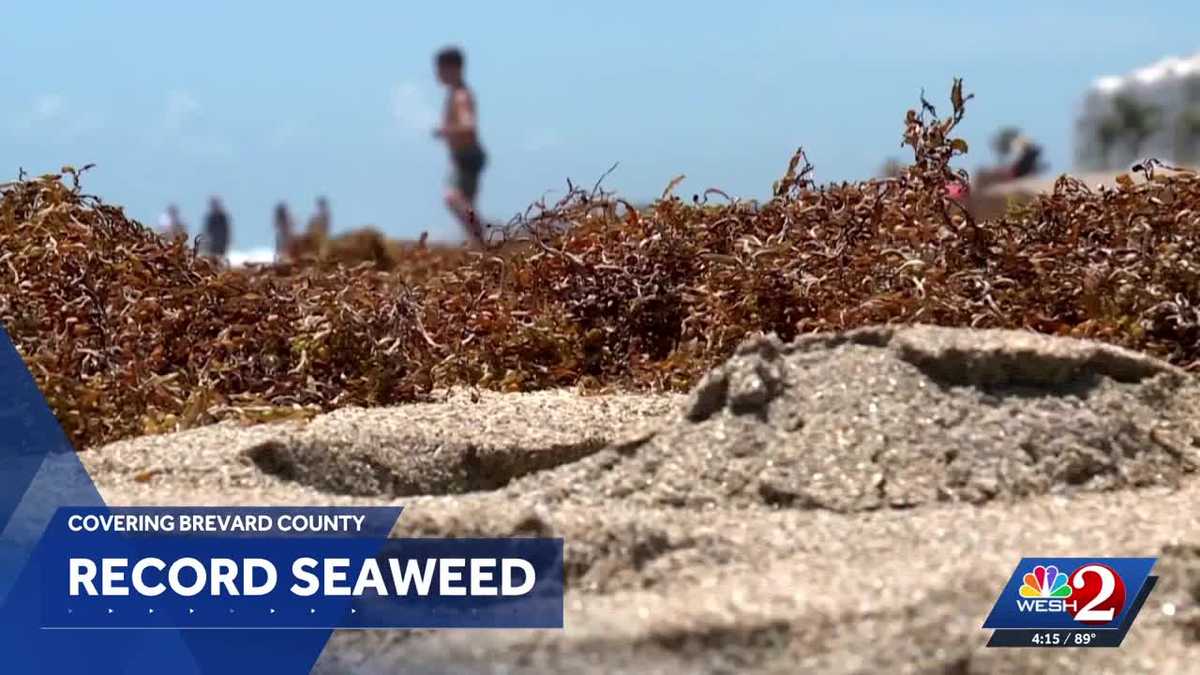
Along Brevard County beaches, large patches of brown seaweed already line the shoreline.
“It does not bother me at all … part of nature,” said Brevard resident Allen Lamotte while visiting the beach.
While floating offshore, sargassum provides important habitat for fish, sea turtles and other marine life. But once the seaweed reaches shore and begins to decay, it can emit a strong odor that some residents and visitors find unpleasant.
“Someone’s coming to vacation … not so pretty … smells a little funky,” said Brevard resident Rhett Boyd.
Boyd, a local surfer, said the seaweed can be a nuisance in the water but does not significantly affect his time on the waves.
“It doesn’t affect surfing,” Boyd said. “So it’s not a big deal.”
Researchers say the blooms have steadily increased over the past decade.
“It’s just increasing every single year, and last year was the largest we’ve ever recorded — almost double the previous record,” said Dr. Brian Barnes, a researcher at the University of South Florida’s College of Marine Science. “This year it looks like it’s going to at least match that, if not exceed it.”
Barnes and his team are using satellite imagery and computer modeling to predict where the seaweed is most likely to wash ashore and which coastal regions could face the biggest impacts.
But forecasting the exact landfall locations remains difficult.
Ocean currents, wind patterns and even the angle of the coastline can influence where the seaweed accumulates, Barnes said.
“The impacts are generally pretty patchy, so you may have an impact on one particular beach, but the beach a mile down the road is completely clear,” he said.
Researchers hope improved forecasting will help local governments better prepare cleanup operations and reduce the economic impact on beach communities during the busy summer tourism season.
Scientists say the sprawling seaweed belt has now become largely self-sustaining, meaning large blooms are likely to remain a recurring challenge for Florida and other coastal regions in the years ahead.