
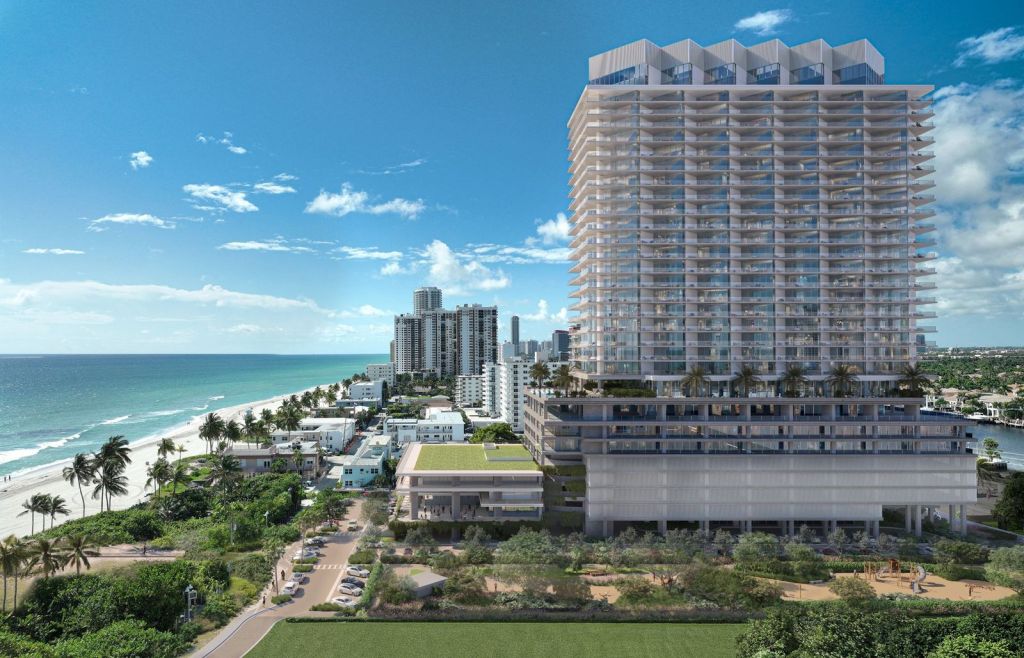
What is known as a “poor door” in new condo developments can restrict a class of residents.
To win government approval, developers can include a defined percentage of apartments to fit a definition of affordable income. Affordable housing residents in such developments may have a separate entrance to a separate lobby leading to separate elevators (or maybe no elevator).
They can be priced out of amenities, have access to different ones, or none. They can be limited to the less desirable spaces in the building, denied entry to a rooftop lounge or a pool that luxury apartment dwellers enjoy. The key word is separation.
In Miami-Dade, Bal Harbour passed an ordinance prohibiting poor doors. Similar laws are in place in New York City. Hollywood has passed no such ordinance. Keith Poliakoff, legal counsel for the Related Group, said he was unable to say that a poor door would not be used in a proposed development for public land on Hollywood Beach.
Five of seven Hollywood commissioners seem fine with this and voted for the project without all details of the planned development in place and the strong possibility of having a poor door.
One commissioner stated his objection to a poor door yet voted for it to move forward anyway.
There are many other issues with this development, but this alone should have been enough to stop it from moving forward.
— Sylvia Meyer, Hollywood
Show us the money
Can anyone define affordable housing on Hollywood beach? Will the monthly rent be the same as other affordable housing units located inland?
— Robert Weiser, Fort Lauderdale
Hollywood suspicions
I smell corruption in the air.
— Ralph J. Capone, Plantation
A worsening housing crisis
Housing costs are putting real pressure on Florida families.
Rising rent and living expenses are making it harder for working people, students and young adults to stay financially stable, even when they work full-time.
When housing becomes unaffordable, families are forced to cut back on essentials, move farther away from jobs and schools, or live with constant financial stress. That affects health, education and long-term stability.
Strong communities depend on ordinary people being able to afford to live in them. Florida leaders should make housing affordability a top priority before more residents are pushed into crisis.
— Maliha Rahman, Plantation
City of Tamarac
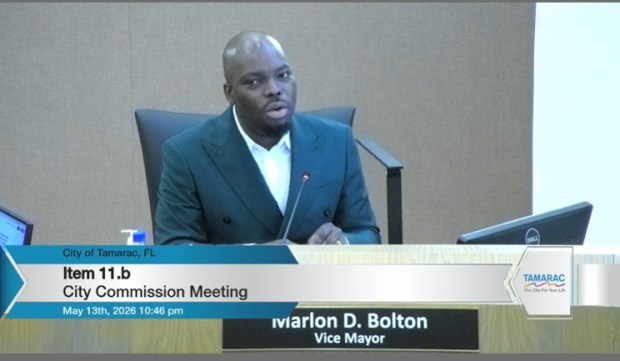
Tamarac Vice Mayor Marlon Bolton again put himself and his colleagues in control of divving up public money, this time $500,000 from a legal settlement on water quality.
The public trust in Tamarac
This never-ending corrupt slush-fund fiasco in Tamarac has to stop.
The controversial $500,000 portion of PFAS money allocation scheme is a sham and undermines the public trust (Tamarac finds a $500,000 slush fund, editorial, May 21).
If Mayor Michelle Gomez and Commissioner Morey Wright had not voted in favor of the measure, the money would have been divided exclusively among commissioners Marlon Bolton, Kicia Daniel and Krystal Patterson.
As documented in the May 13 public meeting video, Mayor Gomez rightfully gave her $100,000 allocation back to the city to be used for PFAS remediation (the mayor said from the dais, “My money is going specifically into the water department”).
— Sami Sofia, Tamarac
Just too few doctors
Thank you for printing Dr. Francis Mei Hardin’s commentary on the doctor retention problem in Florida. I recently left a urologist’s practice because I regularly had to wait in his office more than an hour beyond my appointment time to see him.
My new urologist said: “You’re going to get that here, too. That’s not a bad urology practice; that’s not enough urologists in Broward. We are doing the best we can.” (I’ve had outstanding care from both physicians, by the way.)
A shortage of urologists hadn’t occurred to me. What else don’t we have enough of in Broward? Where are our elected officials on this? If efforts are underway to address this problem, I haven’t heard about it.
— Michael Record, Fort Lauderdale
Please submit a letter to the editor by email to letterstotheeditor@sunsentinel.com or fill out the online form below. Letters may be up to 200 words and must be signed with your email address, city of residence and daytime phone number for verification. Letters will be edited for clarity and length.