
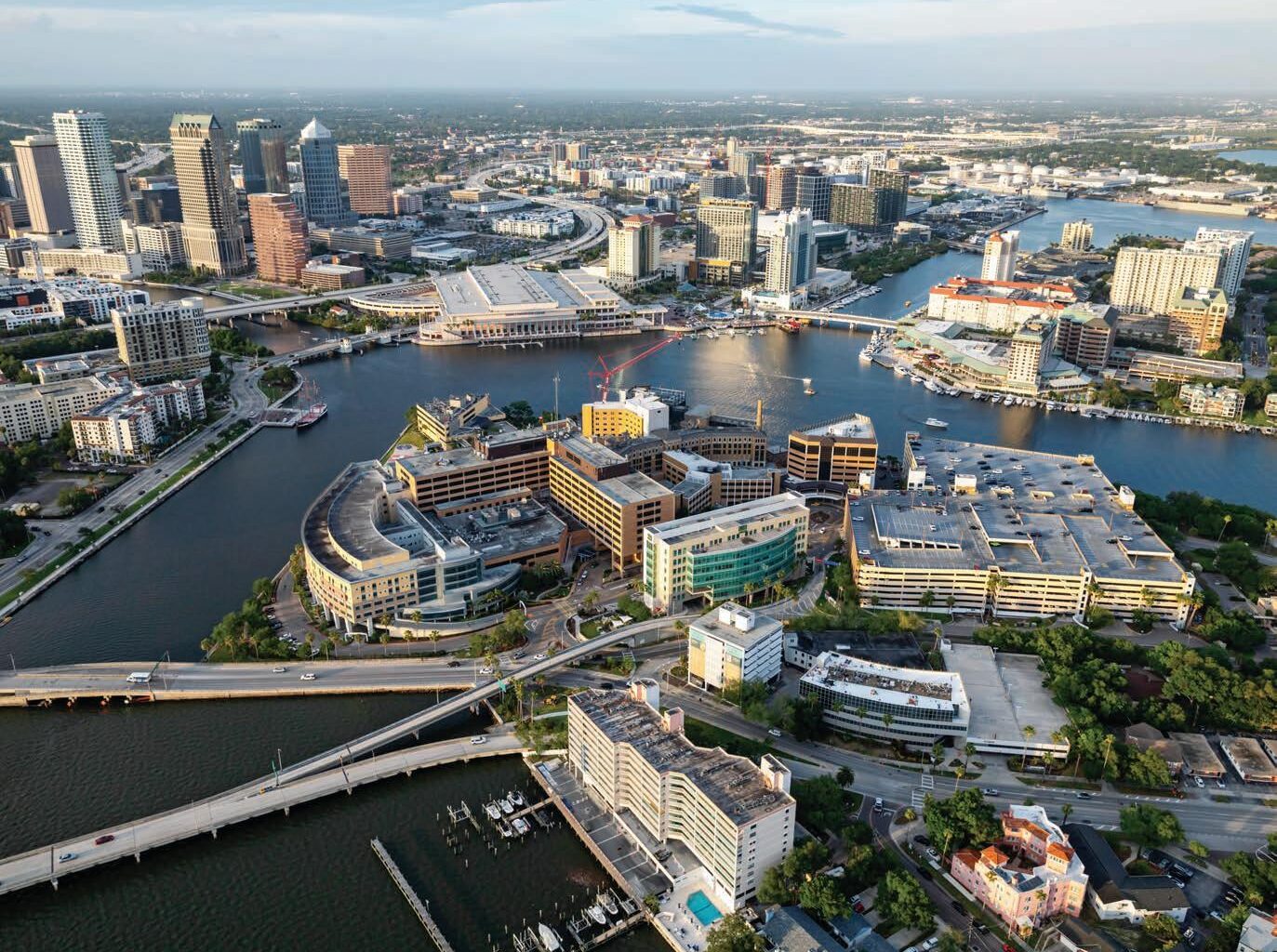
A push to bring large-format digital signs to downtown Tampa gained momentum as City Council members narrowed down a framework they would like to see inked into any future code changes.
After a lengthy workshop discussion, Council members asked city staff to find a way to help the city develop a building inventory to better understand the look and feel of nuanced decisions that would govern digital signage downtown.
The discussion pushed momentum for the proposal forward as Council members identified their key priorities if the proposal is to move forward.
They said an inventory list could be used to identify which buildings could be eligible, which would be off limits and how signs might fit individual facades before the city moves toward any formal ordinance.
Early recommendations included limiting the signs to downtown, protecting the Riverwalk, barring signs on historic landmarks and vacant buildings, requiring 20% of screen time for art or community messaging, and creating maintenance and brightness standards.

But Council members made clear they want more detail before advancing a code change, and discussions quickly revealed the complexities of the proposal. Creating an inventory itself could be costly and time consuming, likely necessitating the use of an outside contractor for the work.
Still, several Council members said the effort could be worth pursuing if the city can ensure the signs function as placemaking tools rather than just another layer of advertising downtown.
Council Member Bill Carlson pointed to other major cities where digital signs have become part of the urban experience, arguing Tampa should not shy away from using them on appropriate buildings. He said the goal should not simply be “running ads,” but “place-making, building entertainment and building an environment for the community.”
Council Chair Alan Clendenin said the city needs a clearer inventory so residents can see “there’s not going to be a sign in the building that’s directly across the street from me” and which buildings would be ineligible, adding that it could be “a really good communication tool.”
Clendenin did ask for more than a 20% time share because it “just doesn’t provide enough public benefit” to justify such a significant change to the city. He later added that increasing the public-use requirement would help foster the place-making elements of the effort.

Council Member Lynn Hurtak cautioned against describing the effort as a pilot program, because any signs approved likely would not come down if the program ended.
Residents’ concerns focused on light, noise, scale and quality of life downtown. Tampa Downtown Partnership staff said public input raised questions about how many signs would be allowed, where they would go, how large they would be, operating hours and whether they would shine into residential windows.
Council Member Charlie Miranda echoed those worries, warning the signs could change downtown’s character and add visual stress for people who have lived there for years.
Others raised legal and industry concerns, particularly whether changes could affect long-standing billboard settlement agreements that could make new policy changes unfair to those involved. City staff said they are still evaluating those issues.
Council ultimately directed staff to come back with more information addressing questions raised during the workshop, including potential contractors for the inventory of eligible buildings, for further discussion.