
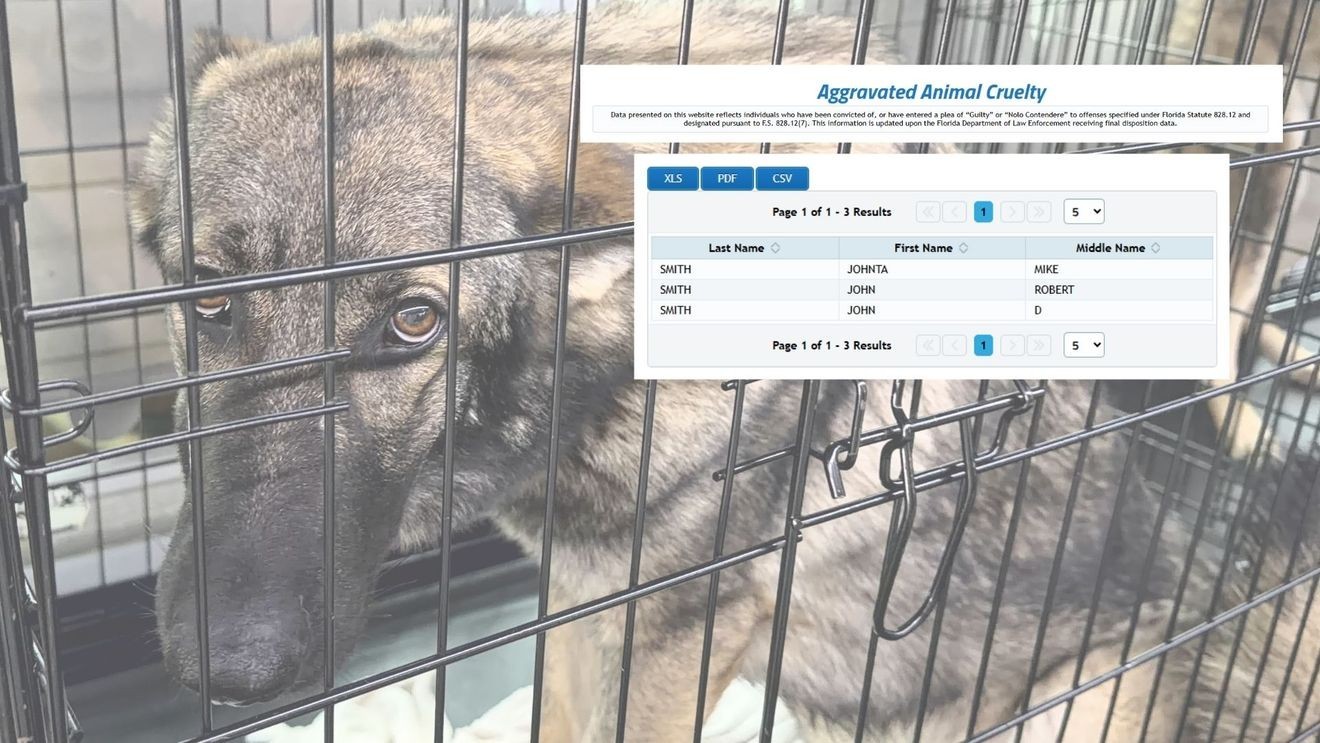
WEST PALM BEACH, Fla. (CBS12) — Florida launched its statewide animal abuse database this year to help shelters, rescues and pet owners identify people convicted of serious animal cruelty crimes.
Now, supporters say the next challenge is what happens when those offenders leave the state.
A new federal proposal introduced Friday by Florida Congressman Greg Steube aims to encourage more states to share information about felony animal cruelty convictions and create systems similar to Florida’s database.
“What this bill is going to do is get other states in the country to kind of hop on board and follow what we did here in Florida,” said Debbie Darino, an animal welfare advocate who helped push for some of Florida’s most significant animal cruelty laws, including Ponce’s Law.
Supporters argue that without similar systems in other states, someone convicted of animal cruelty in one part of the country could relocate and be largely unknown to shelters, rescues or pet owners elsewhere.
“If somebody does leave the state, who’s going to track them? Who’s going to know?” Darino said.
The proposal, known as the Law Enforcement Animal Safety Harm Reporting Act of 2026, or LEASH Act, would require felony animal cruelty convictions to be included in state crime reporting systems tied to certain federal funding programs. The legislation would also direct the U.S. Department of Justice to create a centralized, publicly accessible database of convicted felony animal abusers.
Steube said the proposal builds on work already underway in Florida.
“Animal cruelty is a heinous crime that often signals a pattern of escalating violence,” Steube said in a statement. “Florida has taken important steps to crack down on these crimes, and this legislation extends Florida’s model to better protect animals and help shelters place pets in safe homes.”
Supporters say the goal is to create a more uniform system for tracking convicted animal abusers and close reporting gaps that can occur when offenders relocate across state lines.
See also: Should PBSO deputy be disciplined in controversial incident? Agency review under way
The proposal comes months after Florida launched its statewide animal abuse database under Dexter’s Law.
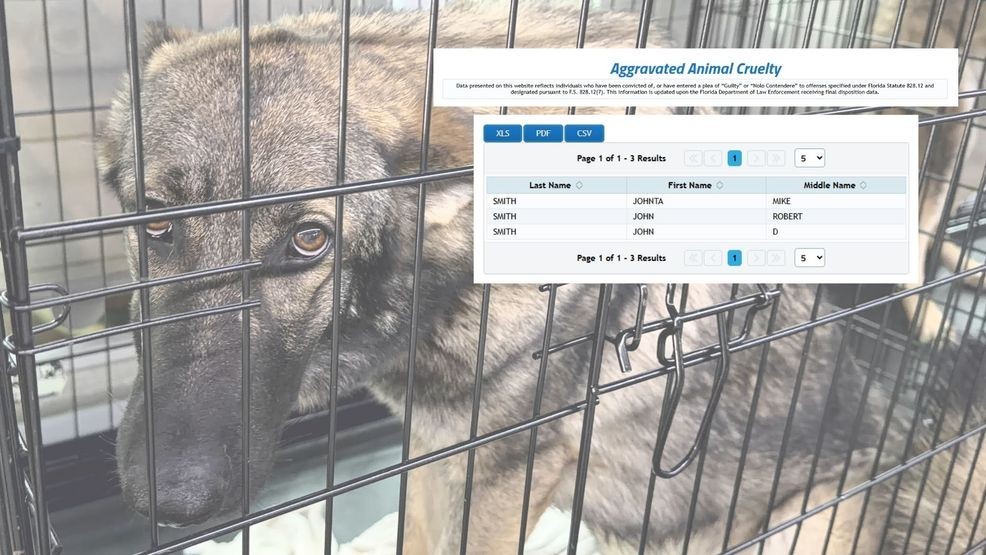
When Florida launched its statewide animal abuse database earlier this year, supporters hoped it would make it harder for convicted animal abusers to obtain another pet. A new federal proposal expected to be filed Friday is looking beyond Florida’s borders.(WPEC)
CBS12 News has closely followed the rollout of that database, including concerns raised earlier this year that the public-facing system initially displayed little more than names, making it difficult to distinguish between people with common names.
After criticism from advocates, lawmakers approved changes requiring the Florida Department of Law Enforcement to add significantly more identifying information. Beginning Jan. 1, 2027, the database is expected to include aliases, dates of birth, race, county of conviction, charges, case numbers, identifying marks and booking photographs.
Darino said those improvements will make Florida’s database more effective while other states consider adopting similar systems.
“We need to do something, and we need to not sit on it any longer,” Darino said. “I don’t think there’s many states that don’t want to do it. I think that most do, but they just need some kind of direction on how you do it.”
The legislation has drawn support from several animal welfare and law enforcement groups, including the Florida Sheriffs Association, the Florida Police Chiefs Association and Humane World Action Fund.
“Florida has proven to be a leader in legislation to prevent animal abuse,” said Chief Robert Bage, president of the Florida Police Chiefs Association. “The membership of the Florida Police Chiefs Association is hopeful that a nationwide animal abuse registry will track offenders, prevent future abuse and aide both law enforcement and the public.”
Humane World Action Fund Vice President Tracie Letterman called the proposal a practical step toward preventing repeat offenses.
“The LEASH Act is a commonsense measure to help ensure that people convicted of felony animal cruelty cannot evade scrutiny simply by crossing state lines,” Letterman said. “This voluntary program is a practical step Congress can take to help stop cruelty before it happens again.”
Darino said Florida’s database was never intended to be the finish line.
“The LEASH Act of 2026 gives another layer of protection for animals against abusers,” Darino said in a statement supporting the bill. “Florida’s database went live on January 1, 2026, but our work to protect the voiceless against the pain and suffering they endure from repeat animal cruelty offenders remains unfinished.”
The LEASH Act was introduced Friday and must pass both chambers of Congress before heading to the president’s desk to become law.