
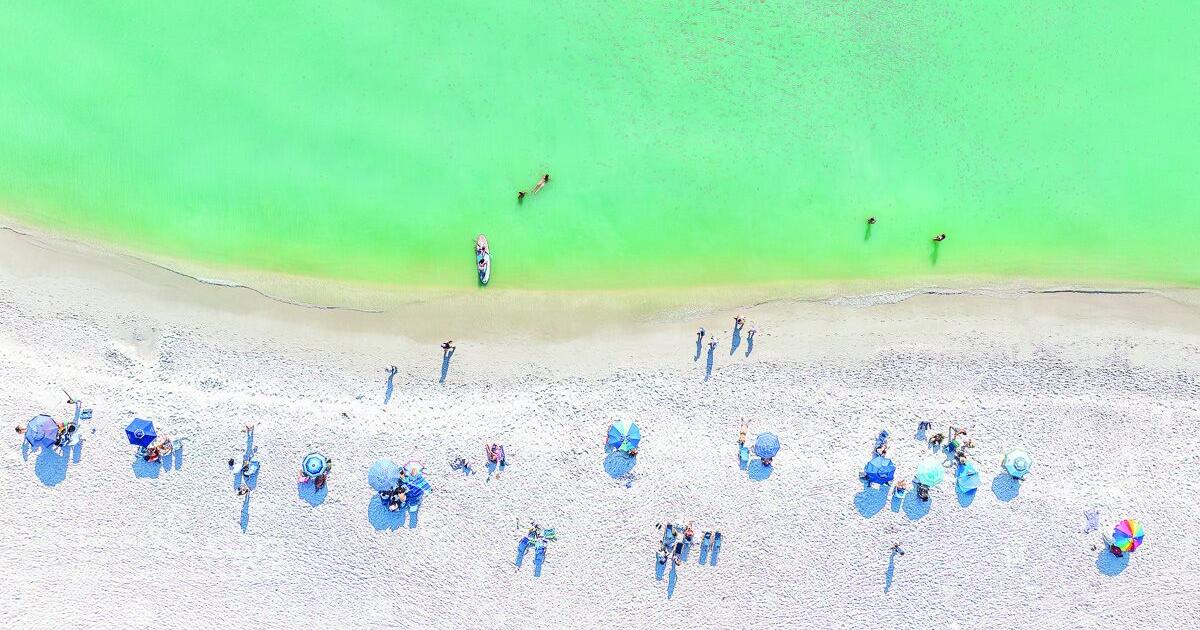

Beachgoers gather along the shoreline in Southwest Florida during the 2025-26 tourism season as regional visitor numbers and tourism spending continued to rebound.
Naples Beach Club, A Four Seasons Resort
Eric and Helen Clemetsen made vacationing on Sanibel Island an annual tradition, escaping Michigan winters for the same cottage on West Gulf Drive. Each year, they settled into Shalimar Cottages & Motel, where sea breezes from the Gulf and a short walk to the shoreline defined their stay.
On Sept. 22, 2022, Hurricane Ian destroyed Shalimar, leaving their home away from home in ruins.
Now, it has returned. And with it, so has much of Southwest Florida’s tourism industry. Between Thanksgiving and Easter during the 2025-26 season, the renamed Shalimar Beach Resort reopened into a market gaining momentum. The 33 rooms at Shalimar on Sanibel have rejoined the market as fully rebuilt inventory.
“We found this, and we really like it,” Helen Clemetsen says of Shalimar. “It’s Old Florida. The cottages were so unique. Every time we came to Florida, we would stop to see Shalimar because it’s such a beautiful place. We were really excited to come back. That was always our goal.”
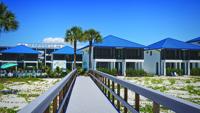
Reimagined after Hurricane Ian, Shalimar Beach Resort offers 33 fully rebuilt rooms, pairing Gulf views, walkable beach access and a quiet, intimate setting with modernized accommodations designed to meet renewed demand on Sanibel.
Brian Tietz
The new Shalimar has a different feel, she said, but still feels like home. The Clemetsens booked 14 nights.
“The other thing I feel is the same is the million-dollar view,” she says. “It’s peaceful. It’s intimate. It’s not a big, mega place.”
Across the region, that mix of returning visitors and restored inventory is translating into a busy season.
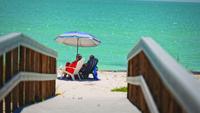
Visitors relax along a Southwest Florida beach during the 2025-26 tourism season as coastal destinations across the region continued recovering from Hurricane Ian and welcomed returning travelers.
Brian Tietz
Rebuilding momentum
Tourist tax collections rose across much of Southwest Florida during the 2025-26 season, signaling renewed demand.
In Lee County, collections increased 13.6% in November, 17.7% in December, 15.7% in January and 21.9% in February. February revenue climbed from $6.12 million in 2025 to $7.47 million in 2026, supporting beaches, spring training facilities, marketing and the Fort Myers Lee County Visitor and Convention Bureau.
Visitor counts reached about 1 million from January through March, up 28% year over year. Spending approached $1.39 billion, a 24% increase, while room nights rose 16% to about 1.7 million.
“This was a sound season for our community,” says Tamara Pigott, executive director of the VCB. “Much improved over the last few years.
“It’s a positive direction,” Pigott says. “Here’s my assessment: Recovery, especially coastal recovery, is ongoing. But it does feel like we’ve turned the corner. We’re starting to put that (hurricane recovery) conversation behind us and focus on how we can deliver the best experience to visitors who come into our community.”
The rebound has not been consistent across the region. In Charlotte County, bed tax revenue fell 12% year over year in November after impacts from hurricanes Milton and Helene, before rebounding modestly in later months, including a 7% increase in February.
Collier County saw stronger gains. Revenue rose from $4.88 million in January to $7.09 million in February, a 45.2% month-over-month increase, reflecting peak-season demand in Naples.
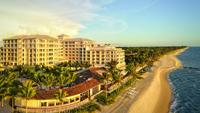
At Naples Beach Club, a Four Seasons Resort, a 220-room luxury beachfront destination, premium accommodations, high-end dining venues and strong local engagement are helping drive rising room rates and elevating an upscale hospitality market.
Naples Beach Club, A Four Seasons Resort
Luxury lift
That surge aligned with the first full season of Naples Beach Club, a Four Seasons Resort, where average daily rates exceeded $1,200 and a five-bedroom presidential suite rented for as much as $40,000 per night.
High-end demand is pushing pricing across the region. The new 220-room Naples Beach Club, has drawn both visitors and locals, with restaurants including HB’s, The Merchant Room and Sunset Bar open to the community.
“At other properties I’ve worked, you have to work hard to get locals to adopt your bar and your restaurants,” says Cory Carlson, regional commercial director for Four Seasons. “That’s not the case in Naples. It’s so much fun to watch the community integrating with our destination guests.”
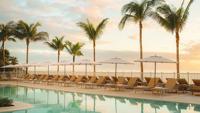
At Naples Beach Club, a Four Seasons Resort, a 220-room luxury beachfront destination, premium accommodations, high-end dining venues and strong local engagement are helping drive rising room rates and elevating an upscale hospitality market.
Naples Beach Club, A Four Seasons Resort
In Collier County, the average daily room rate rose from $485 in January 2025 to $499 in January 2026.
“I don’t think it can be solely attributed to one suite or even one hotel,” says Teresa Delaney, director of public relations for the resort. “The Four Seasons effect has been that the overall ADR has increased across all properties, but particularly luxury properties. This has most likely led to the cumulative jump in bed tax.”
Demand and limits
Air travel shows steady demand. Passenger counts at Southwest Florida International Airport totaled 4.29 million from November through February, slightly above the previous season and exceeding pre-Ian levels.
At Punta Gorda Airport, traffic declined early in the season before rebounding in February and March to 223,811 and 309,678 passengers, respectively.
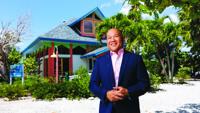
John Lai, president and CEO of the SanCap Chamber, says Sanibel and Captiva continue rebuilding lodging inventory and tourism infrastructure following Hurricane Ian.
Brian Tietz
Room to recover
Even with increased arrivals, lodging capacity remains a constraint, particularly on barrier islands.
“We don’t have the inventory,” says John Lai, president and CEO of the Sanibel-Captiva Chamber of Commerce. “The fact of the matter is while we didn’t have any hurricanes make landfall, the year prior was not kind to us.”
Lai referred to hurricanes Milton and Helene, which damaged parts of Captiva, including the Mucky Duck restaurant that reopened in 2026.
“For us to be up 3.2% in occupancy, it says a lot about how our area rebounded,” Lai says. “We all know when disasters hit, they certainly impact the years following.”
Before Hurricane Ian, Sanibel and Captiva had 2,452 rooms. As of April, that total is 1,817, about 74% of previous inventory.
“We had zero available rooms,” Lai says of Sept. 23, 2022. “We had no bridge, no power, and every single room was shut down. If we don’t keep looking at these spreadsheets, we forget how far we have come. It’s crazy.”
The remaining recovery will take time.
“That’s a crystal ball question,” Lai says. “The last 25% is the hardest. It’s buildings that haven’t come out of the ground yet. While we have sprinted to 74%, the rest is going to be a marathon. Maybe 90% is the new 100%.”

Visitors like Rick Champagne and his daughter are fueling Southwest Florida’s tourism rebound, pairing inland stays with coastal exploration and spring training experiences at JetBlue Park and Hammond Stadium.
Visitors’ view
Rick Champagne of Clinton, Massachusetts, and his daughter, a sophomore at Colby-Sawyer College, approached the region from a different angle, staying inland while exploring the coast.
They flew out of Worcester on JetBlue, choosing Fort Myers after previously visiting Fort Lauderdale and Orlando.
Their trip blended familiar draws with local connections. At JetBlue Park, they climbed atop the Green Monster outfield wall, a near replica of the one at Fenway Park, and posed for a photo above a No. 39 painted on the wall, an ode to the late Mike Greenwell.
“Mike Greenwell was my favorite player,” Champagne says.
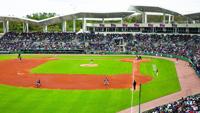
Fans fill the stands during a Boston Red Sox spring training game at JetBlue Park in Fort Myers. Spring training remains one of Southwest Florida’s strongest tourism and economic drivers.
Evan Williams
They stayed five nights inland, using their time to explore the region, including two days on Sanibel Island.
“These tickets went on sale at 10 a.m. on a Thursday,” Champagne says of the Red Sox game. “I bought them right away.”
They watched the Red Sox defeat the Atlanta Braves 4-3 on St. Patrick’s Day before a sellout crowd of 9,601.
A day earlier, about 6 miles away at Hammond Stadium, the Minnesota Twins defeated the Pittsburgh Pirates 5-1 in front of 7,363 fans.
“We routinely rank in the top five for attendance for the entire league,” says Victor Gonzalez, assistant director of Florida operations for the Minnesota Twins. “People are coming down here. Look at what the temperature is in Minneapolis today. Sometimes it’s a 70-degree difference.”

Tamara Pigott, executive director of the Fort Myers Lee County Visitor & Convention Bureau, says Southwest Florida tourism has turned a corner as recovery efforts continue after Hurricane Ian.
Brian Tietz
Turning the corner
Baseball, beaches and sunshine remain the region’s core draw, Pigott said. As recovery from Hurricane Ian approaches four years, the narrative is shifting from rebuilding to what comes next.
Pigott is set to retire, and her successors will chart the next phase as the industry moves beyond recovery and into a new cycle of growth. “There’s still work to do,” Pigott says. “I’m not implying that we’re done.”
That reality may shape what comes next for Southwest Florida’s tourism industry.