
The full Florida Senate and House of Representatives are expected to consider and vote on Gov. Ron DeSantis’ plan to reduce homestead property taxes on Tuesday during the second day of Special Session F.During committee hearings on Monday, lawmakers tweaked the governor’s original proposal to ensure that homeowners would still pay the portion of their property taxes that funds public education.“Schools don’t have the ability to be nimble and flexible like local governments do and that’s why this amendment specifically withdraws our K-12 public education,” said Republican Rep. Sam Garrison, who is lined to become the next House Speaker. The Florida Policy Project estimated that raising the homestead exemption to $250,000 would cost districts an average of $5 billion annually. “The governor’s property tax plan fails to address what happens to education,” House Minority Leader Fentrice Driskell (D-Tampa) said before the start of the special session. “In fact, it makes our public schools the punching bag.”Under the proposal headed to both chambers on Tuesday, the homestead exemption would increase to $150,000 in 2027 and then to $250,000 in 2028. “It’s hard to argue against it, I mean, when you raise that the initial threshold to 250, that’s 60% of people who are tax-free,” Gov. DeSantis said last Friday.Both the Senate Appropriations Committee and the House State Affairs Committee advanced the proposed constitutional amendment along party lines on Monday. Lawmakers made two other notable changes to the plan DeSantis unveiled last week after he spent more than a year advocating for major property tax relief.The amended measure clarifies that local governments can still fund constitutional offices, such as the clerk of courts, tax collector, and supervisor of elections, through property taxes. The committees also removed the governor’s proposed state trust fund meant to help local governments offset lost revenue.Democratic lawmakers have argued that the reduction amounts to a tax shift rather than a tax cut, as they’ve raised concerns about its impact on funding for public safety. “Republicans have brought us a political stunt that threatens to bankrupt our local communities,” Senate Democratic Leader Lori Berman said. The proposed property tax constitutional amendment needs approval from 60 percent of lawmakers in both chambers for the initiative to go on the November ballot. It would require approval from 60 percent of Florida voters to take effect.
TALLAHASSEE, Fla. —
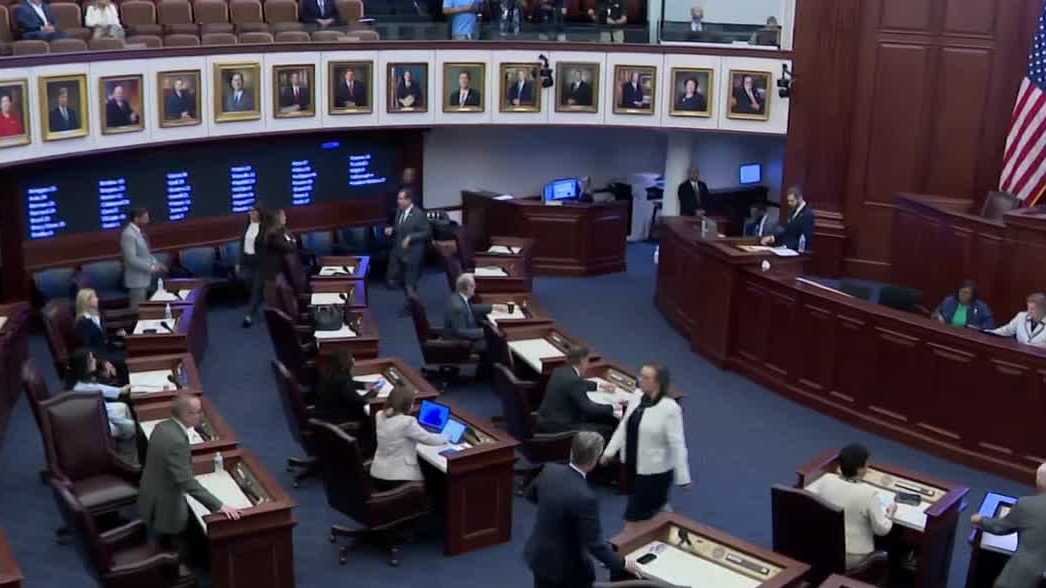
The full Florida Senate and House of Representatives are expected to consider and vote on Gov. Ron DeSantis’ plan to reduce homestead property taxes on Tuesday during the second day of Special Session F.
During committee hearings on Monday, lawmakers tweaked the governor’s original proposal to ensure that homeowners would still pay the portion of their property taxes that funds public education.
“Schools don’t have the ability to be nimble and flexible like local governments do and that’s why this amendment specifically withdraws our K-12 public education,” said Republican Rep. Sam Garrison, who is lined to become the next House Speaker.
The Florida Policy Project estimated that raising the homestead exemption to $250,000 would cost districts an average of $5 billion annually.
“The governor’s property tax plan fails to address what happens to education,” House Minority Leader Fentrice Driskell (D-Tampa) said before the start of the special session. “In fact, it makes our public schools the punching bag.”
Under the proposal headed to both chambers on Tuesday, the homestead exemption would increase to $150,000 in 2027 and then to $250,000 in 2028.
“It’s hard to argue against it, I mean, when you raise that the initial threshold to 250, that’s 60% of people who are tax-free,” Gov. DeSantis said last Friday.
Both the Senate Appropriations Committee and the House State Affairs Committee advanced the proposed constitutional amendment along party lines on Monday.
Lawmakers made two other notable changes to the plan DeSantis unveiled last week after he spent more than a year advocating for major property tax relief.
The amended measure clarifies that local governments can still fund constitutional offices, such as the clerk of courts, tax collector, and supervisor of elections, through property taxes.
The committees also removed the governor’s proposed state trust fund meant to help local governments offset lost revenue.
Democratic lawmakers have argued that the reduction amounts to a tax shift rather than a tax cut, as they’ve raised concerns about its impact on funding for public safety.
“Republicans have brought us a political stunt that threatens to bankrupt our local communities,” Senate Democratic Leader Lori Berman said.
The proposed property tax constitutional amendment needs approval from 60 percent of lawmakers in both chambers for the initiative to go on the November ballot.
It would require approval from 60 percent of Florida voters to take effect.