
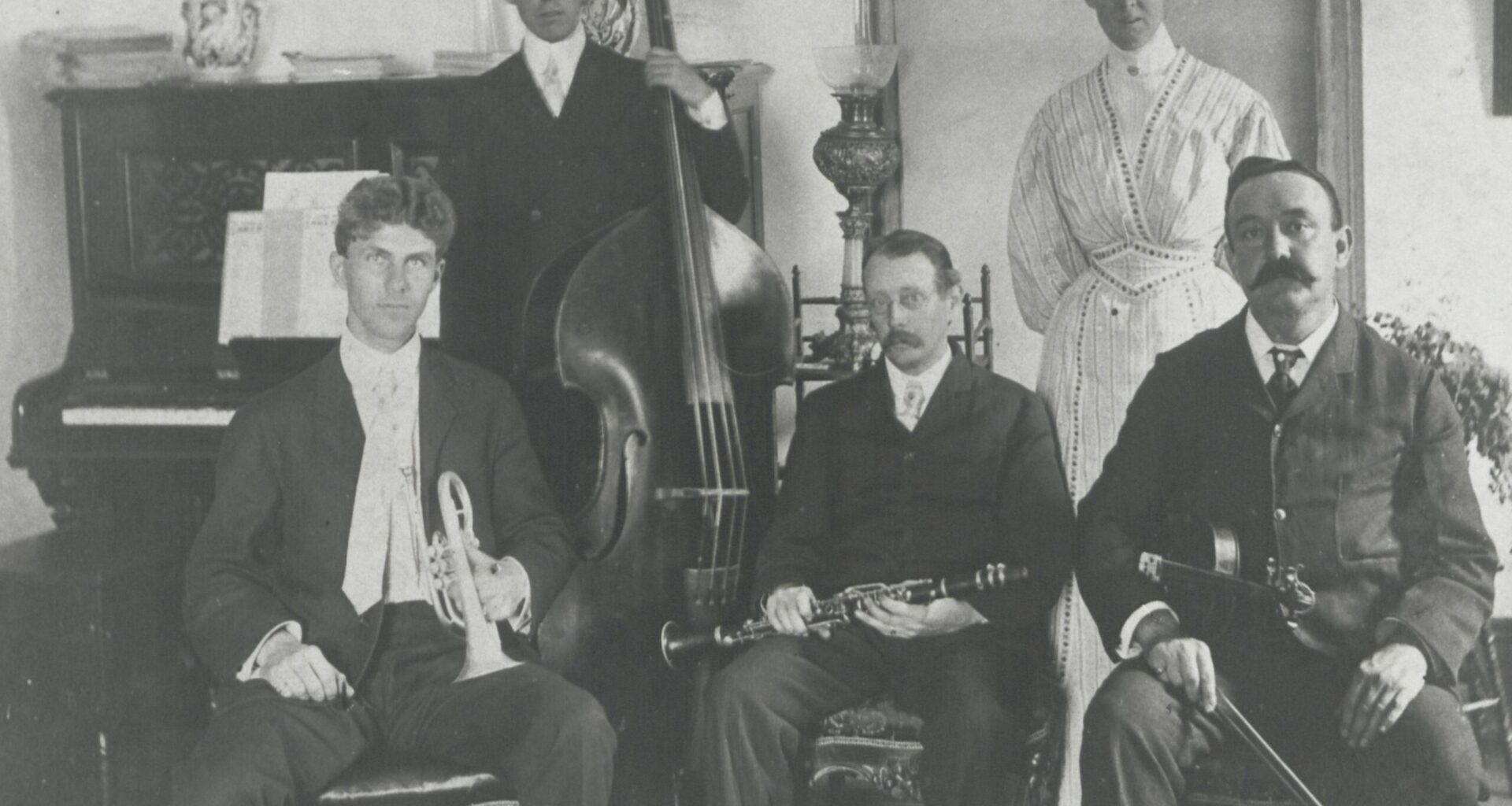
In the May 16, 1940, edition of the Orlando Evening Star, among updates from the war raging in Europe, on the front page was an obituary: Henry A. Newell, “better known to his many friends here as Harry,” had died.
Harry Newell (it’s Harry on his tombstone) was a music teacher in Orlando, his adopted home of nearly six decades, and was best known for founding the city’s band, “the first band in Orlando.” This group was at the heart of the city’s various celebrations over the years, performing for many of the major events around town during its heyday at the beginning of the 20th century. They’d even travel around Florida and perform with, or even against other bands. The Evening Star noted the Orlando Band won a battle of the bands, “one of his happiest memories” for the late Harry Newell. The Orlando Band was his project, one that he shared with his wife, Gertrude.
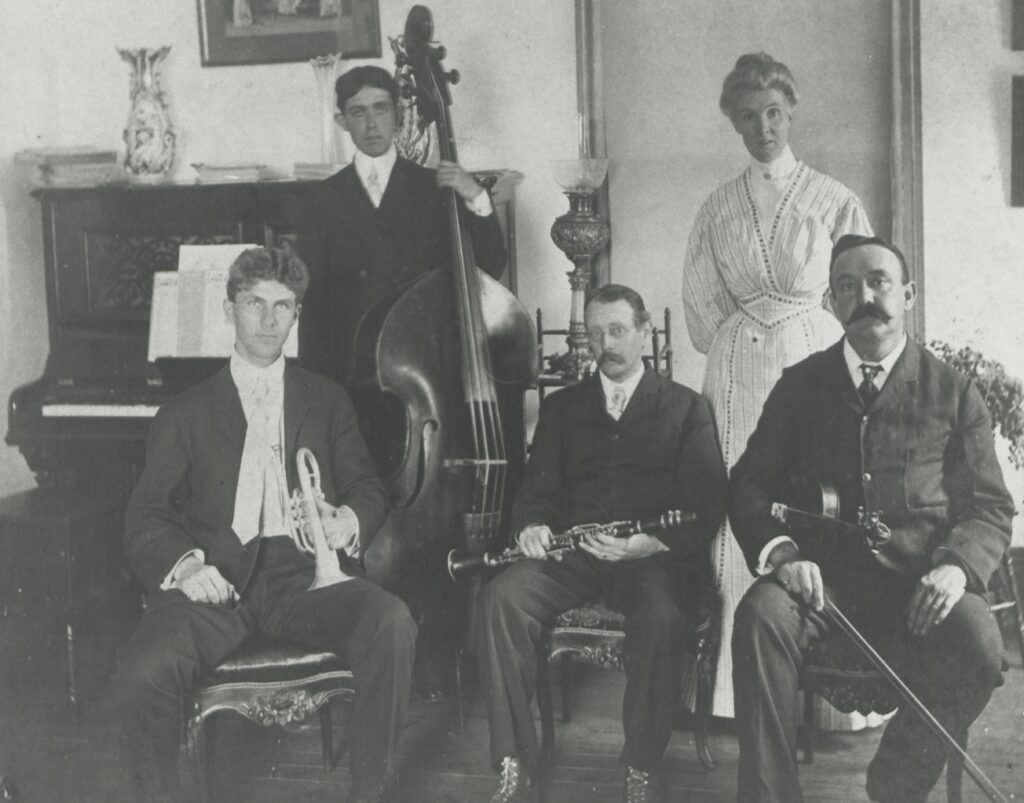
(COURTESY OF THE ORANGE COUNTY REGIONAL HISTORY CENTER)
Today, despite Harry Newell’s beloved band, it is Gertrude’s name that still holds a special place in town.
Celebrity meant something a lot different around the turn of the century, in an era of far more local communication, where the most important people were the leaders in your communities. Social circles became the beating hearts of cities, and someone like Gertrude Sweet Newell was exactly the sort of figure who would establish a name for herself, one that would never fade.
Gertrude had everything you’d need to make a proper celebrity in the early 20th century. It didn’t hurt that Gertrude was described as “a beautiful woman with auburn hair and blue eyes,” according to the Central Florida Genealogical Society. She was even once named the most beautiful woman in Orlando.
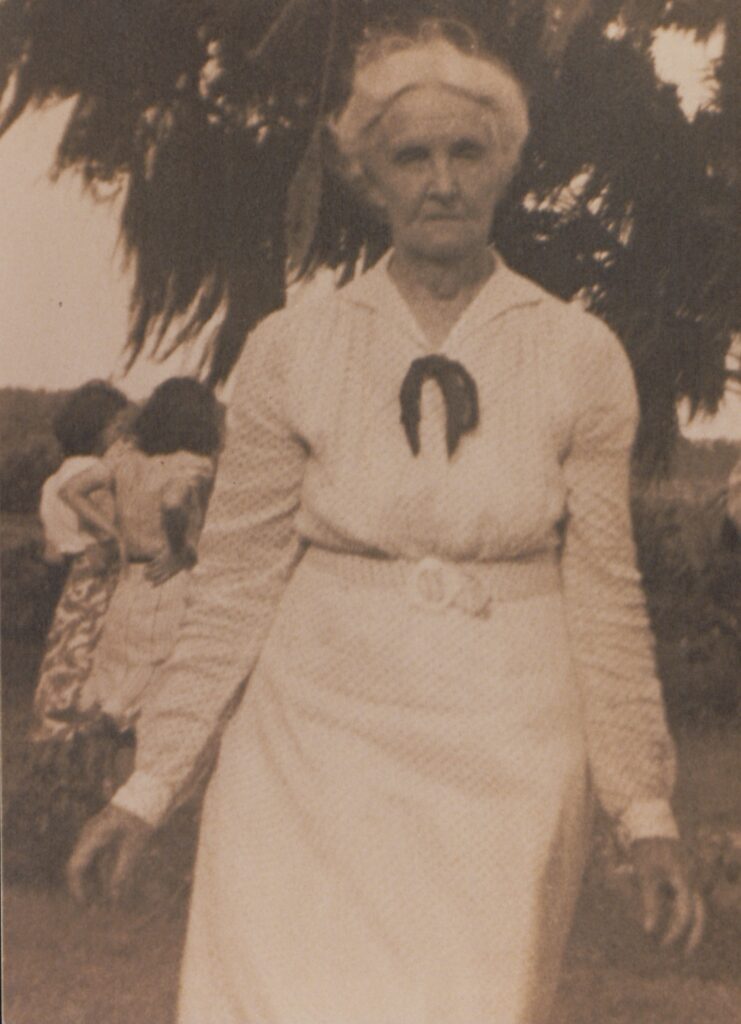
(COURTESY OF THE ORANGE COUNTY REGIONAL HISTORY CENTER)
Gertrude Sweet’s family came to Orlando in 1874 from New Orleans when she was a teenager, “a year before the little town of Jernigan had its name changed to Orlando,” according to the May 2, 1941, Orlando Evening Star. (Not necessarily true, by the way. We just officially incorporated the following year, in 1875.) In 1877, she was “Orange County’s first May Queen,” as part of Orlando’s first May Day celebration. She was already known then as a talented musician, and she’d go on to be the pianist for the Orlando Band.
Her brother, Charles Sweet, would serve the city as mayor in the early 1880s. Mayor Sweet was a surveyor, and as the streets of Orlando were laid out, Charles made sure to put in a special spot for his sister. He called it Gertrude’s Walk, and you’ve probably walked right by it, right along the train tracks that have carried visitors downtown for generations. Gertrude, according to an Orlando Sentinel piece from Jan. 26, 1986, “wasn’t too fond of the street because it is next to railroad tracks.”
Perhaps Gertrude didn’t see the appeal, but it’s certainly one of my favorite spots downtown. I’ve spent more than my fair share of evenings walking down the street that bears her name. Head out from an event at the Kia Center, wandering for a night cap as the night goes long, and you’ll no doubt find yourself along Gertrude’s Walk. Hopefully you’ll remember the name.
Gertrude Sweet Newell was in this city from the very beginning, before Orlando was even Orlando. We may not have heard her music or seen her apparently famous face, but you’ll know her name. She might not have liked the spot, but Gertrude’s still in Orlando, 80 years after her death. If that’s not fame, I don’t know what is.
___
Sources for this article include the aforementioned editions of the Orlando Evening Star and Orlando Sentinel newspapers and the Central Florida Genealogical Society’s April – June 1997 publication of “Buried Treasures,” p. 30.