
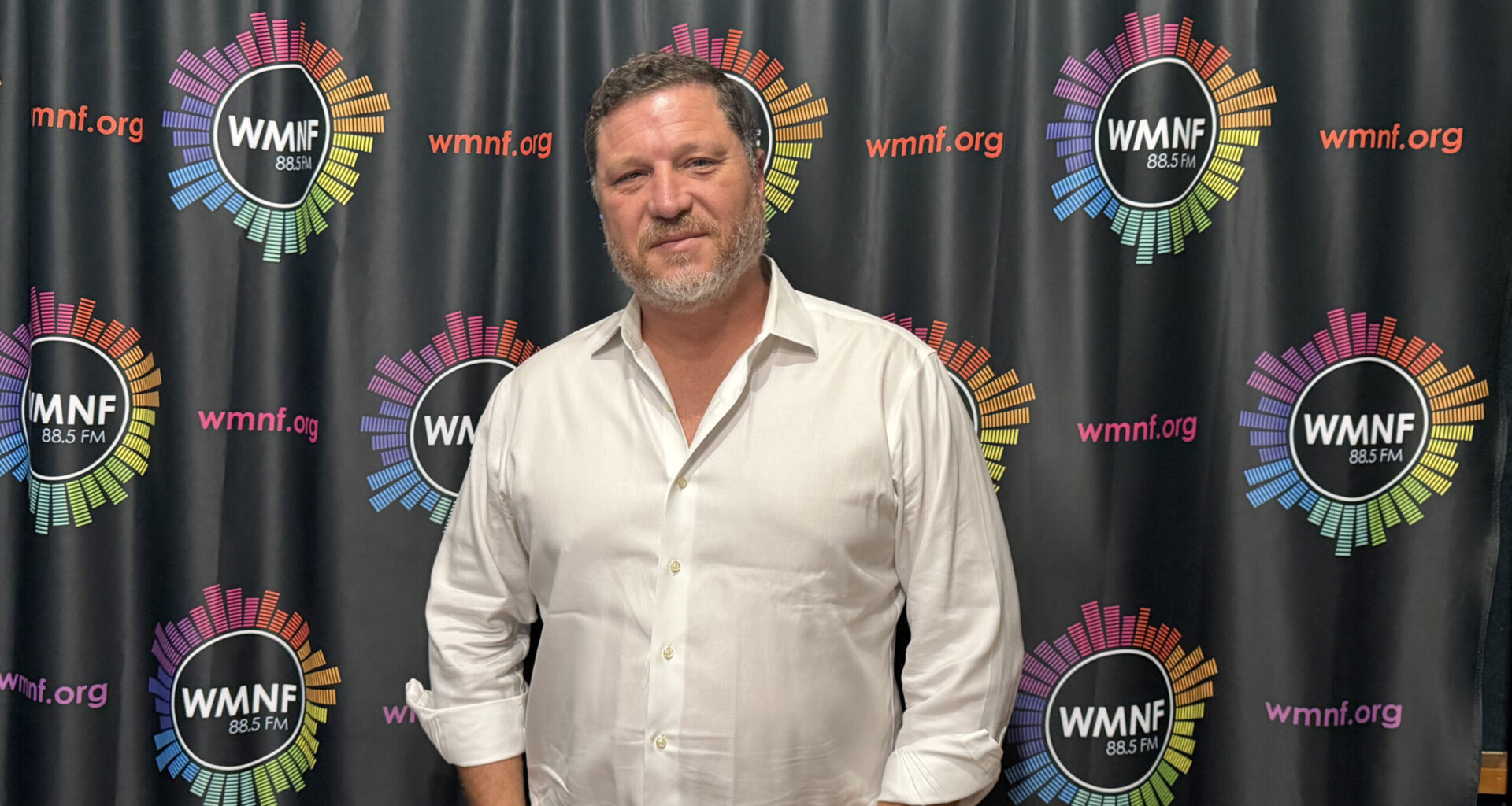
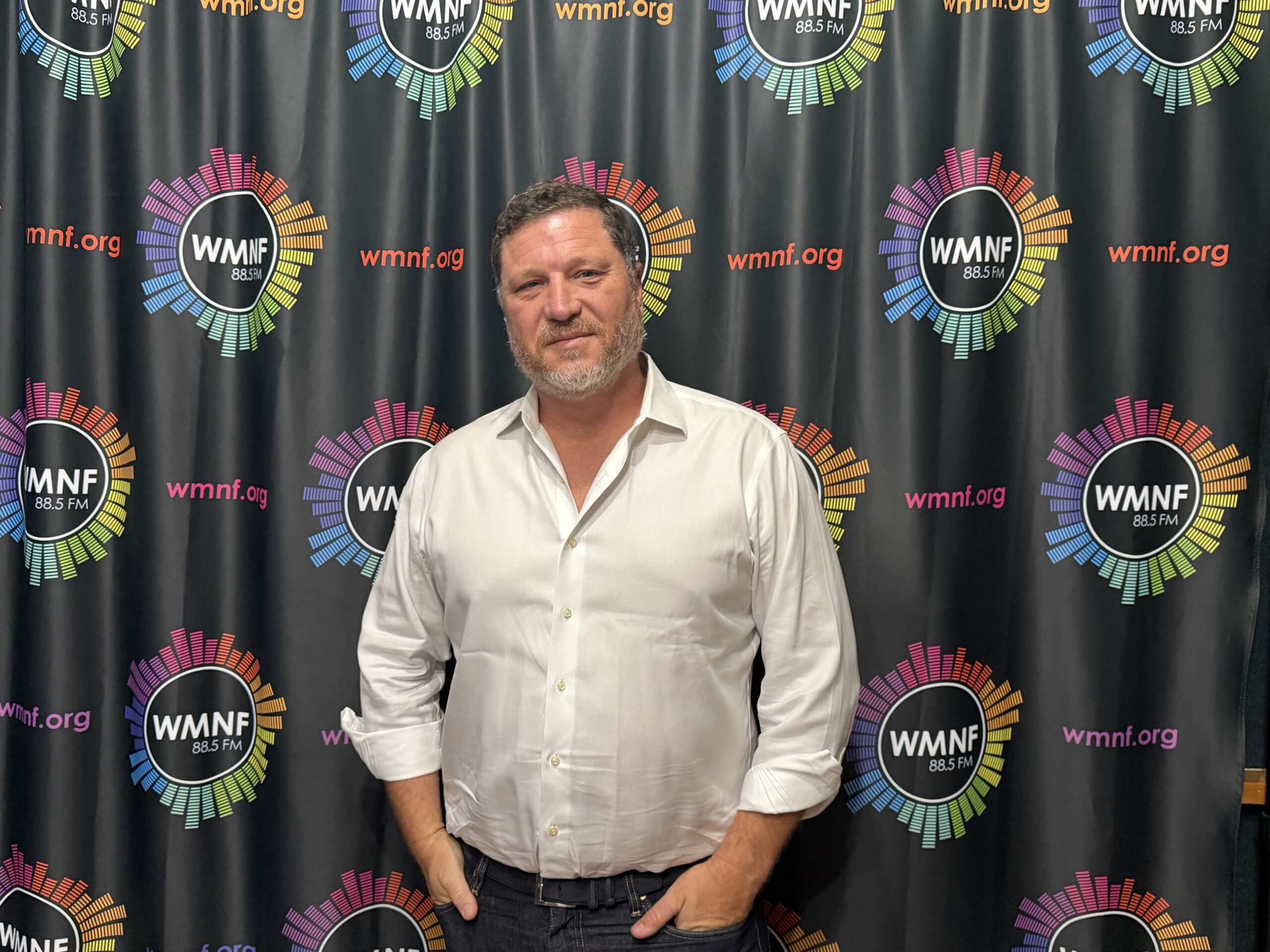
Jeff Brandes, president of the Florida Policy Project and a former Florida State Senator, joins MidPoint. Photo by Daria Mironova/WMNF.
A proposed property tax referendum could reshape how Florida’s local governments are funded, raising concerns among policy experts about its impact on homeowners, renters, and public services.
On June 10, Jeff Brandes, President of the Florida Policy Project and a former Florida State Senator, and Anders Croy, Executive Director of the Florida Watch and DeSantis Watch accountability projects, joined MidPoint to discuss the potential consequences for local municipalities, government services, and housing policy.
Concerns over local funding
Croy described the proposal as potentially “the largest tax shift in Florida history,” arguing that reducing or eliminating property tax revenues would leave counties and municipalities struggling to sustain essential services. Public hospitals, emergency response, disaster recovery, schools, and public health programs depend heavily on local property tax revenue. Without that funding source, local governments would be forced to seek assistance from the state legislature or replace lost revenue through new fees and taxes.
Brandes echoed concerns about the impact on local government autonomy. He pointed out that shifting responsibility for funding local services to Tallahassee would weaken home rule and increase state control over local decision-making.
The guests also pointed out that small counties and cities, and Florida’s “bedroom communities,” where the majority of residents live in homestead properties, would be most vulnerable to tax revenue losses and would find it difficult to provide basic services. That may lead to municipal bankruptcies and possible consolidation of counties, also potentially disrupting Florida’s political geography.
Impact on renters
Although the proposal primarily targets homeowners’ homesteaded property taxes, both MidPoint guests argued that renters could also face high indirect costs.
Croy noted that renters would receive none of the proposed tax benefits and would likely be forced to absorb higher housing costs if landlords pass through additional expenses. At the same time, all renters would remain subject to any increases in sales tax or local fees adopted to replace lost property tax revenue.
Brandes agreed, saying renters could effectively be “hit twice” through both higher rents and additional taxes, fees or assessments.
Emergency services and disaster response
The discussion also highlighted concerns about emergency preparedness. With Florida entering another hurricane season, Croy questioned whether communities would have sufficient resources to respond quickly after major storms if local funding sources are reduced. He argued that dependence on state assistance could slow disaster recovery operations and make communities more vulnerable during emergencies.
Potential effects on housing development
Brandes raised another concern: the proposal’s possible impact on housing policy. He suggested that if homestead properties generate less revenue for local governments in the future, then cities and counties may become less inclined to approve new single-family housing developments. Instead, local officials may favor apartments and other non-homesteaded properties that continue to produce more tax revenue.
What about existing financing of public works and projects?
Brandes noted that some municipalities have financed major infrastructure projects by bonding them with future tax revenues. When those revenues are no longer forthcoming, what then? He suggested it was “legislative malpractice” for the legislature to have put this on the ballot without assembling and reviewing the necessary data and thoroughly researching such matters. Brandes also believes that some members of the legislature are now feeling “buyer’s remorse” over their vote in favor of advancing this referendum.
Property taxes vs property insurance
The discussion also touched on Florida’s ongoing property insurance crisis, questioning whether the referendum to lower property taxes was an attempt to deflect voters from their high property tax bills.
Brandes said that homeowners’ insurance conditions have improved since recent reforms, and he predicted that rates could continue to decline if the state avoids major hurricanes.
Croy cited data showing that Florida homeowners still pay several times the national average for property insurance. He noted that premiums have risen dramatically over the past several years. Croy added that lawmakers should prioritize affordable insurance before pursuing major property tax changes.
The MidPoint discussion stressed a central question facing Florida voters: whether passing this ballot question to reduce property taxes would provide meaningful financial relief or simply shift costs elsewhere, placing new financial pressures on local governments, public services, and residents across the state. Brandes summed up the consequences if Florida voters pass this referendum, suggesting Florida would then become known as the “fee state of Florida, instead of the free state of Florida.”
You can listen to this entire MidPoint show on demand from the archives here, on the WMNF app, or as a WMNF MidPoint podcast on Spotify or Apple Music.