

 Credit: Mary Rachel Quinn
Tampa’s history is so rich, and there are so many different versions of all the stories, that sometimes reality and fantasy start to blur. Paul Wilborn—author, artist, journalist, Executive Director at St. Pete’s Palladium Theater and founding member of Ybor City’s Artists and Writers Ball—leans into the ambiguity in his second novel, “The Everlasting Life of Charlie Wall,” released in April via St. Petersburg Press.
Born and raised in Temple Terrace, Wilborn, a King High School grad and alum of University of the University of South Florida, didn’t discover Ybor City until after he was hired at the since-shuttered Tampa Tribune. The district is where Wilborn, 74, lived his misspent youth—and it’s the backdrop of “The Everlasting Life of Charlie Wall ” where the mobster falls into depression. Trip, who works for Wall, works to rebuild his boss’ self-esteem by convincing wall that some people still want him in the grave.
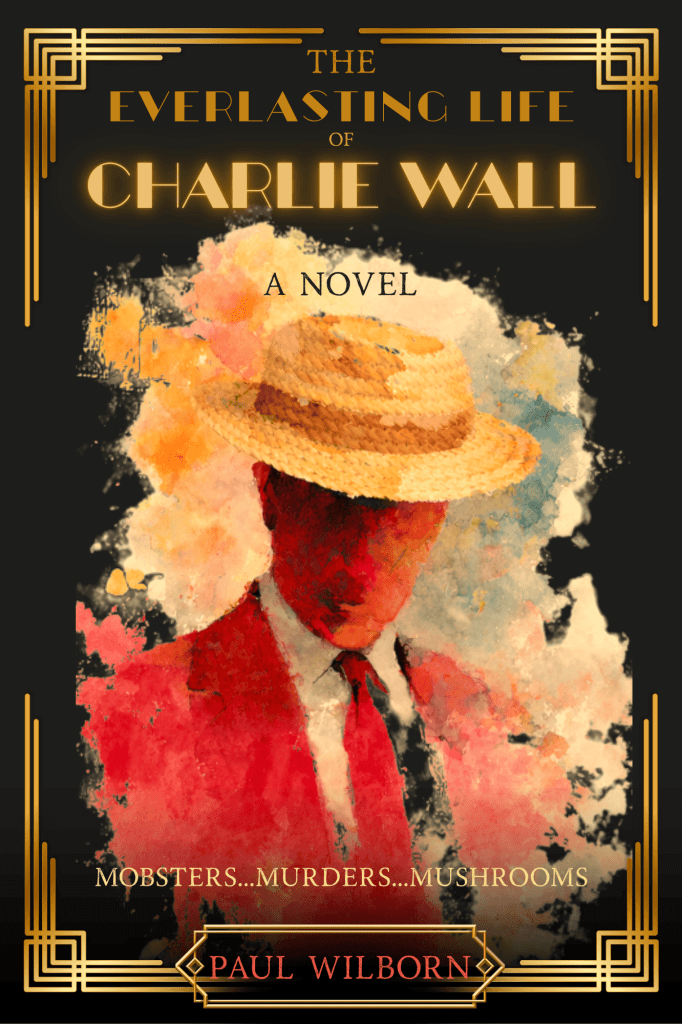
“What neither of them know is that an aging hit man has decided to finish the job he botched 30 years earlier,” Wilborn says about the work. “I call the book a ‘factual fantasy.”’ The real Charlie Wall died in 1955, but in my book, he lives. The book tells the true story of Tampa, which was one of the most corrupt and vice-ridden cities in America for three-fourths of the 20th century.”
Read an excerpt from the first chapter of “The Everlasting Life of Charlie Wall ” below. Learn more at wilbornwrites.com.
An arrow—its tip shiny silver, its sleek red shaft trimmed at the base with a tuft of lime-colored feathers—swooshed by Charlie’s head, slamming with a “thock” into the frame above the front door. In the snapshot silence afterward, Trip Armstrong thought he could hear the arrow quivering, like someone had plucked a taut string in the guts of a grand piano.
“Holy undershirts!” Charlie gasped, as Trip turned the key and pushed the old man through the open door, slamming it behind them.
“Whoa Betty!” Charlie shouted. “What in Hades was that?”
Trip suppressed a grin. It tickled him when his boss made up his own curse words. They stood for a long beat in the dark, listening to the ticking of the grandfather clock before Trip flipped the light switch.
Charlie’s mouth twisted up into a tight smile. “They keep trying. They keep failing.”
Stepping to the closed door, he shouted to his would-be assassin: “You should know by now you can’t whack Charlie Wall!”
But, at least for a moment, they could scare him. When Charlie turned back, Trip noticed a growing stain around the zipper of his seersucker trousers. Charlie dismissed the stain with a wave of his hand.
“I told you I had to pee. Dalmation! Now I gotta clean this suit.” Charlie pulled a pocket watch from his jacket, scanned it, then looked up at Trip, as if it were any other night. “How’d it get so late?”
Trip knew exactly how it got so late. Waving a limp twenty at Betty, the longtime bartender at The Turf, Charlie had insisted on a fourth Old Fashioned.
“You sure, Charlie?” Betty’s face was a mask of bones and wrinkles, her sparse curls yellowed by six decades of cigarette smoke. “I think your level is good.”
On most subjects, Charlie had a philosophy he lived by, except when he didn’t feel like it. His philosophy of drinking was like that. He believed a wise man should know how to hold his liquor. About once a night, usually in The Turf, his favorite among the dark, old-school joints around downtown Tampa, the drunken philosopher would rise slowly from the barstool and straighten his shoulders, his lanky, Abe Lincoln frame draped in his standard uniform—a seersucker suit that seemed to grow larger every day—Or, maybe after 85 tumultuous years on the planet, Charlie was shrinking. His pale blue dress shirt hung loose around a wattled neck, his paisley bowtie dangled, his straw boater rested upside down on the bar. “People drink the wrong way,” Charlie would say to his barroom companions—often total strangers—his high lonesome voice a mix of southern aristocrat and cracker cowpoke.
“A wise man only drinks to here.” He would draw a flat hand across the middle of his chest, where his shirt was rorschached with soup and gravy stains. He’d wiggle his fingers.
“A little higher. A little lower. It’s okay. When a man gets in trouble is when he drinks to here.” Charlie’s index finger slid like a knife blade across his neck. “It’s neck drinkers that give liquor a bad name.”
Betty had heard it plenty of times. Usually after Charlie had let the booze rise to neck level. But she knew you didn’t argue with Charlie Wall. People had died after disagreeing with Charlie. Sure, it was a long time ago, but they had died. In cars. On front porches. In trash-strewn alleys behind Ybor City dive bars. All rising to meet their maker courtesy of a double-barreled blast from a sawed-off wielded by one of Charlie’s guys.
Betty set down a fresh Old Fashioned. Easing off the stool, Charlie took the drink down the bar where a couple of 30ish women were giggling at a private joke.
“I’m Charlie Wall,” he announced. “Ever hear of me?”
The women wore the business-blue pant suits and pastel blouses that said they worked just down the street at the courthouse. Likely court reporters, Trip thought. Their hair styles were identical, all scrambled-up curls, though one was dyed blond, the other chocolate brown.
“You a lawyer?” The brunette asked.
“I’m a crook.” Charlie eased onto the stool next to them. “Used to be anyway. Long time ago. Call your Momma. I bet she’s heard of me.”
Pitch in to help make the Tampa Bay Journalism Project a success.
Subscribe to Creative Loafing newsletters.
Follow us: Google News | NewsBreak | Reddit | Instagram | Facebook | BlueSky
Recent Stories

The former Republican leads Democrats in fundraising with $6 million.

“We should never allow antisemitism anywhere, and we have to stand up against it,” Scott said.

“With each change of season, the interior of the house experiences a change.”
This article appears in June 11 – 17, 2026.
Related