
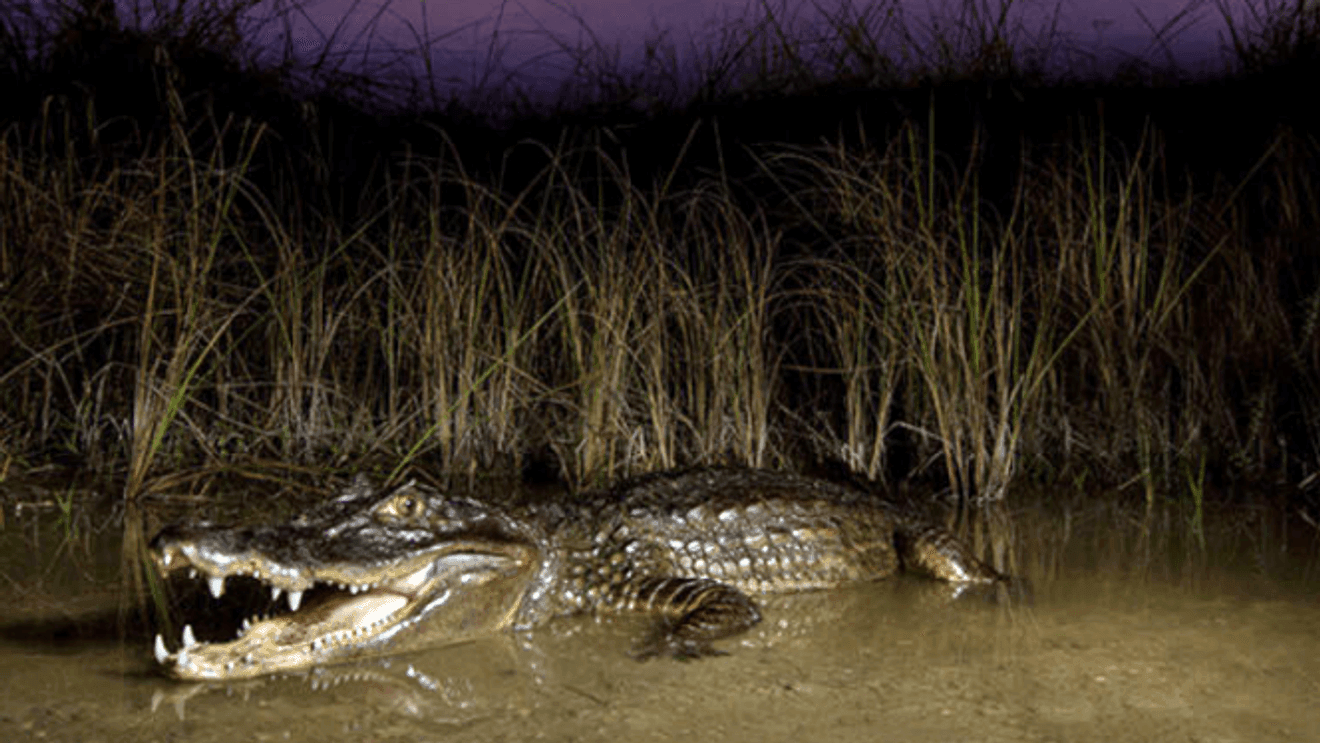
WEST PALM BEACH, Fla. (CBS12) — It looks familiar at a glance, gliding just beneath the water’s surface in canals and wetlands across South Florida. But scientists say this reptile is neither an alligator nor a crocodile.
It’s the spectacled caiman, and a University of Florida study is now shedding new light on its growing presence in the Everglades.
In the canals, wetlands and marshes of the Florida Everglades, the spectacled caiman has quietly expanded its foothold, threatening an already vulnerable ecosystem. The spectacled caiman gets its name from a key physical feature: a bony ridge between its eyes that looks like a pair of glasses. Scientists say this is the easiest way to tell it apart from Florida’s native crocodilians.
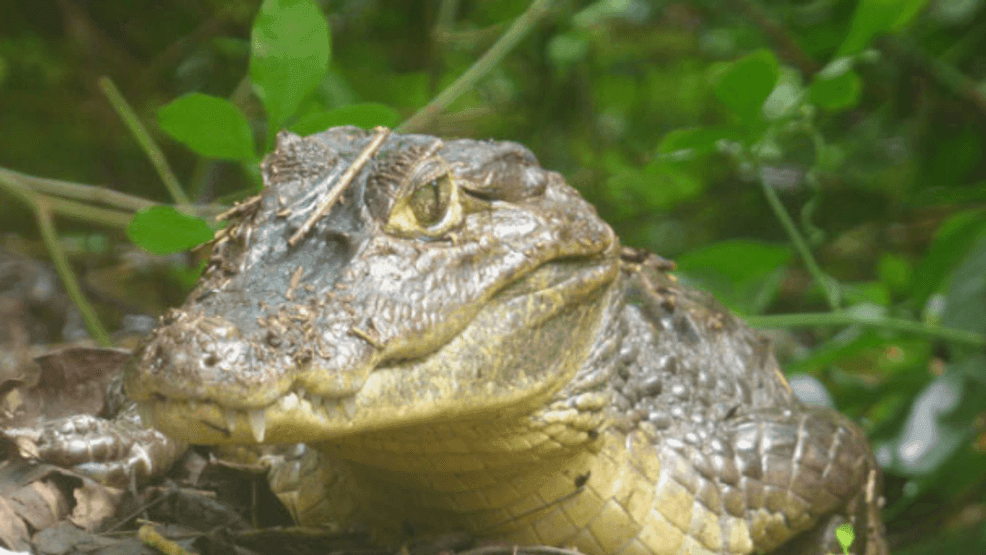
It’s the spectacled caiman, and a University of Florida study is now shedding new light on its growing presence in the Everglades. In the canals, wetlands and marshes of the Florida Everglades, the spectacled caiman has quietly expanded its foothold, threatening an already vulnerable ecosystem. (University of Florida)
Caimans are generally smaller than alligators and crocodiles, typically reaching about 6 to 8 feet. They also have a shorter, broader snout than crocodiles and a heavily armored body lined with bony plates. Their olive-brown coloring and banded tails can make them easy to confuse with young alligators at a distance.
The species, native to Central and South America, has been in Florida for decades. First reported in the wild in the 1960s, it was considered established by 1980 after it began reproducing in the region.
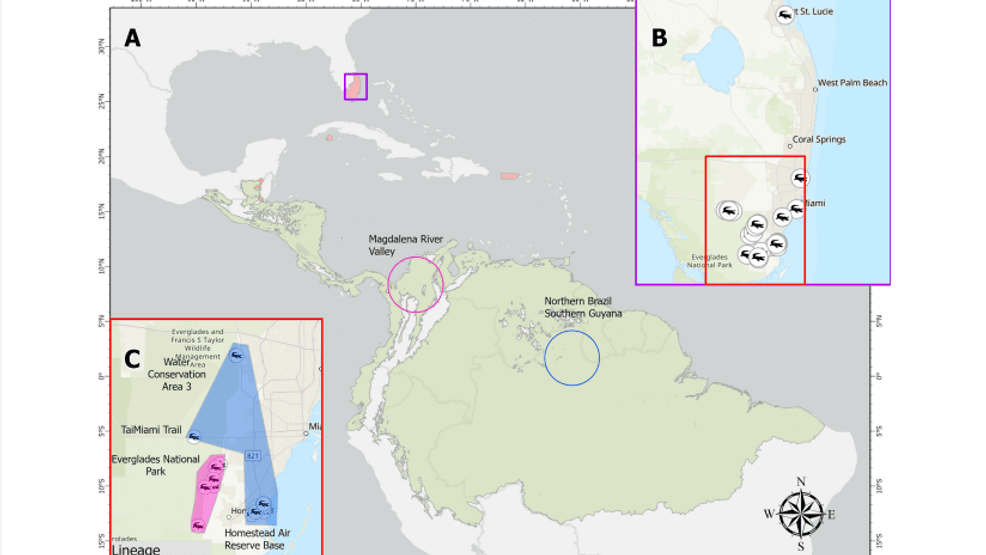
Caimans are found across South Florida, from urban canal systems to wetlands near Everglades National Park. Sightings as far north as Port St. Lucie suggest its range may still be growing. (University of Florida)
Caimans are now found across South Florida, from urban canal systems to wetlands near Everglades National Park. Sightings as far north as Port St. Lucie suggest its range may still be growing.
A University of Florida study reviewing more than 70 years of research shows the species is more widespread and adaptable than previously understood, while also highlighting major gaps in what scientists still don’t know about its impact.
Sergio Balaguera-Reina, lead author of the study and a UF/IFAS research scientist, said:
We now know the spectacled caiman is established in more areas than we previously thought.”
“We still lack basic information about how this species may affect Everglades ecosystems,” said Balaguera-Reina.
The caiman’s adaptability is a key concern. It thrives in both natural and manmade habitats and eats a wide range of prey, including fish, birds, reptiles and small mammals. That broad diet could lead to competition with native predators like alligators and American crocodiles.
Researchers say the species may also complicate the Comprehensive Everglades Restoration Plan, a multibillion-dollar effort to restore water flow and protect wildlife. Improved freshwater conditions could make habitats even more suitable for caimans.
See also: Florida deputies arrest father after ATV wheelies with child at street takeover
Genetic studies show Florida’s population likely comes from multiple regions in South America, increasing its ability to adapt. Scientists are still working to understand how far the reptiles travel, where they nest and how quickly they may spread.
“We think caimans in Florida may move more than populations in their native range,” Balaguera-Reina said. “This could mean they disperse faster than we expect.”
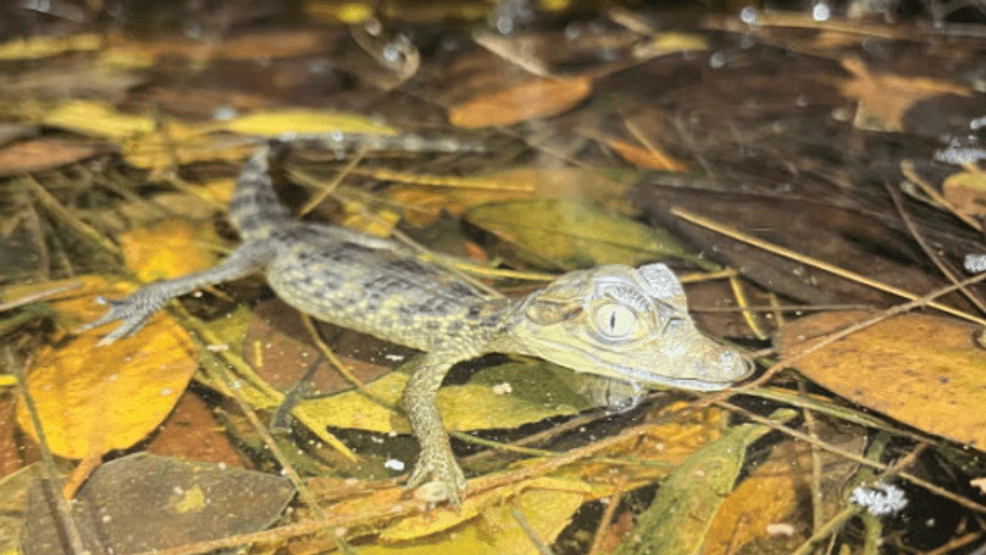
It’s the spectacled caiman, and a University of Florida study is now shedding new light on its growing presence in the Everglades. In the canals, wetlands and marshes of the Florida Everglades, the spectacled caiman has quietly expanded its foothold, threatening an already vulnerable ecosystem. (University of Florida)
Researchers are tracking the species and developing new tools to detect emerging populations. They also urge the public to help by reporting sightings through the IVEGOT1 app or hotline: 1-888-IVEGOT1 (483-4681).
For now, experts say the spectacled caiman is a reminder of how quickly invasive species can gain ground and how difficult they can be to control once established.