
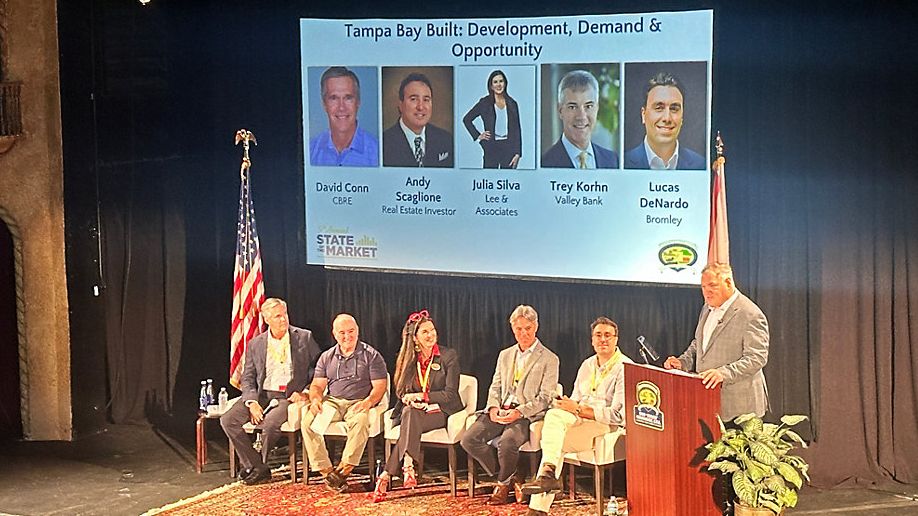
TAMPA, Fla. — Tampa’s housing market is entering a new phase as rapid pandemic-era growth begins to cool, even as the region continues to attract new residents and investment.
That shift — along with major questions about housing affordability and proposed property tax changes — took center stage at the fifth annual “State of the Market,” hosted by Hillsborough County Property Appraiser Bob “Coach” Henriquez.
The event brought together economists, developers, real estate professionals and business leaders to take a closer look at residential, commercial and industrial growth across the Tampa Bay area, and what comes next for one of Florida’s fastest-evolving regions.
Whether Tampa–Hillsborough remains a top destination to live, work and play is now a key question for both locals and newcomers.
Experts say strong population growth and long-term investment potential continue to keep the region competitive — but with more cautious optimism than in recent years.
After years of rapid pandemic-era growth, the housing market is beginning to normalize, with slower price increases and more balanced buyer demand.
Economists at the event described the moment not as a downturn, but as a turning point and one that will require more strategic decision-making moving forward.
At the same time, a major policy debate is unfolding.
A proposed property tax reduction that could go before voters this November drew significant attention, with local leaders raising concerns about how cuts could impact essential services.
Tampa Mayor Jane Castor warned that property tax revenue already falls short of covering critical operations like police and fire services.
“Property taxes do not generate enough revenue on their own to fully fund police and fire services,” Castor said.
Henriquez echoed concerns about the broader impact, noting that any reduction in property tax revenue would affect multiple agencies across the county.
“People need to realize that loss is not just one size fits all,” Henriquez said. “It affects all taxing authorities — the Children’s Board, Port Authority, Aviation Authority — many of which rely heavily on property tax dollars.”
The Hillsborough County Property Appraiser’s Office is also analyzing proposed changes to Florida’s homestead exemption, including a potential increase that could significantly reduce taxable value across the county.
While that could provide relief for homeowners, Henriquez said the long-term effects depend on how local governments adjust.
“The homestead exemption is probably the easiest way to lower your property tax burden,” he said. “And depending on what happens in November, that benefit could increase significantly.”
The proposal could also expand eligibility for newer Florida residents, though Henriquez noted that legal questions remain.
“That concept has been found unconstitutional previously, so that’s something that will likely be litigated before it moves forward,” he said.
Despite economic pressures such as high interest rates, inflation and slower transaction volume, experts pointed to continued resilience in the market — driven by private investment and long-term growth trends.
For Tampa, the takeaway is clear: the market remains strong, but no longer at the peak seen just a few years ago.
“The market continues to be strong,” Henriquez said. “Clearly it’s not what it was a couple of years ago, but it’s more corrected.”
As the region navigates this transition, leaders say transparency will be key — especially with potential property tax changes heading to voters.
The property appraiser’s office is developing an online tool that will allow homeowners to estimate potential savings if the proposal is approved, part of a broader effort to help residents better understand the impact.
With growth continuing — but at a more measured pace — the decisions made now could shape the future of housing, development and affordability across Tampa Bay.