
By Raymer Maguire, The CLEO Institute
The Orlando Utilities Commission (OUC) likes to call itself “the reliable one,” but in my house, we refer to it as “the dirty one.”
As director of campaigns and policy for The CLEO Institute, I spend most days thinking about how Florida’s utilities can transition away from burning expensive, polluting coal and gas and instead invest in clean, affordable energy powered by solar and backed by battery storage. That means I think a lot about OUC, because it has one of the dirtiest fuel mixes among Florida’s utilities, with 84% of its power coming from burning gas and coal.
For reference, Florida’s largest utility, Florida Power & Light, gets less than 1% of its power from coal. The second-largest energy provider, Duke Energy Florida, derives about 9% of its energy from coal. OUC, by comparison, still generates roughly 24% of its electricity from coal, a point that OUC board member, Roger Chapin, recently bragged about while inaccurately saying that increasing natural gas usage is “integral to bringing on more solar.”
 Orlando Utilities Commission’s Stanton Energy Center (Gabriel Vanslette, CC BY 3.0, via Wikimedia Commons)
This over-reliance on gas and coal has made Orlando dirtier, less healthy and more expensive. Coal burning drives up air pollution and greenhouse gas emissions, while gas, which still pollutes, also exposes customers to volatile global gas markets. OUC’s bills are directly tied to fuel costs, which is why families often see their bills spike when gas prices fluctuate up. The bottom line is that OUC is owned by the city of Orlando. It should be working to make life in Orlando cleaner and more affordable.
Instead of accelerating its transition to clean energy, OUC is delaying and outsourcing it. For example, the retirement of Stanton 1, a coal unit previously scheduled to close this year, has been pushed to mid-2026. Another OUC coal stack, Stanton 2, was previously scheduled to phase out coal in 2027, but OUC’s new 10-year site plan now says the timeline is “to be determined.”
These decisions have very real impacts on families’ monthly budgets. For instance, OUC reported that over 35% of the monthly bills for Orlando residents who use 1,000 kWh of electricity per month are allocated just to pay for gas and coal. Every extra month of coal burning means more pollution and higher bills.
The Stanton Energy Center, where OUC burns coal, has also stored coal ash in an unlined landfill for nearly four decades. According to the U.S. Environmental Protection Agency, “coal ash contains contaminants like mercury, cadmium, and arsenic. Without proper management, these contaminants can pollute waterways, groundwater, drinking water, and the air.”
OUC’s unlined landfill is particularly concerning during hurricanes, when flooding can spread contaminants widely. Orlando’s communities deserve clean closure of the unlined landfill, independent oversight of failing infrastructure, expanded groundwater and air monitoring with public reporting, and a community health assessment while the city transitions to clean energy solutions.
 Raymer Maguire
This is all happening at the same time that OUC does not offer robust energy efficiency programs and is making it harder for residents to generate their own clean power. Last December, commissioners voted unanimously to phase out net metering, replacing fair credits for rooftop solar with a complicated “PeakShift” program. Every resident who spoke at the public hearing opposed the change.
If OUC truly intended to reduce harmful emissions, it should encourage, not discourage, local distributed solar adoption. The good news is that there is a better path. Utility-scale solar is now cheaper than gas and coal, and once the panels are built, the fuel (sunlight) is free. Yet instead of owning its own solar farms, OUC relies on decades-long contracts with the parent company of Florida Power & Light. What is the point of a nonprofit, city-owned utility if most of the benefits flow to an out-of-state, for-profit corporation? OUC should build and own local solar capacity so savings return to Orlando’s residents.
In a little more than two years, Orlando will have a new mayor who will serve on the OUC board. That leader can chart a different course — one that is cleaner, healthier and more affordable.
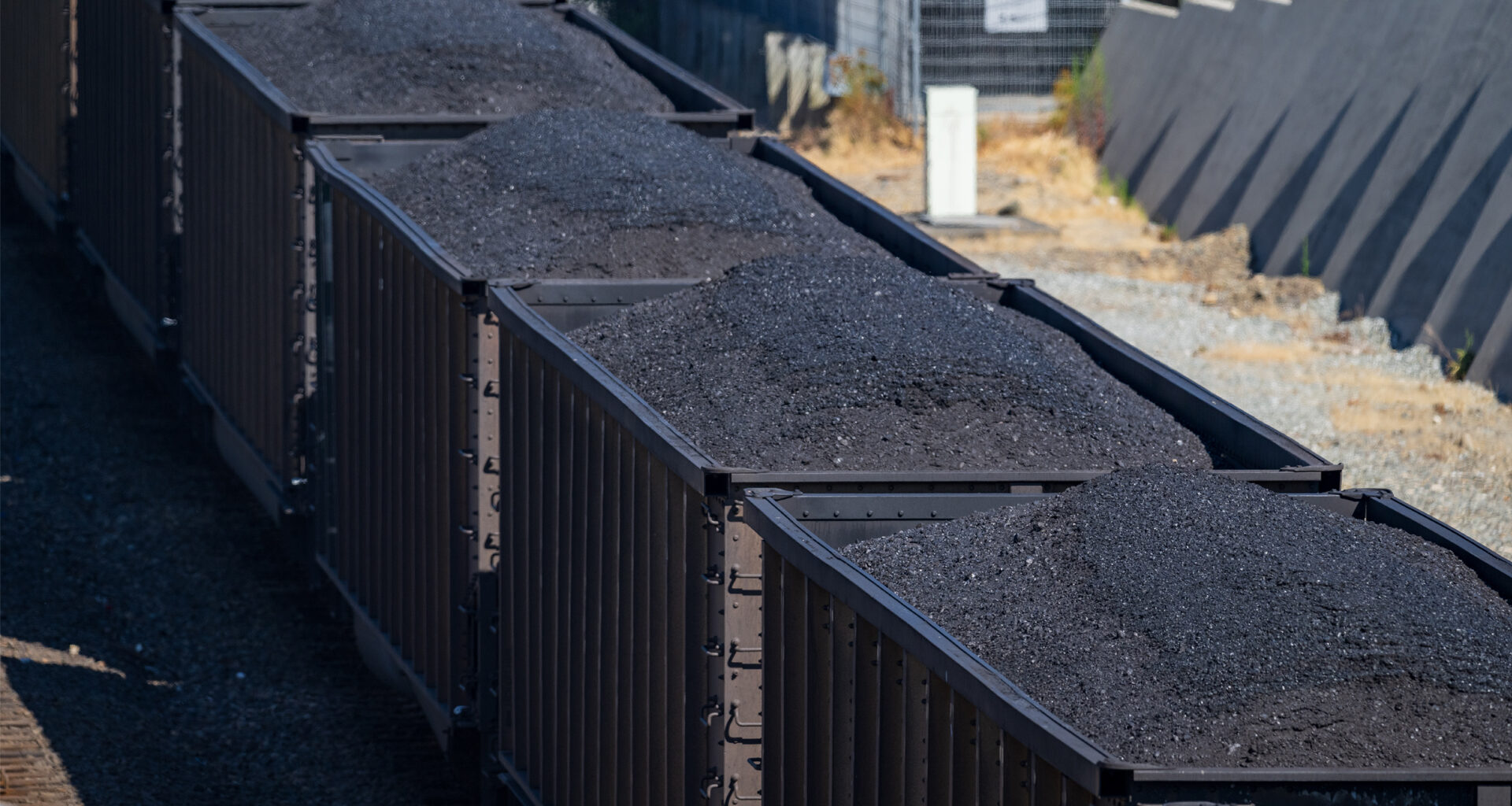
Raymer Maguire is director of campaigns and policy at The CLEO Institute, a nonprofit, nonpartisan organization dedicated to climate education and advocacy. Banner photo: Coal being transported by train (iStock image).
Sign up for The Invading Sea newsletter by visiting here. To support The Invading Sea, click here to make a donation. If you are interested in submitting an opinion piece to The Invading Sea, email Editor Nathan Crabbe at ncrabbe@fau.edu.