
A brutal combination of high temperatures and humidity will lead to dangerously hot heat indices Thursday that forecasters say could peak at 110 degrees.
The high feels-like temperatures has led the National Weather Service to place much of Florida, including Tampa Bay, under a heat advisory that will begin at 11 a.m. and will run until 7 p.m.
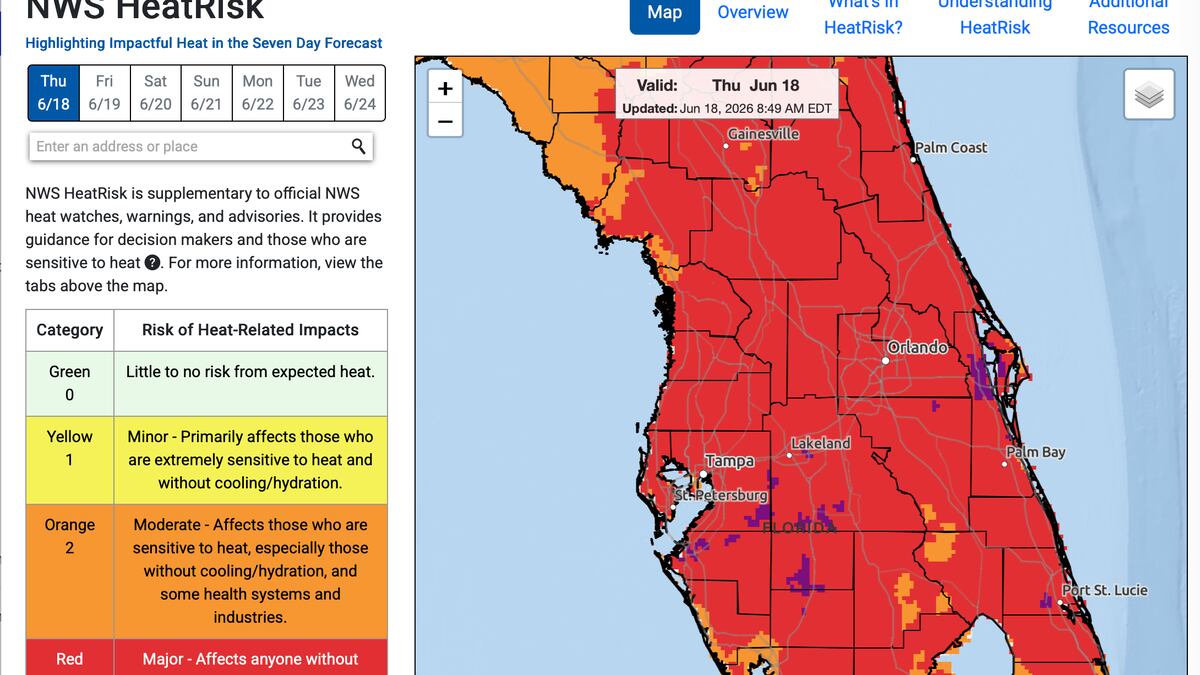
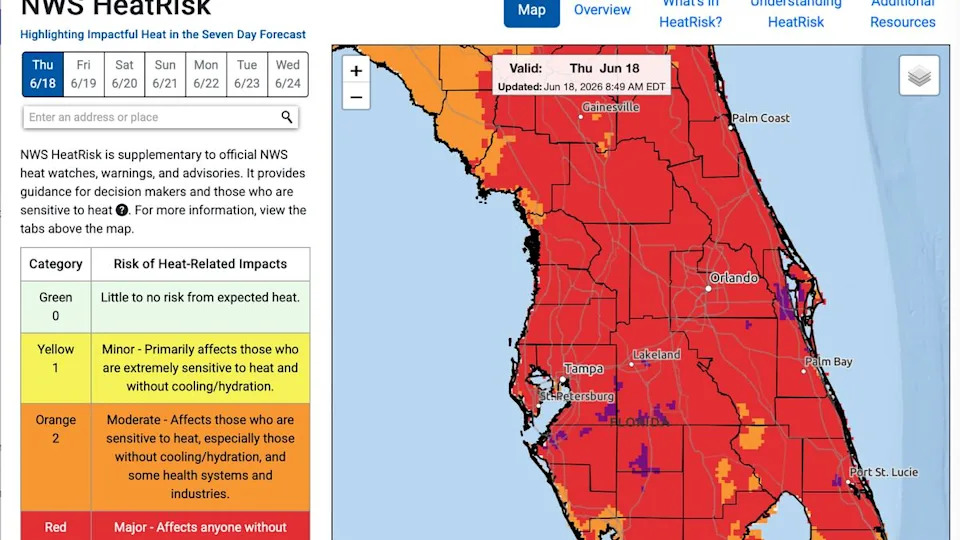
Another tool, a map depicting the possibility of heat-related illness, showed much of Tampa Bay under a “major” level three out of four risk on Thursday. That is the kind of heat can affect anyone without access to cooling or water.
Some small pockets of east Hillsborough were under an “extreme” warning, when the weather service expects long, overnight heat with no relief.
The map is created by looking at the hottest 5% of temperatures for a given date and location. This allows the weather service to better account for a person’s ability to acclimate to rising heat.
A forecast from the weather service’s Tampa Bay office said more heat advisories could come this weekend as the heat index could remain 105 degrees or above.
The heat index is a mix of air temperature and humidity. The blend of the two is often referred to as the “feels-like” temperature — how outside temperatures feel on our bodies.
Weather officials advised drinking plenty of water, wearing light-colored cloths and avoiding the warmest parts of the day.
For those without access to cooling, Florida’s extreme heat is particularly perilous.
Our bodies’ ability to sweat is often strained by the region’s high humidity.
When a person sweats, heat is pulled away from their body, thus cooling them down. When humidity levels are high, the air becomes saturated with water, and a person’s ability to cool lags.
Those who spend long periods of time outside, like homeless people or outdoor workers, are most vulnerable to high temperatures.
Children and older adults, who already struggle to regulate temperatures, are also most sensitive to heat.
How to prevent heat illnesses
Heat illness can fall on a spectrum. It can start with cramps or a rash, but in severe cases — when a person’s body temperature soars to around 104 degrees — it can lead to heatstroke.
If you can, only spend time outside during the coolest hours of the day, in the morning and at night. Access to water and hydration breaks are essential.
If you develop a rash, stomach cramps, headaches or nausea, get out of the sun and into a shaded or air-conditioned area to cool down. Often, this is enough to safely bring down a person’s body temperature.
Doctors also suggest shedding clothes to allow for more sweating.
For additional cooling, place a wet towel on a person’s neck or ice packs on their head and armpits. Throwing water on a person can also help.
If you notice someone acting differently or showing changes in their mental status, call 911 and cool them immediately.
For more on heat risks, check out the Center for Disease Control’s website.
• • •
The Tampa Bay Times launched the Environment Hub in 2025 to focus on some of Florida‘s most urgent and enduring challenges. You can contribute through our journalism fund by clicking here.