
TALLAHASSEE, Fla. — The Spring 2026 graduating class at the Florida A&M University–Florida State University
College of Engineering represents a milestone more than two decades in the making.
Fifty engineering degrees were awarded this spring to 49 graduates, making it the
largest graduating cohort of FAMU engineering students since the turn of the millennium.
The achievement reflects years of strategic growth, student-centered support and a
commitment to preparing the next generation of engineers.
Building a Pipeline for Success
For university leaders, the achievement represents more than a number—it reflects
the success of intentional recruitment, academic support and student development initiatives
designed to help engineering students thrive.
“Graduating the largest group of FAMU engineers from the joint college since the turn
of the millennium is evidence that what we’ve built here is working,” said Suvranu De, Ph.D., dean of the FAMU-FSU College of Engineering. “Our enrollment has grown, our support
infrastructure has matured, and our faculty have deepened their investment in student
success. These were students who were recruited intentionally, supported consistently
and graduated because we built systems designed to get them there.”
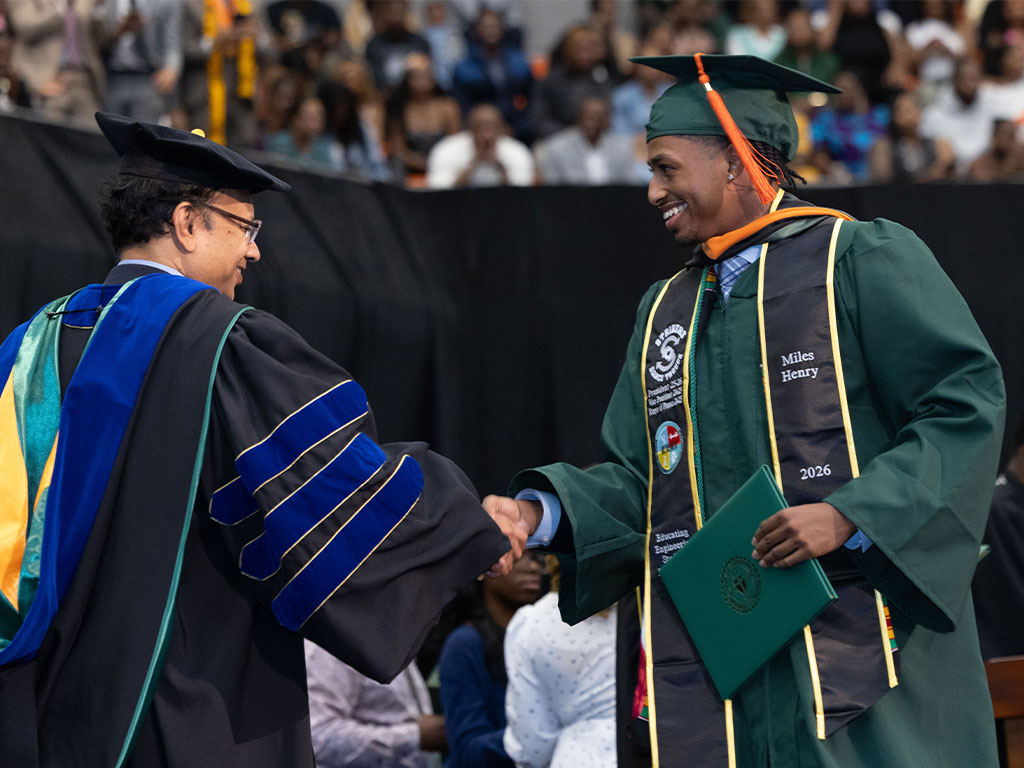 Dean Suvranu De, Ph.D., dean of the FAMU-FSU College of Engineering, congratulates
a graduating engineering student during Florida A&M University’s Spring 2026 Commencement
Ceremony. (Photo courtesy Christian Whitaker)
Over the past five years, FAMU undergraduate enrollment at the joint college has increased
by 66%, reflecting the effectiveness of strategic recruitment efforts and student
support programs. Dean De said the college’s success is rooted in a comprehensive
approach that begins before students arrive on campus and continues through graduation.
“This milestone belongs to an entire ecosystem, and we’ve invested deliberately in
every part of it,” De said. “On the recruitment side, we have a full-time recruiter
dedicated solely to identifying FAMU-bound students who are well prepared in math
and science and on track to complete an engineering degree.”
That support continues once students arrive through expanded scholarship opportunities,
Engineering Living Learning Communities, peer-to-peer tutoring and academic resources
designed to help students navigate the rigors of engineering coursework.
Investing in Student Achievement
Among the programs contributing to student success is the Engineering Student Access
Program, supported through Florida A&M University’s Title III Programs. Of the 40 first-time-in-college students in the graduating cohort, 34 participated
in engineering access initiatives, representing nearly 85% of the graduating class.
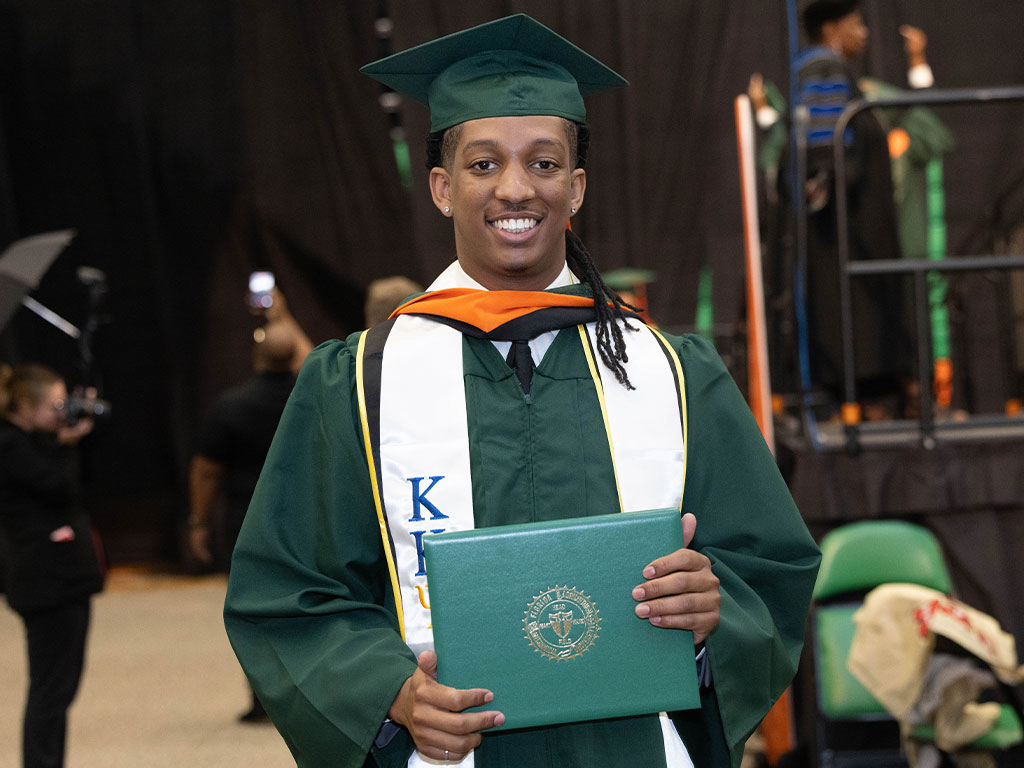 A member of the Spring 2026 graduating class celebrates earning an engineering degree
during Florida A&M University’s Commencement Ceremony. (Photo courtesy Christian Whitaker)
For Charmane V. Caldwell, Ph.D., director of Student Access at the FAMU-FSU College of Engineering, the milestone
reflects years of intentional efforts to remove barriers and create pathways to success
for aspiring engineers.
“For me, this moment is deeply personal because it represents a journey that began
decades ago,” Caldwell said. “As a student at the FAMU-FSU College of Engineering
in the 1990s, I experienced firsthand what the college meant to students on both campuses.
There was a strong sense of community, pride and responsibility to help the next generation
succeed.”
After returning to the college more than a decade ago, Caldwell worked with alumni,
industry partners and FAMU Title III to expand student access programs and strengthen
support systems designed to improve retention and graduation outcomes.
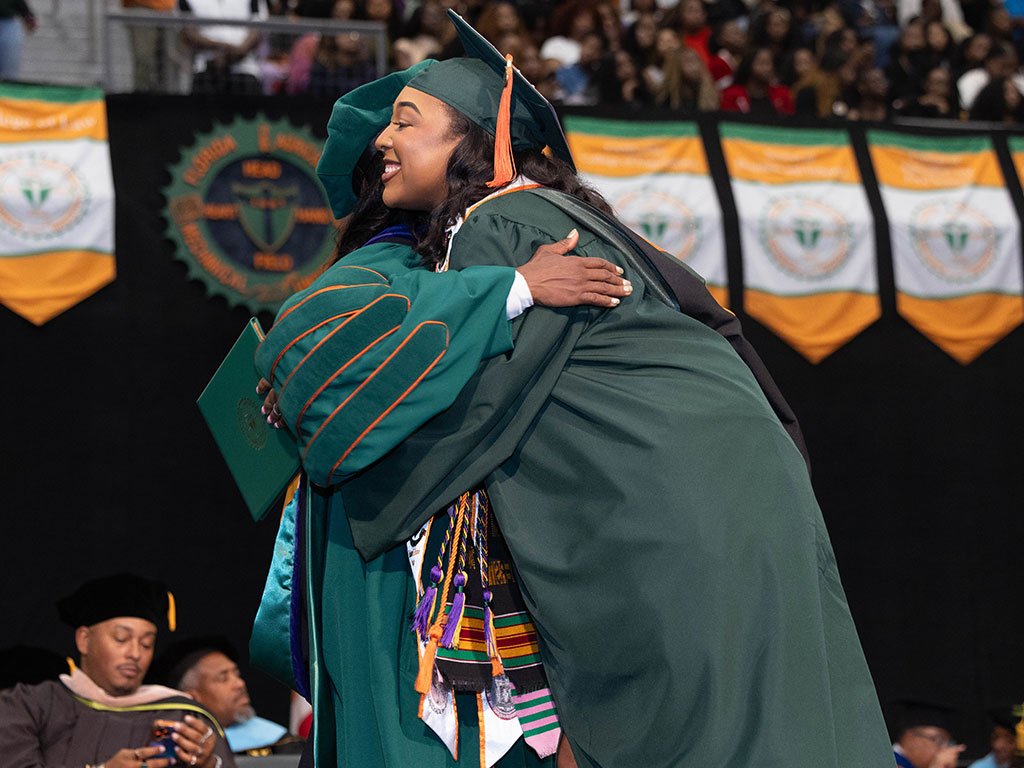 A Spring 2026 engineering graduate celebrates with Florida A&M University President
Marva Johnson, J.D., during Commencement. The historic graduating class included 49
graduates who earned 50 engineering degrees, marking the largest FAMU engineering
cohort in more than 25 years. (Photo courtesy Christian Whitaker)
Today, approximately one-third of incoming engineering freshmen participate in one
of the Engineering Student Access programs she oversees. This spring, those students
accounted for approximately 85% of the engineering graduates who entered the university
from high school and earned degrees.
“That statistic tells a powerful story,” Caldwell said. “It demonstrates what can
happen when students are given the opportunity, support system and belief they need
to thrive.”
Caldwell said creating a sense of belonging has been central to the success of the
program.
“The key has always been creating an environment where students feel like they belong
before they ever question whether they can succeed,” Caldwell said. “Engineering is
challenging, and students need a community that pushes them, supports them and reminds
them they are not facing those challenges alone.”
Erick Akins, Ph.D., executive director of Title III Programs, said the partnership has played a critical
role in supporting student success.
“It gives them a sense of belonging because they don’t just participate the first
two years—they participate all four years,” Akins said. “That helps them when they
graduate because they’re exposed to the rigor and expectations of the engineering
profession while they’re still students. It’s rewarding to see them succeed, and it’s
a great return on investment for the university.”
Turning Support Into Success
For Austin Onyebueke, a Tampa native who earned dual degrees in computer engineering and electrical engineering,
the milestone represents years of hard work and perseverance.
“Being part of the FAMU-FSU College of Engineering’s largest graduating class in more
than 25 years means a great deal to me,” Onyebueke said. “This is one of the biggest
milestones of my life because it represents years of hard work, perseverance and growth.”
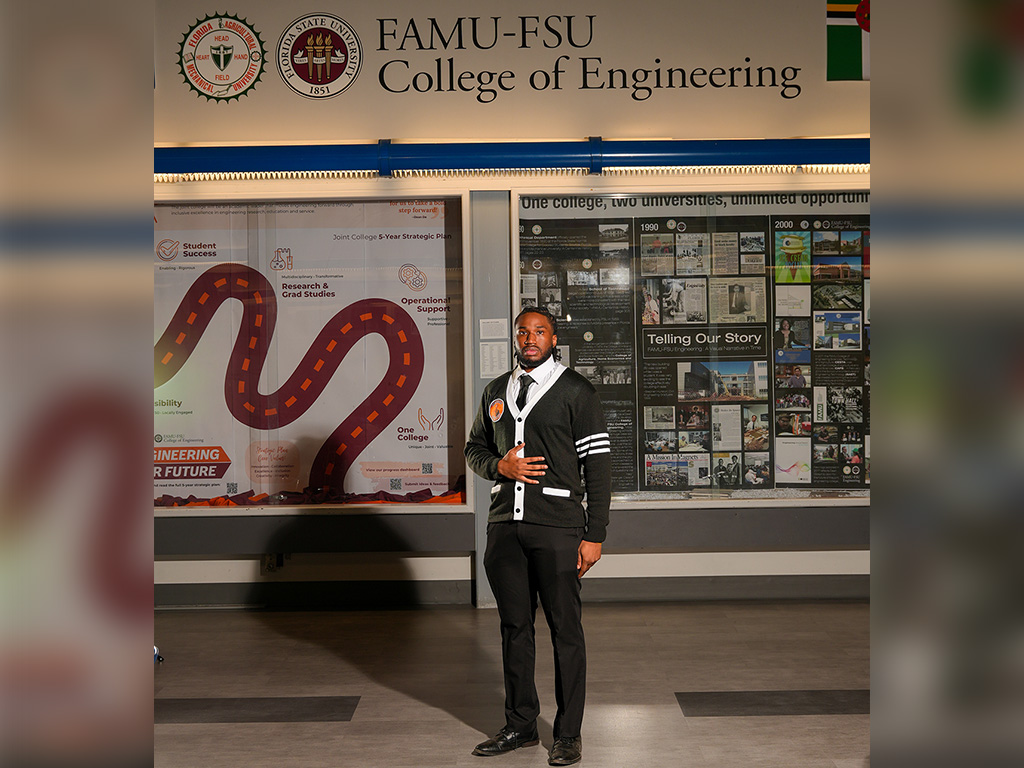 Austin Onyebueke, a Tampa native and Spring 2026 graduate of the FAMU-FSU College
of Engineering, poses inside the college’s atrium. Onyebueke earned dual degrees in
computer engineering and electrical engineering. (Photo courtesy Austin Onyebueke)
Onyebueke credits the Engineering Living Learning Community and the Educating Engineering
Students Innovatively Program with helping him navigate the challenges of engineering
coursework and prepare for the next stage of his career.
“Honestly, the ELLC and EESI were two of the main reasons I was able to make it to
graduation,” he said. “They surrounded me with people who believed in me, challenged
me to be better and gave me the resources I needed to succeed.”
From Tennessee to Biomedical Engineering
For Mariah Johnson, a biomedical engineering graduate from Memphis, Tennessee, being part of the historic
graduating class was a proud and emotional experience.
“I think the word I would use is surreal,” Johnson said. “Being one of the largest
classes to graduate was amazing. We came in together, supported each other throughout
the years and then had the opportunity to graduate together. It made me feel proud
and hopeful.”
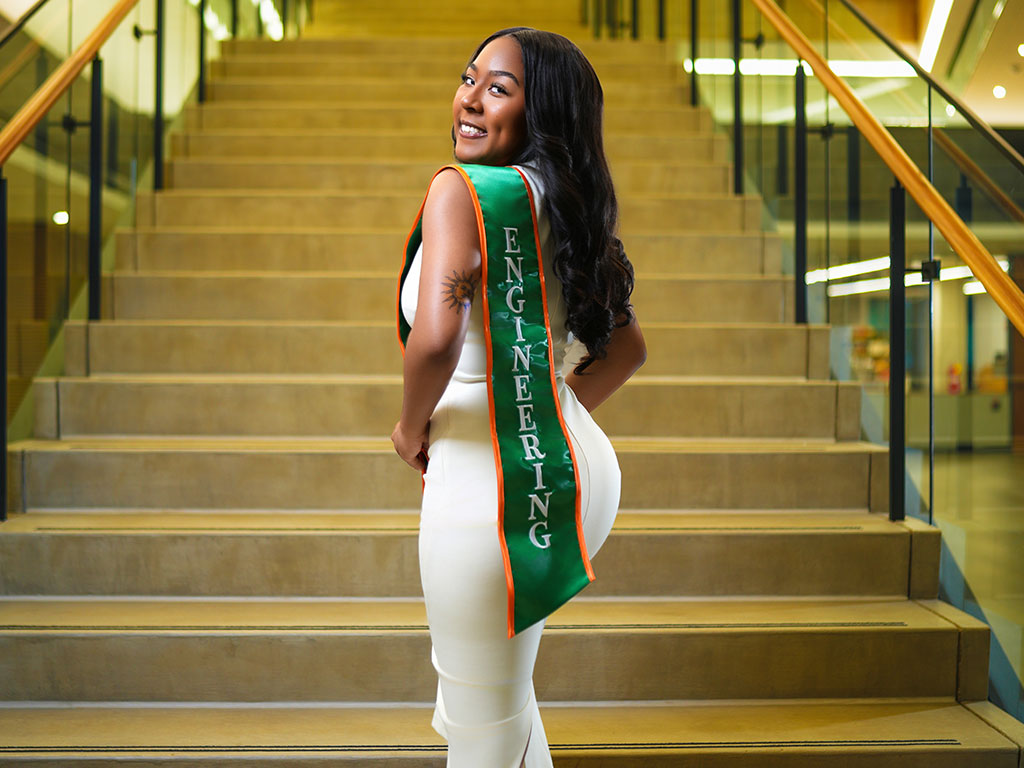 Mariah Johnson, a Spring 2026 biomedical engineering graduate, poses inside the FAMU-FSU
College of Engineering. Johnson recently began her career as a clinical account specialist
with Johnson & Johnson. (Photo courtesy Mariah Johnson)
Johnson chose FAMU because of its welcoming environment and supportive engineering
community. Through the Engineering Living Learning Community and Student Access programs,
she found the support needed to succeed academically and professionally.
“I wanted to do something where I could see the impact of my work helping people,”
Johnson said.
She recently began her career as a clinical account specialist with Johnson & Johnson
in Pensacola, Florida, where she supports physicians performing procedures that treat
patients with heart arrhythmias.
First-Generation Engineer, Future Systems Leader
For Azaria Moore, an industrial engineering graduate from Bradenton, Florida, earning her degree is
both a personal and family milestone.
As a first-generation college student and the first engineer in her family, Moore
credits the support and community she found at FAMU with helping her persevere through
one of the nation’s most demanding academic disciplines.
“Engineering is not easy,” Moore said. “There were many moments when I questioned
myself, but having a community around me helped me push through.”
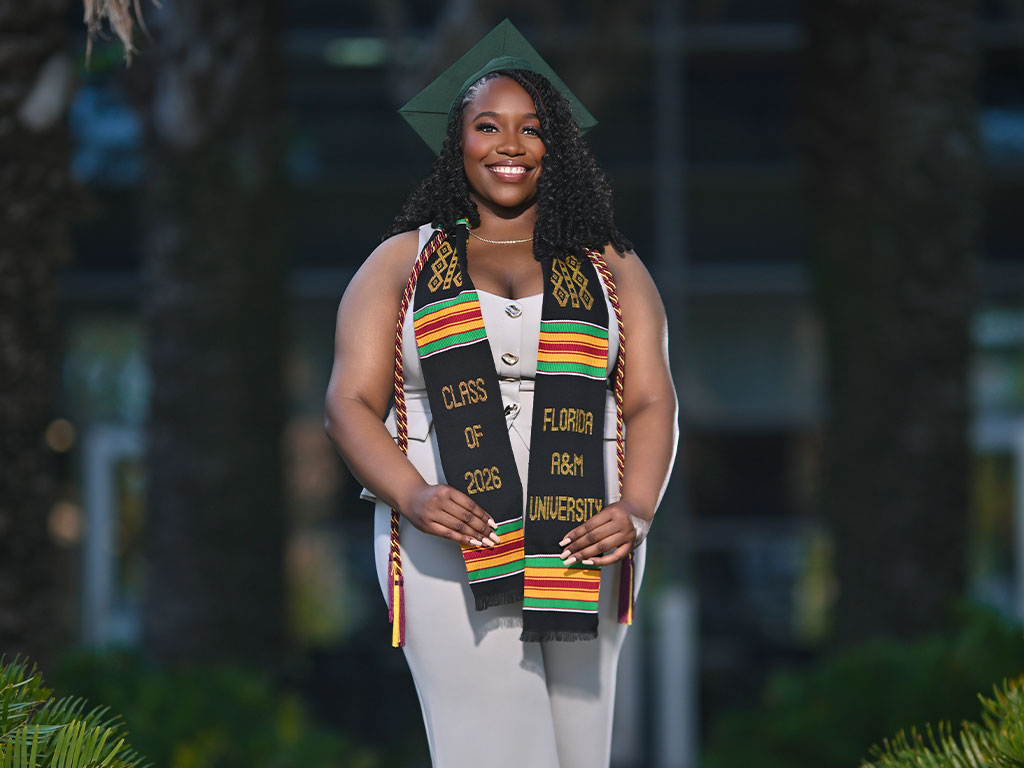 Azaria Moore, an industrial engineering graduate from Bradenton, Florida, poses on
Florida A&M University’s campus ahead of Spring 2026 Commencement. Moore, a first-generation
college student and the first engineer in her family. (Photo courtesy Azaria Moore)
Inspired by research opportunities and hands-on projects, Moore plans to continue
her education by pursuing a master’s degree in systems engineering at the FAMU-FSU
College of Engineering.
“I want to work in the defense industry with aircraft and advanced systems,” Moore
said. “The opportunities I’ve had here helped me discover what I’m passionate about
and where I want my career to go.”
A Legacy That Continues
As graduates begin careers in healthcare, technology, manufacturing, defense and other
industries, their accomplishments represent more than individual success stories.
They reflect the collective efforts of faculty, staff, mentors and programs committed
to helping students achieve their goals.
Dean De believes the impact of this graduating class will extend far beyond the classroom
and workplace.
“Every FAMU graduate who enters the workforce shifts the equation—not symbolically,
but as a practicing engineer solving real problems and opening doors for the next
person,” De said. “I expect to see members of this class return as faculty, entrepreneurs
and senior leaders. That’s how legacies compound.”
From first-generation college students to future innovators in healthcare, technology
and defense, the members of the Spring 2026 graduating class are poised to make an
impact far beyond the classroom—continuing a legacy of excellence that will inspire
the next generation of FAMU engineers.
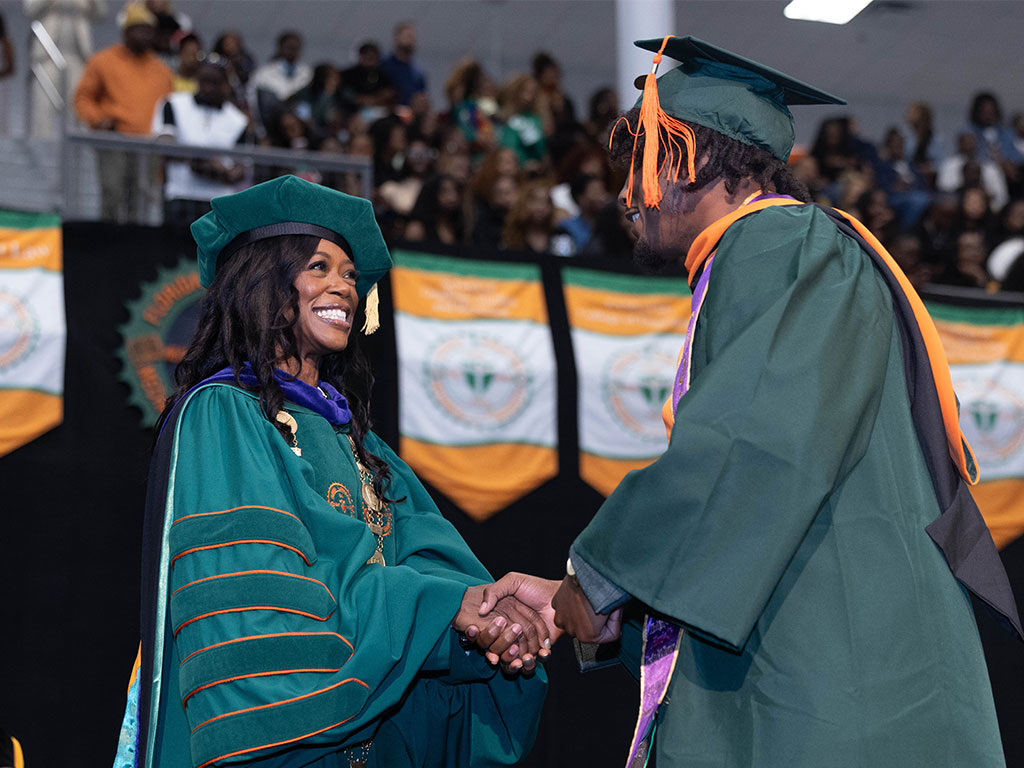 Florida A&M University President Marva Johnson, J.D., congratulates a graduating engineering
student during the Spring 2026 Commencement Ceremony. (Photo courtesy Christian Whitaker)
Media Contact:
Ashley Flete
Senior Communications Specialist
ashley1.flete@famu.edu