
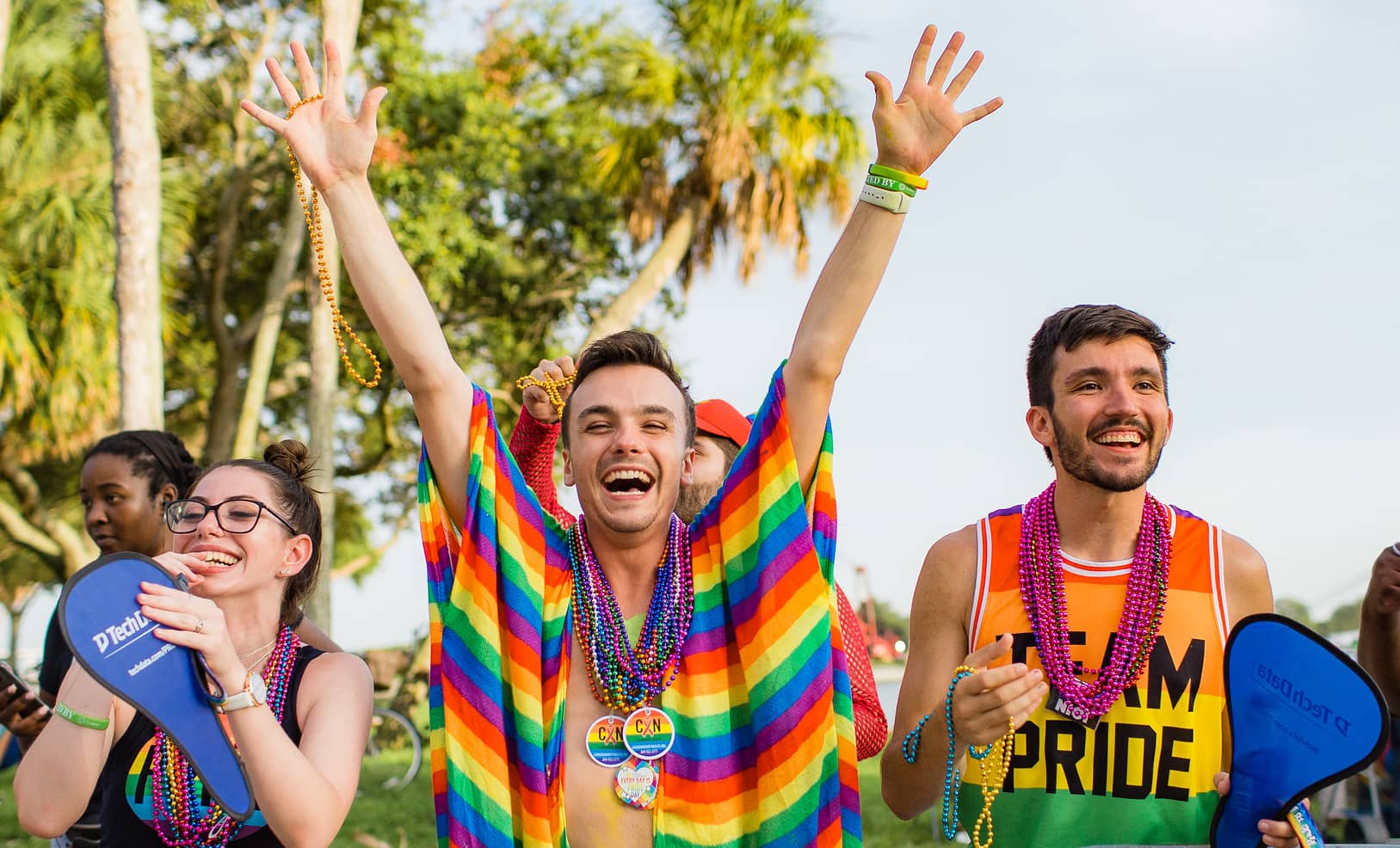
As hundreds of thousands of people prepare to descend on downtown St. Petersburg this weekend for one of the nation’s largest LGBTQ+ celebrations, the St. Petersburg Police Department says it has identified no credible threats but will continue monitoring social media and intelligence networks through the conclusion of Pride festivities.
“We continue to use federal, state and local resources to monitor potential issues until the event has concluded,” said St. Petersburg Police Department Public Information Officer Ken Knight.
Knight said the department found no serious threats ahead of last year’s Pride celebration either, despite record attendance.
St. Pete Pride has grown into Florida’s largest Pride celebration, with organizers expecting more than 360,000 people to attend this year’s events. That turnout presents unique challenges for law enforcement, requiring months of planning that extends well beyond staffing parade routes and directing traffic.
READ MORE: Here comes St. Pete Pride’s big weekend for 2026
Knight said officers continuously evaluate intelligence from local, state and federal partners while also monitoring publicly available social media for anything that could pose a threat to attendees.
“There are always security concerns around any event with a large attendance,” Knight said. “Police strategies are constantly evaluated, changed and enhanced based on incidents that occur around the world as well as after-action determinations from previous years.”
While the overall security plan remains similar to previous years, this year’s event includes some logistical changes.
Several Pride events have shifted locations, requiring police to adjust staffing levels, traffic control and deployment strategies.
Technology will also play a larger role than in previous years. The department has used drones and the city’s camera network to monitor large events before. This year, however, marks the first Pride celebration in which drones can be deployed as part of the department’s real-time response to calls for service.
“We have used the cameras and drones in the past,” Knight said. “This is the first time we will have the ability, if necessary, to use the drones as part of a real-time calls-for-service response, as this is now part of our daily response.”
The expanded capability allows officers to quickly assess incidents from the air before committing personnel on the ground, potentially improving response times during one of the city’s busiest weekends of the year.
Despite heightened security measures, Knight said the department’s biggest concerns may be less about crime than the practical realities of hosting hundreds of thousands of people in downtown St. Petersburg during late June.
“This year extreme heat and traffic are major concerns for the downtown event,” he said.
To help ease congestion, police are encouraging attendees to carpool, use rideshare services or take advantage of shuttle transportation from designated parking garages rather than attempting to park downtown.
Officers are also reminding visitors to stay hydrated throughout the day as temperatures climb into the summer heat.
Knight said public awareness remains one of the department’s most effective safety tools.
“If they see something suspicious, please report it so that police can take appropriate action,” he said.
Law enforcement agencies across the country have continued increasing security at large public gatherings in recent years as crowd sizes have grown and incidents elsewhere have influenced planning for major events. Knight said St. Petersburg follows the same approach, continually refining its operations based on lessons learned from previous Pride celebrations and other large-scale events.