
ORLANDO, Fla. — The U.S. Department of Agriculture says funding has run dry for the Supplemental Nutrition Assistance Program — also known as SNAP or food stamps — leaving nearly 42 million Americans who rely on the assistance at risk of not seeing their debit-like EBT cards refilled this month.
What You Need To Know
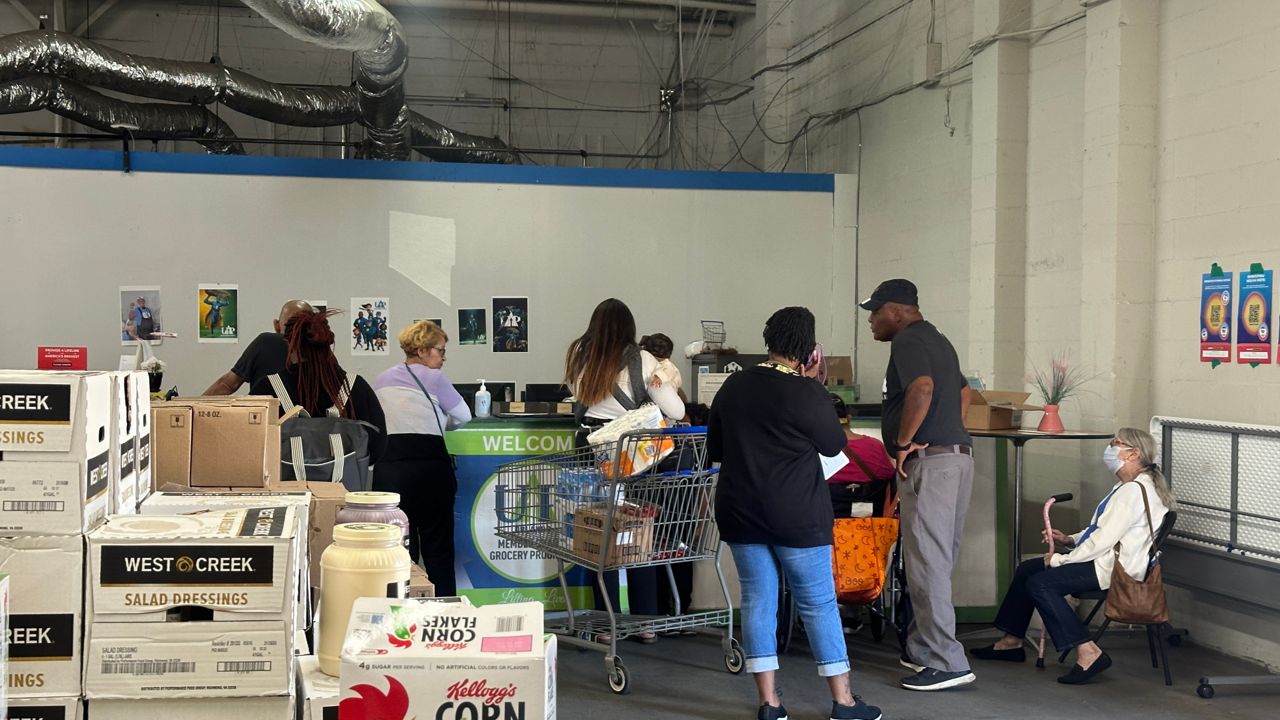
Dozens of families filled the parking lot and lined up at the help desk to receive food vouchers at United Against Poverty in Orlando, as they did not receive their SNAP benefits at the beginning of November.
In Central Florida, more than half a million people receive SNAP benefits, according to Second Harvest Food Bank.
At United Against Poverty, families within 200% of the federal poverty level can buy food items at a discount, using their SNAP benefits to fill a cart for about $20 to $30. For those who didn’t receive their benefits, the organization is providing vouchers so they can still shop.
Second Harvest Food Bank leaders remind residents that their online Food Finder tool can help connect people with resources nearby. In October alone, the nonprofit saw a 300% increase in online searches — another sign of growing need across Central Florida.
In Central Florida, more than half a million people receive SNAP benefits, according to Second Harvest Food Bank. Several local nonprofits that serve low-income working families are now seeing a surge in requests for help as the government shutdown continues.
At United Against Poverty in Orlando, lines have been steady with families checking in and showing their SNAP accounts with zero balances, signing up to get vouchers to shop at the organization’s discounted grocery store. Leaders with the nonprofit say the need has grown dramatically.
“The lines have been constant. We are seeing a lot of new members that are signing up. I know over the weekend, since I was covering the desk myself, I’ve done over 70 new members that we have never even served before,” said Anjali Vaya, executive director of United Against Poverty.
Dozens of families filled the parking lot and lined up at the help desk to receive food vouchers, including SNAP recipient Yoleine Normil. “The food stamps help, help my family, help my children,” Normil said.
Normil said her account balance sits at $0 this month.
“What happened to my food stamps right now is, I filled the food stamps but I never got anything now,” she said.
Like her, many customers are searching for affordable options while waiting for benefits to resume.
“Almost everything for my kids, almost everything, vegetables, fruits, snacks, everything, but when I came and I had the food stamps that helped a lot,” Normil said.
Now that her SNAP funds have run out, she says the United Against Poverty store is her only resource.
Vaya said families within 200% of the federal poverty level can buy food items at a discount, using their SNAP benefits to fill a cart for about $20 to $30. For those who didn’t receive their benefits, the organization is providing vouchers so they can still shop.
“We will make sure everybody gets food and that they have a voucher to get groceries for the week. That’s the least we can do. And we’re asking our donors to step up,” Vaya said.
She added that many people coming in for help have never used a food pantry before.
“They have never used a food bank before, and they are just in shock when they’re coming over here and telling me we are frustrated. This is not fair,” Vaya said.
Second Harvest Food Bank leaders said they are also starting to feel the impacts.
“SNAP is really the first line of defense in this country when it comes to food insecurity. And so it’s really going to be missed. We have 515,000 people in our seven-county area that depend on that program,” said Greg Higgerson, chief development officer for Second Harvest Food Bank of Central Florida.
The organization distributes about 300,000 meals daily to people facing hunger through more than 800 partner agencies. But Higgerson said the current situation is straining the system.
“We know that they are getting just really big upticks in demand from people calling them. I heard one Osceola County agency report to us that they received 4,000 calls over the weekend,” he said.
The uncertainty is weighing heavily on families. “Of course I am worried, I don’t know how too long it’s going to be but for right now it’s already hard,” Normil said.
Vaya said nonprofits like hers are doing their best to keep up with the growing demand, but it’s becoming increasingly difficult.
“I’m hoping that the government has an answer for us very shortly, because this is not in our budget. This is not what any of none of the non-profits have this kind of a budget line item to be able to support the number of dollars that are zeroed out,” she said. Normil said she shares that hope. “I hope, I hope they restart it,” she said.
Second Harvest Food Bank leaders remind residents that their online Food Finder tool can help connect people with resources nearby. In October alone, the nonprofit saw a 300% increase in online searches — another sign of growing need across Central Florida.