
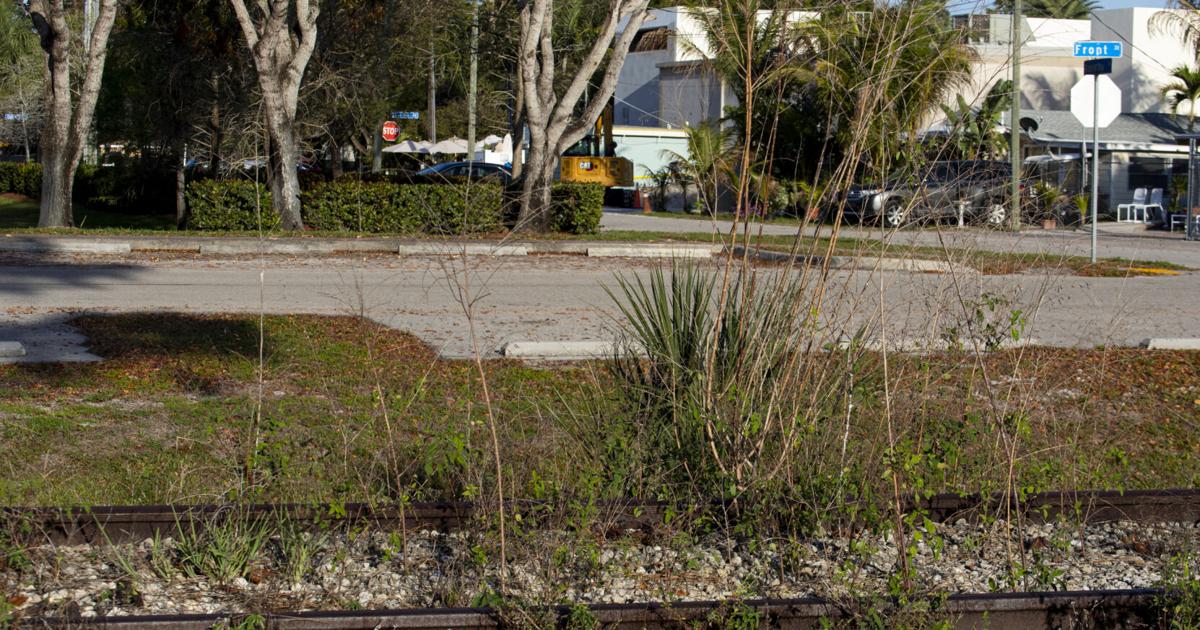
The federal government may be responsible for compensating some landowners adjacent to the proposed 11.4-mile Bonita Estero Rail Trail, if the project set along an old unused railway corridor moves forward as expected.
A select group of landowners may still have ownership rights to parts of the old corridor under easement agreements dating back to the late 1800s and early 1900s when the land was first acquired for railroad use, rail-trail conversion experts said.
But many other landowners next to the corridor may have no claim if the original railway operator bought the property outright through a “fee simple interest” agreement.
The potential litigation was triggered by recent development interests along the rail corridor.
The Estero, Bonita Springs and Collier County governments are in the due diligence phase of purchasing 11.4 miles of inactive rail corridor from Seminole Gulf Railway for $60 million, to fulfill longtime plans to build the multiuse BERT on the spot.
As part of the deal, the corridor would be placed in a federal program called “railbanking” that preserves unused railway corridors throughout the United States under a 1983 amendment to the National Trails System Act. The system preserves unused rail corridors for public use such as rail-trail conversions. It also means that someday the corridor could be reactivated for rail use if deemed economically justifiable by the federal Surface Transportation Board. Although unlikely, it is part of the national economic and security priority of the railbanking program.

Seminole Gulf Railway corridor in Bonita Springs
Evan Williams
Due to the railbanking provision, the federal government could be held liable for parts of the land that remain under old easement rules, attorneys with the St. Louis-based law firm Lewis Rice said.
The nonprofit Trust for Public Land, which has worked with communities across the U.S. and Florida to implement similar rail-trail conversations, represented the Estero, Bonita Springs and Collier County governments in the purchase agreement with Seminole Gulf.
Such compensation claims are often a part of the process during rail-trail conversions, said Doug Hattaway, TPL’s Southeast Region Conservation Director.
“That’s their business strategy and they have every right to it,” Hattaway said of Lewis Rice.
“So I want to be clear, this doesn’t mean there’s anything wrong with what’s happening. There is not a conflict, there is not a debate, there is not an argument… (It) is business as usual, if you will.”
The Lewis Rice attorneys are part of the firm’s Federal Takings & Rails to Trails practice that specializes in identifying and representing such landowners when their property is used for rail-trail conversions.
“We represent landowners all across the country,” Lewis Rice attorney Lindsay Brinton said.
The firm has identified about 50 Bonita Springs landowners who they believe would be eligible for compensation, she said. They are concentrated north of West Terry Street off of Old 41 Road.
Brinton said the amount of the claim is based on the value of the property. In Florida, the firm claims to have represented landowners in Lee, Sarasota, Pinellas, Lake and Miami-Dade counties.
Seminole Gulf Railway corridor in Bonita Springs
Evan Williams
Brinton and fellow Lewis Rice attorney Meghan Largent plan to hold community meetings to discuss compensation claims with landowners. According to a press release from the Lewis Rice firm, the attorneys will host the three meetings at TownePlace Suites by Marriott in Estero at 23161 Via Coconut Point at 5:30 p.m. July 1 and 9 a.m. and noon July 2.
While the purchase agreements between the governments and Seminole Gulf is in the due diligence process, it is not guaranteed. The process is expected to be completed this fall. Until then, any one of the parties could end the agreement.
Also, Bonita Springs residents are set to vote Aug. 18 on whether or not to approve a bond measure to pay for the city’s portion of the acquisition. If they say no, the city would likely need to find another means of financing its portion of the sale if they move forward with BERT plans.