
ORLANDO, Fla. — Beginning July 1, Florida will have a new tool designed to help find missing children with autism faster. The statewide Spectrum Alert aims to quickly mobilize law enforcement and the public when a child with autism goes missing.
Experts say children with autism are significantly more likely to wander away from safe environments, and those situations can quickly become dangerous. They say this new alert system gives communities another tool to respond faster and ultimately save lives.
“Children with autism often times will have different ways of communicating. They may have different levels of language that may be less than their neurotypical peers,” said Jennifer Cicia, an autism disorder specialist at UCF’s Center for Autism and Related Disabilities.
Cicia works with families through UCF’s Center for Autism and Related Disabilities, helping connect parents with resources and support. She said many families live with the constant fear that a child could wander away unexpectedly.
“The first thing that we want to do, if we know a child with autism has gone missing, we want to check our water. And then what can people do? They can continue to keep their eyes on water,” Cicia said. “Just because I looked and my pool was good doesn’t mean that a child’s not going to ten minutes from now get into my backyard and get into my pool.”
The new Florida Spectrum Alert is specifically designed for missing children with autism under the age of 18.
To activate the alert, law enforcement must believe the child has autism, determine through an active investigation that the child is in danger of death or serious bodily injury, have a detailed description or photograph available, and recommend activation.
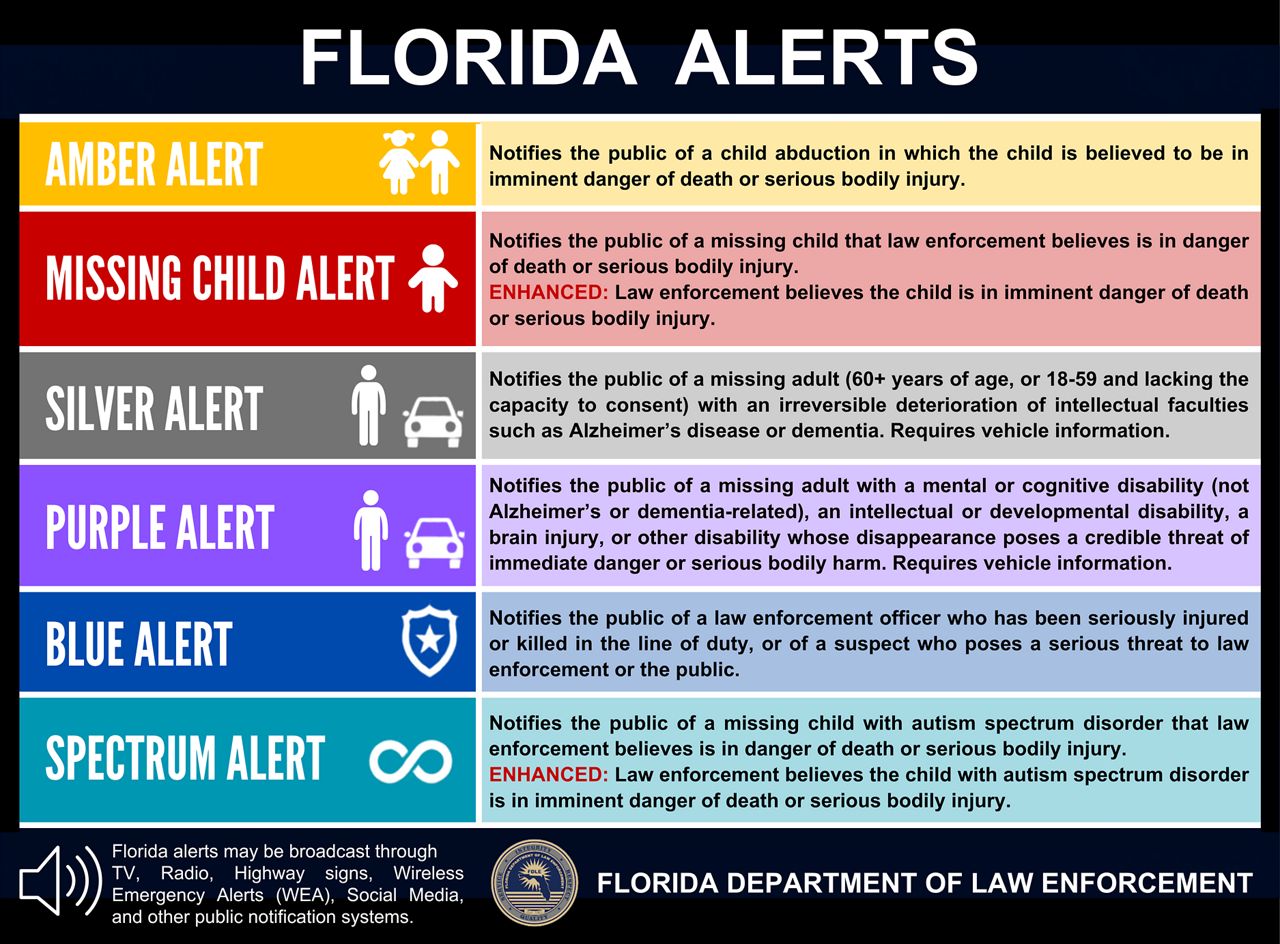
“This alert is a little different than the Amber Alert, and it’s important because if you get an alert to your phone in reference to a Spectrum Alert, that means that we believe that child maybe within five miles of where they were last seen,” said Melissa Bujeda, director of Missing Persons and Offender Enforcement for the Florida Department of Law Enforcement.
Bujeda said the alert will be area-specific so people will be able to keep their eyes open for the missing child, helping law enforcement.
“Florida ranks fifth in the nation for autism-related drownings. So as of right now, roughly one and 31 children are now diagnosed with autism, so this isn’t a rare scenario. It’s a growing safety concern for families statewide in the entire state of Florida,” Bujeda said.
Experts say time is critical because in Florida, where lakes, ponds and retention areas are common, those searches can truly become a race against time.