
By Paul Guzzo, University Communications and Marketing
Fifteen years ago, a $1.5 million gift from Dick and Cornelia “Cornie” Corbett transformed
USF’s soccer stadium into one of the nation’s premier collegiate venues. Less obvious
was what came with it: A direct connection to the founding of the United States.
Cornelia Corbett, whose last name now adorns the stadium, is a descendant of Elbridge
Gerry, one of the men who helped shape the nation’s earliest years and is counted
among the 56 signers of the Declaration of Independence.
As the university celebrates its 70th anniversary and the nation its 250th, that connection
places USF within a broader arc that stretches from the founding era to present day.
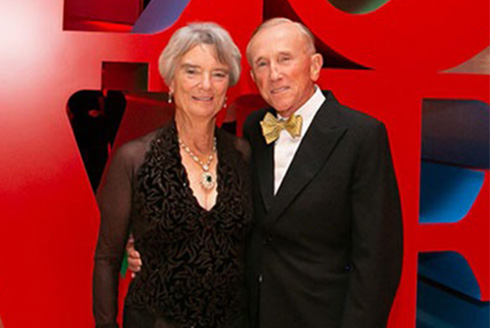
Dick and Cornelia “Cornie” Corbett …
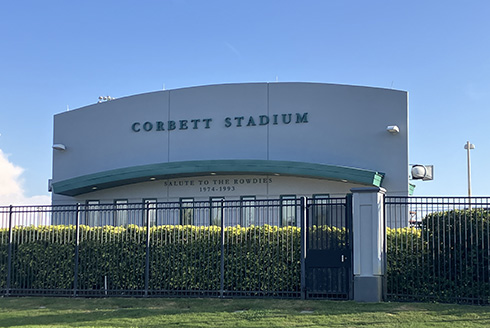
… and the USF soccer stadium that bears their name
“Cornie comes from a family that was there at the very beginning of the country, the
Founding Fathers,” said her husband, Dick Corbett, a former aide to President John
F. Kennedy who later worked in the Kennedy business office and on U.S. Sen. Robert
F. Kennedy’s presidential campaign. He’s now one of Tampa’s leading real estate developers.
“When your roots go back to people who helped shape the nation, it gives you a different
perspective on giving back.”
The connection begins with Gerry, Cornelia Corbett’s great-great-great grandfather.
Born July 17, 1744, into a merchant family in Marblehead, Massachusetts, Gerry emerged
as an early critic of British rule. He opposed the sale and consumption of British
tea in the years leading up to the American Revolution, served in the Massachusetts
legislature and later represented the colony in the Continental Congress.
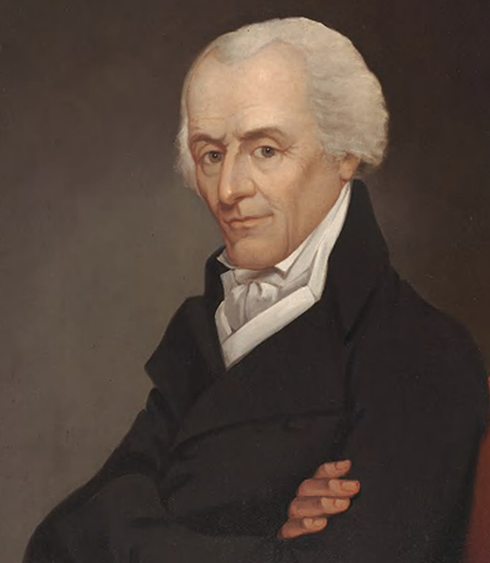
A painting of former vice president Elbridge Gerry [Photo courtesy of U.S. National
Archives]
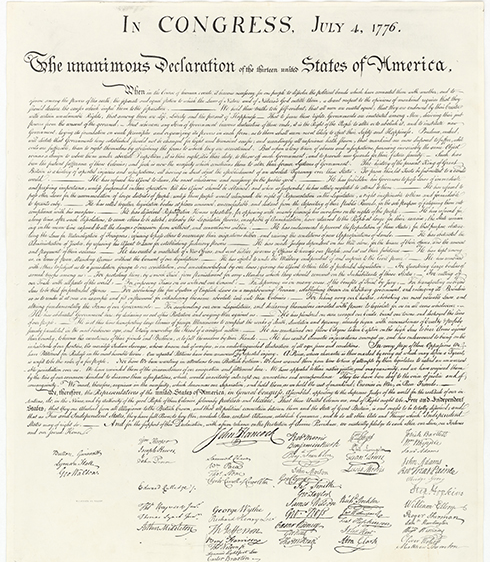
The United States Declaration of Independence [Photo courtesy of U.S. National Archives]
Gerry’s role in supporting independence led John Adams to praise him by writing, “If every Man here was a Gerry, the Liberties of America would be safe
against the Gates of Earth and Hell.”
When the Declaration of Independence was adopted in 1776, Gerry was among the delegates
supporting the break from Great Britain. Though absent from the formal ceremony on
Aug. 2, he signed the document around a month later and is recognized as one of its
56 signatories. Today, his name remains among the most legible on the Declaration.
However, when asked to sign the U.S. Constitution, Gerry refused, arguing it did not
do enough to limit federal power or protect individual liberties. His objections helped
fuel demands for additional protections, contributing to the adoption of the Bill
of Rights. He went on to serve under President James Madison as fifth vice president
of the United States.
“Roots like that shaped Cornie’s lasting commitment to giving back,” Dick Corbett
said.
That commitment deepened when the Gerry and Corbett families were joined through the
marriage of Dick and Cornelia.
Dick Corbett’s own life intersected with another significant chapter in American history.
He worked with the Kennedy organization during John F. Kennedy’s 1960 presidential
campaign and was seated near the podium when Kennedy delivered his infamous, “Ask
not what your country can do for you, ask what you can do for your country” remarks
during his 1961 inauguration ceremony. Corbett then served in the Kennedy business
office and became national treasurer of Robert F. Kennedy’s 1968 presidential campaign
before building a successful development career that included Tampa’s International
Plaza.
Cornelia Corbett later owned the Tampa Bay Rowdies from 1986 through 1993.
Despite neither attending the university, together the Corbetts made philanthropy
a priority, with USF among their most significant commitments.
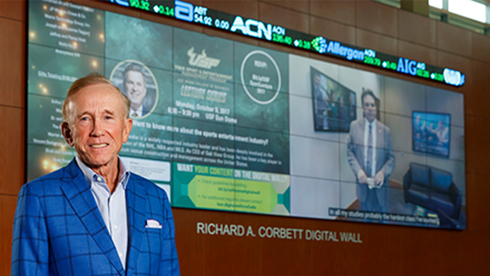
Dick Corbett and the digital wall his family funded
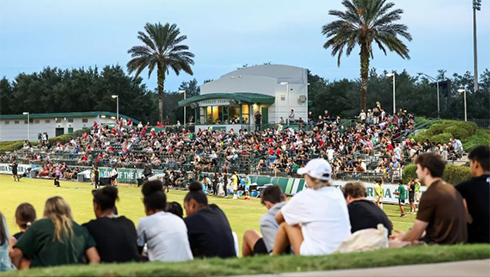
Fans watch a soccer game at Corbett Stadium
Their support includes a gift that helped build Corbett Stadium and a later $500,000
donation that funded the digital wall inside the Muma College of Business building
on the Tampa campus. Made up of 32 high-resolution screens, the wall serves as a central
information hub featuring a stock ticker; student, faculty and alumni stories; campus
announcements; social media feeds; and live news programming.
“USF is part of our community,” Dick Corbett said. “We’ve always believed that if
you have the ability to help, you should. That is what this great nation was founded
on. Supporting the students here just felt like the right thing to do.”