
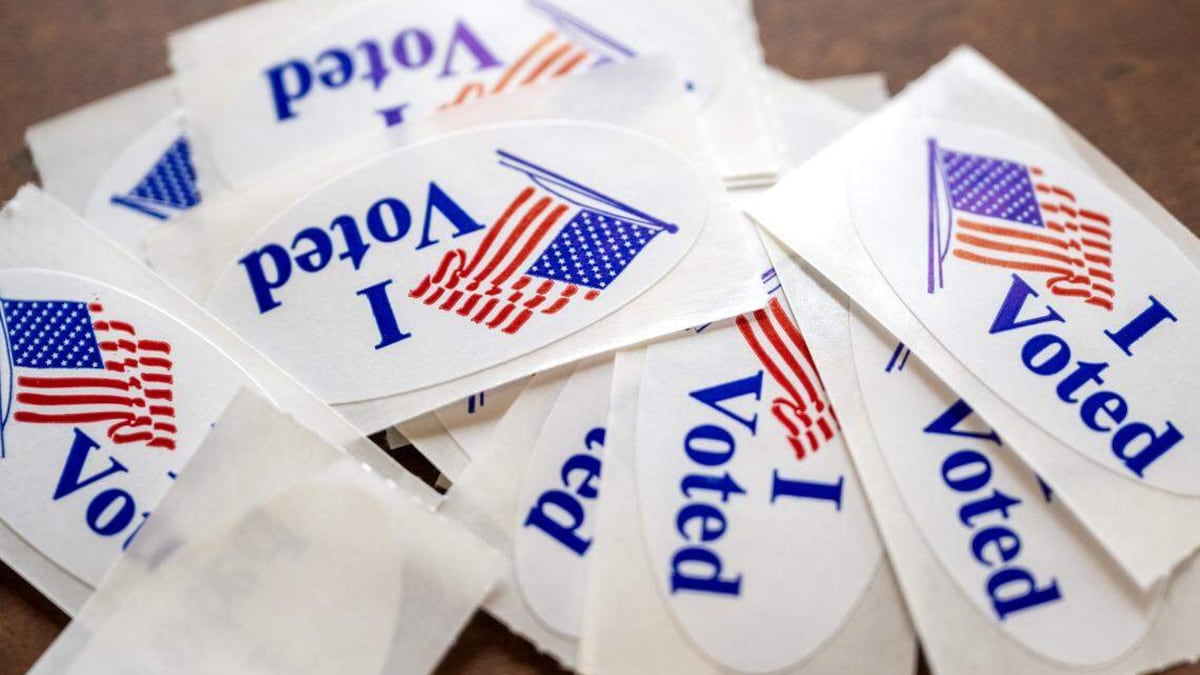
As Florida heads into the August primary season, voters will discover that the “Universal Primary” is an ironic misnomer. This amendment to the Florida Constitution approved by voters in 1998 is in fact a textbook example of how elections can be rigged.
It provides that all voters may vote in a party’s primary, regardless of political affiliation, if the primary winner faces no “opposition” in the general election. The amendment is an exception to Florida’s closed primaries which limit political primaries to party members and exclude voters registered as politically unaffiliated.
The amendment was designed to eliminate the anti-democratic absurdity of conducting a Florida closed primary where the primary was effectively the general election. Otherwise only members of the political party holding the primary would determine the outcome of the general election. Such elections only happen in Russia and China, right? Not in Florida.
Most Floridians who approved the proposed amendment likely read “opposition” in the general election to mean a credible “opposition.” A linguistic twist blindsided those voters. After adoption of the amendment, the Florida Secretary of State and Florida Supreme Court interpreted “opposition” to include write-in candidates filing for general elections.
Write-in candidates typically do not raise or spend campaign money, even though one hapless write-in raised more than nine times his primary opponent and still lost. They do not pay filing or other fees to run. They rarely have any campaign staff. Their names are not even printed on the ballot. Voters must literally write in the correct name of the candidate. It is not a shocker to learn that no write-in candidate has ever won a Florida election.
This theoretical “opposition” of nominal write-in candidates is an exception to the universal primary contest because it recloses the primary and bars anyone from voting in the primary except party members. It excludes not only the politically unaffiliated but members of all other political parties. If a write-in candidate files for the general election and at least remains a candidate until the primary election is concluded, the “universal” part of “Universal Primary” becomes meaningless. The primary becomes the only election that counts. Political fixers in both major parties have exploited the loophole to run kamikaze write-in candidates with no chance of winning. By this sleight of hand, it is still possible to effectively have one-party general elections in Florida. Move over Putin and Xi Jinping.
The Florida Center for Government Accountability estimates that in 2024 write-in candidates locked out two million Florida voters who were not members of the political party holding the primary. From 1998 to 2022 Florida Open Primaries found that write-ins closed 114 solo primaries to everyone but party members. Both Democratic and Republican parties used this write-in subterfuge to reclose primary elections. This is the kind of grubby politics that erodes public trust in the electoral system.
In Sarasota County where I live the 24-year-old daughter of a Republican fundraiser became a write-in candidate in the general election for Sarasota County supervisor of elections. No Democratic or independent candidate filed for the general election. Her action reclosed the primary and kept 150,000 Sarasotans from voting in the Republican primary. With no apparent intent to run in the general election, she withdrew her write-in candidacy after the primary. Only Republican voters wound up electing the supervisor of elections with only 7.8 % of the electorate voting for the winning Republican candidate. How do elections like this differ from elections in Russia or China where puppet opposition candidates have no chance of winning in one-party “democratic” elections?
Abolishing the Universal Primary would do everyone a favor except for those who want to game the electoral system. Those who support closed primaries and those who oppose them like me have an identical interest in eliminating the Universal Primary. Even where no write-in candidate files for a general election and only one party is picking candidates for an office in its primary, it violates the First Amendment rights of that party to force it to allow members of opposition parties and the politically unaffiliated to vote in what is supposed to be a party primary. This avoids a one-party election but at the price of violating that party’s rights of political association.
As America celebrates 250 years of rule by the people, it is past due for Florida to abolish the Universal Primary and face up to the full consequences of a closed-primary system.
Michael J. Polelle lives in Sarasota and is an emeritus professor of law at the University of Illinois Chicago School of Law.