
As America commemorates the 250th birthday of our nation throughout 2026, some historians are looking back to July 4, 1976, to see how Floridians marked the 200th anniversary, also known as the Bicentennial. In anticipation of that occasion, a Bicentennial commission was established at the state level to distribute federal funds to organizations throughout Florida, such as the Orange County Bicentennial Committee, that were planning patriotic events in their own local communities.
There was already much excitement about the nation’s history in Orlando at the time, with Church Street Station being added to the National Register of Historic Places in May 1976. Additionally, 1976 saw the opening of the Orange County Historical Museum in Loch Haven Park, with the mission to highlight the history of Central Florida. These projects were funded in part by the Orange County Bicentennial Committee with the goal of preserving key places and stories within the region.
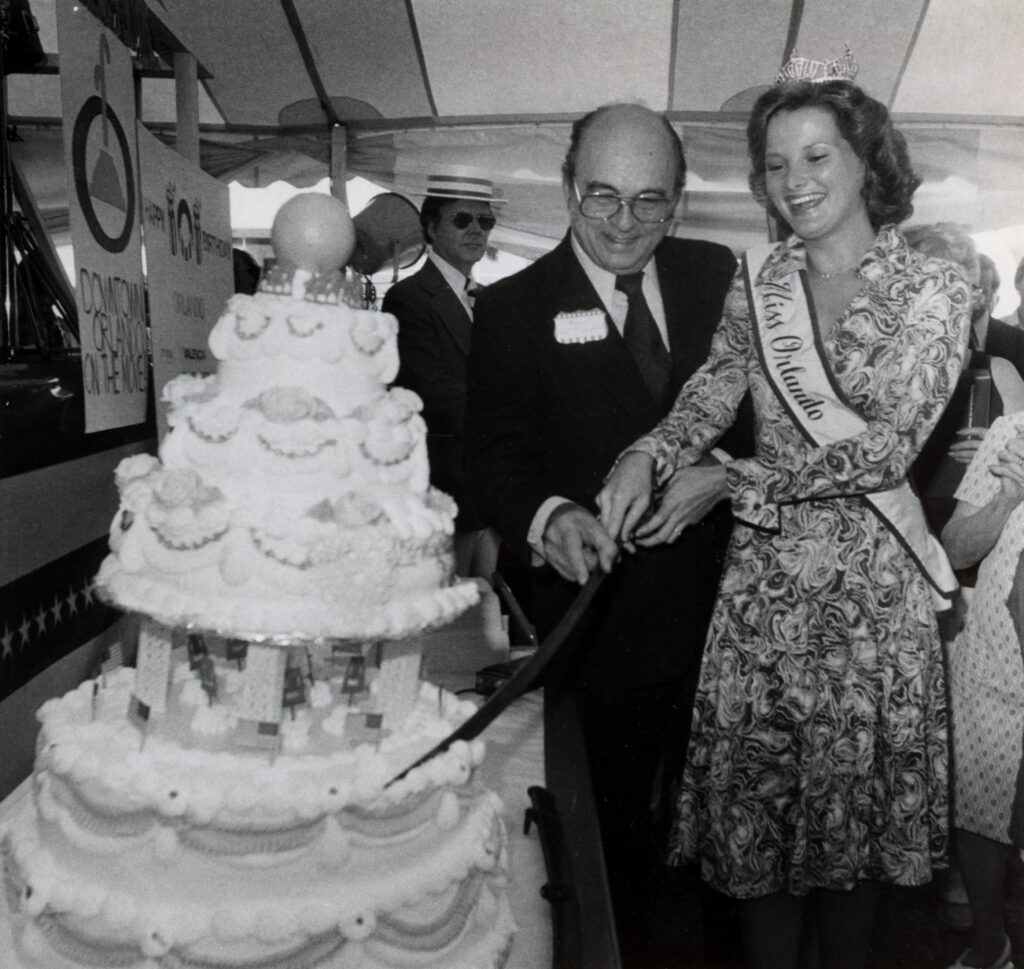
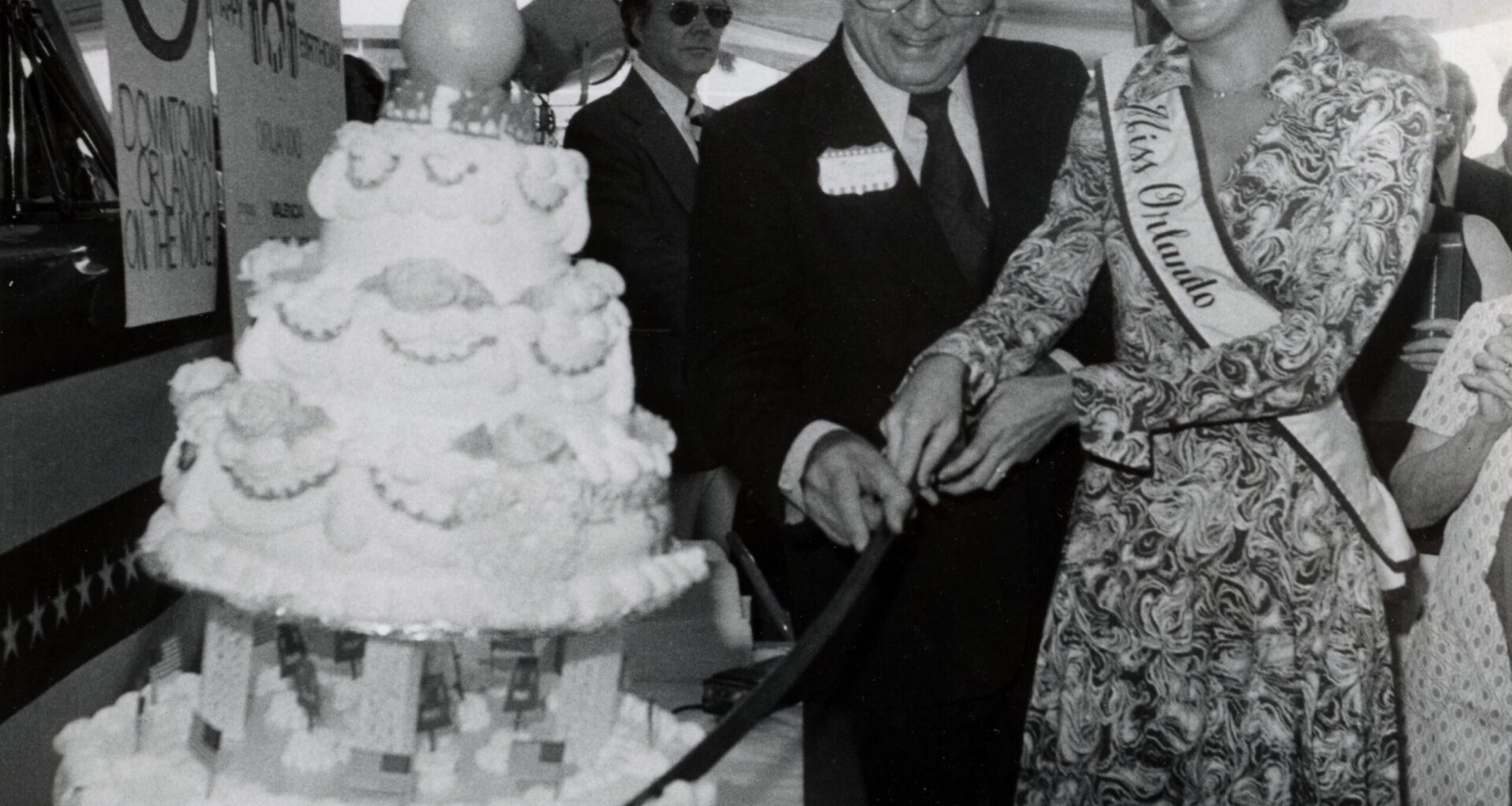
Mayor Carl Langford and Patricia Perkins, Miss Orlando 1976, cut the cake for Orlando’s 101st birthday party. (COURTESY OF ORLANDO SENTINEL ARCHIVE)
In February 1974, Orlando was designated as a Bicentennial City by the American Revolution Bicentennial Administration. The organization provided funds for the community’s celebrations and programs, as well as national recognition for the upcoming slate of events. Meanwhile, the local committee was hard at work, supporting the expansion of the John Young Museum and Planetarium — known today as the Orlando Science Center — and promoting its newest exhibition, “Streets of Orlando.”
The Orange County Bicentennial Committee also published “More Than a Memory,” a comprehensive book of Orlando history and photographs dating back to 1875. A companion exhibit of the same name was first shown at the John Young Museum before making its Bicentennial appearance at Fashion Square Mall from June 28 through July 5. The display covered the evolution of the city’s agriculture, business, government, transportation and culture, as well as Orlando’s place in 200 years of American history.
On Independence Day, July 4, the festivities began downtown at 2:45 p.m. with the firing of a cannon at Lake Eola Park. It was your typical Florida day; temperatures rounded out at around 93 degrees, with cloudy skies and thunderstorms threatening to rain on the parade of excited Orlandoans. Any weather concerns were alleviated as a 200-gun salute took place that evening, shortly before a fireworks display at 9 p.m.
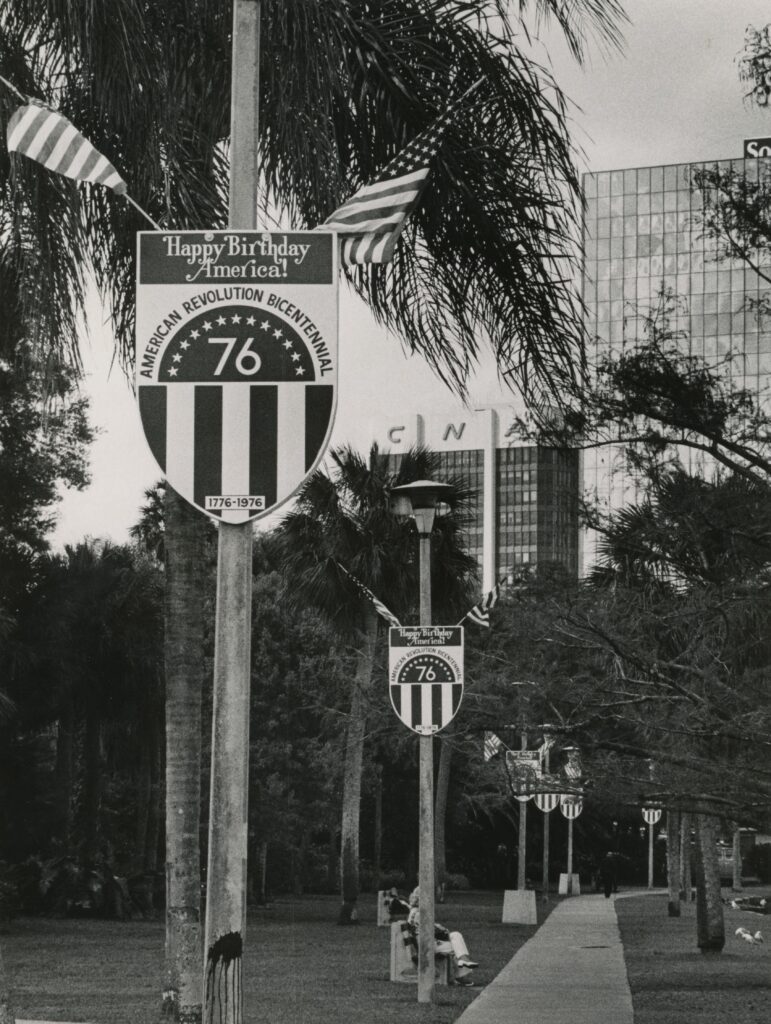
Bicentennial decor lines the walking path around Lake Eola Park. (COURTESY OF ORLANDO SENTINEL ARCHIVE)
The celebrations didn’t end on the Fourth of July, however.
The city itself turned 101 on Aug. 4, and there was plenty of activity to commemorate the occasion. That day, music and birthday cake could be enjoyed at noon at Church Street Station, followed by an unveiling ceremony of the complex’s renovation and new exhibit center taking place at 5 p.m. The Orange Bird, of Florida Citrus Commission fame, was in attendance to greet children as guests toured the Spirit of ’76 locomotive and viewed a passing street parade. Residents also had the opportunity to sign birthday cards to Orlando at Loch Haven Park.
Now in its 151st year, Orlando has plenty of history to share. Many cultural institutions in Central Florida are offering America 250 programming throughout 2026, celebrating both the local community and the history of the United States of America during its semiquincentennial year.
___
Courtney Burns is the assistant curator of education at the Orange County Regional History Center.