
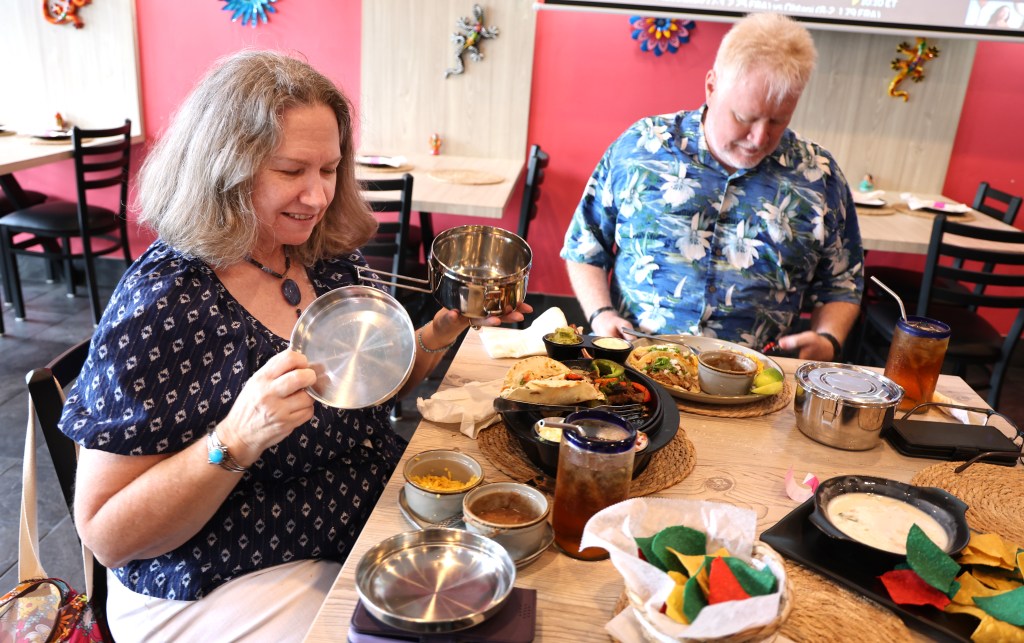
An emerging contingent of South Florida restaurant patrons is rejecting plastic and Styrofoam containers for their takeout.
They arrive at their dining destinations prepared, with reusable containers and refillable bottles stored in their canvas tote bags. Some, such as Plantation resident Vicki Rethemeyer, also bring along metal silverware, steel straws and cloth napkins, all to avoid plastic forks and other single-use products that will be thrown in the garbage.
“It is a combination of reasons why I do this. I don’t like waste, so we take home the food we don’t eat. We paid a lot for it,” says Rethemeyer, a retired office manager and mother of four. “It’s not something I hide anymore.”
Delray Beach resident Janet Seet Ling Low said she also has to-go boxes at the ready when she goes to a restaurant.
“I always try to bring a leftover container to 1) not waste food 2) reduce plastic/Styrofoam box usage,” she wrote in response to a question posted in “Let’s Eat, South Florida,” the South Florida Sun Sentinel’s foodie Facebook group. “Recycling is no longer sufficient to protect Mother Earth. We need to REDUCE. The USA is hugely behind. I can’t believe we still condone Styrofoam takeout boxes. And the sheer number of shoppers who don’t bring their own bags is so depressing.”
It’s hard to avoid plastic in 21st-century America, as it’s a major ingredient in clothing, cosmetics, water bottles, razors, straws, bandages, sponges, tea bags, coffee filters and many other daily products. For reasons environmental and practical, some in the United States are trying to steer clear of these materials that studies say are bad for the environment and our health.
A 2024 poll by NPR/PBS NewsHour/Marist showed a third of Americans have reduced their use of plastic and its by-products. Many are concerned about its resistance to decomposition in landfills and its threats to wildlife, which ingest the pieces or get entangled in them.
According to the U.S. Environmental Protection Agency, microplastics, or tiny plastic particles, “have also been found in human livers, kidneys, and placentas. Additionally, the International Union for Conservation of Nature finds that carcinogenic chemicals found in plastic products can leach into tap water, which may cause developmental, reproductive, neurological, and immune disorders.”
Many nonprofit groups, such as the Ocean Blue Project, It’s Easy Being Green and the Center for Biological Diversity, have been spreading the word that one simple way to reduce plastic use is to bring your own container to restaurants and cafes, which is allowed under Florida’s food codes.
These codes come through the federal Food and Drug Administration, which issues food-handling guidance, said Kelley Dennings, a senior campaigner at the Center for Biological Diversity.
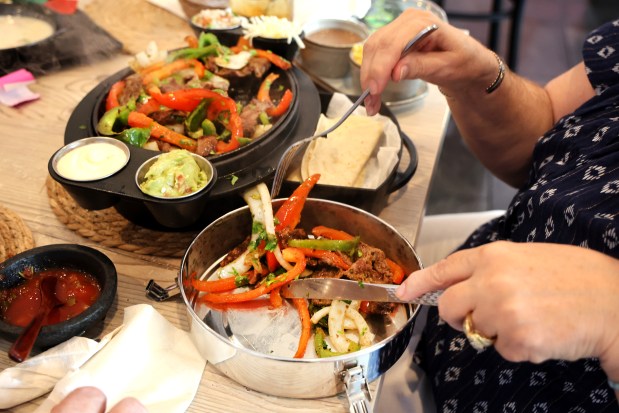 “It is a combination of reasons why I do this. I don’t like waste, so we take home the food we don’t eat,” says Vicki Rethemeyer, a retired office manager.
Dennings, who lives in Jacksonville and monitors Florida’s food codes, said the FDA updates its guidance, which offers advice for reducing the spread of disease at sites that serve food, every four years. She said Floridians have been able to fill their clean drink bottles and food containers since 2013, and the codes have been updated regularly, with new advice expected at the end of this year.
The 2026 codes will offer food takeout guidance “beyond just coffee, soda, water and food leftover containers and will allow additional forms of reuse, like permitting customers to use their own multi-use containers at salad bars or when ordering food from a food truck if the container is clean and sanitized,” Dennings said.
In the meantime, she said many Floridians don’t realize that:
• If they are using a container that is clean and durable, such as thermally insulated bottles and nonspill coffee cups, they are allowed to fill up their beverage at a restaurant’s self-service fountain.
• Restaurant employees can fill a patron’s clean drink bottle from behind the counter if the cap and straw are removed.
• Customers can fill food containers they brought from home, but restaurant employees aren’t allowed to pack this food, according to the code.
Although the guidance is making it easier to BYOC, or Bring Your Own Container, most diners have not been quick to change their takeout habits, said restaurateur Burt Rapoport, whose hospitality group owns Deck 84 and Burt & Max’s, both in Delray Beach.
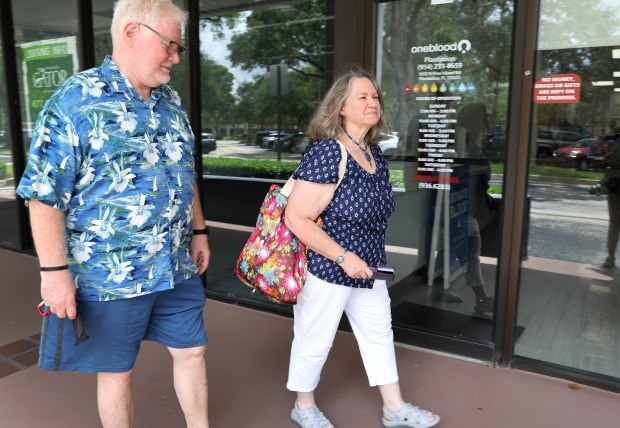 Vicki and Mark Rethemeyer, of Plantation, also bring along metal silverware, steel straws and cloth napkins when they dine out, all to avoid single-use products that will be thrown in the garbage.
“We don’t have a policy and these requests don’t happen often,” he said. “However, our operating policy is to ‘always find ways to say yes to our guests.’ So, we would certainly accommodate this request” if asked, he said.
Larry Marks, a waiter at a Davie restaurant, agreed. He said restaurants usually don’t mind satisfying these customers, but he estimated only 20 people have brought their own containers to his tables over the past 10 years.
“It’s not that prevalent,” Marks said. “I would say I see more water bottles being refilled than containers for takeout.”
When the Sun Sentinel posed the question in “Let’s Eat, South Florida,” several commenters said they were appalled that fellow diners would transport their own tableware to a restaurant.
“This sounds very tacky, unsanitary and just completely unnecessary,” Miami resident Berenice De Jesus wrote.
Or, as Debbie Hughes, of Fort Lauderdale, put it: “I cannot fathom walking into a restaurant with friggin Tupperware that I’ve brought in anticipation of having leftovers. How about just ordering less if you have such a dainty appetite? Geez.”
For those who can’t fathom planning in advance to take home food, Plantation resident Emily Rosenstein said there’s a practical reason to transport your own to-go box: to avoid car spills.
“I regularly bring my own containers for leftovers, but this is mostly because restaurant containers leak,” Rosenstein said. “No matter how careful I am, they leak in the car and the disposable bag that the restaurant container is in. I carry an empty Tupperware-style container in my bag when I go to a restaurant where I believe there will be leftovers. Then the same container comes to work with me the next day.”