
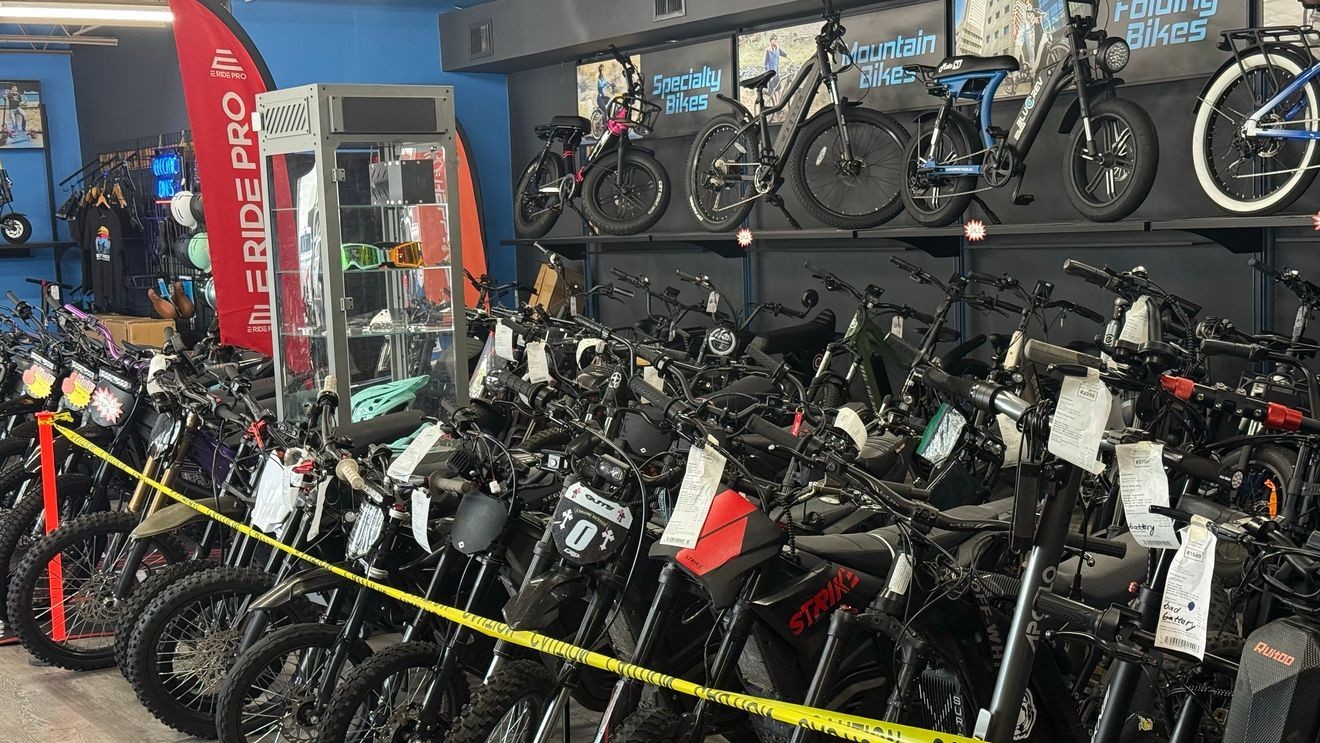
BOCA RATON, Fla. (CBS12) — They can travel as fast as 28 mph, don’t require a driver’s license and have quickly become one of the most popular ways for children and teens to get around.
From neighborhood streets and bike paths to school routes, e-bikes are becoming a familiar sight across Palm Beach County and the Treasure Coast. But as their popularity grows, so do the crashes, complaints and questions surrounding who’s responsible when something goes wrong.
The CBS12 News I-Team examined recent local crashes, Florida law, court records and enforcement efforts to better understand what’s legal, who’s being held accountable and why Florida’s attempt at a statewide response ultimately stalled.
What’s a legal e-bike?
One of the first things the I-Team found is that many people use the term “e-bike” to describe several different types of electric-powered bikes—even though they aren’t treated the same under Florida law.
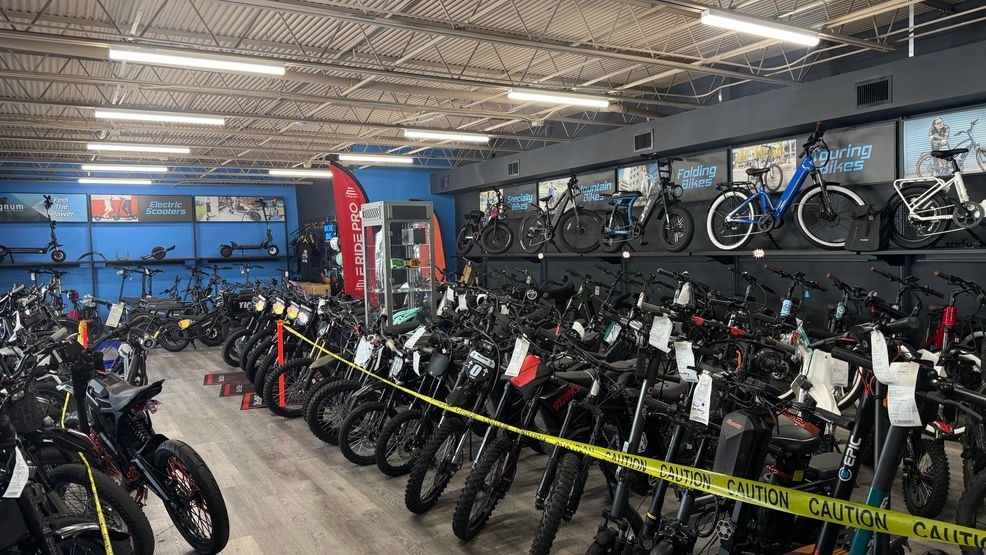
From neighborhood streets and bike paths to school routes, e-bikes are becoming a familiar sight across Palm Beach County and the Treasure Coast. But as their popularity grows, so do the crashes, complaints and questions surrounding who’s responsible when something goes wrong. (WPEC)
At Epic E-Rides in Boca Raton, owner Fari Amirian said helping customers understand those differences has become an important part of the buying process.
“The kids usually do the selling for us,” Amirian said. “The parents come in asking, to be honest, it’s like, ‘What are they?'”
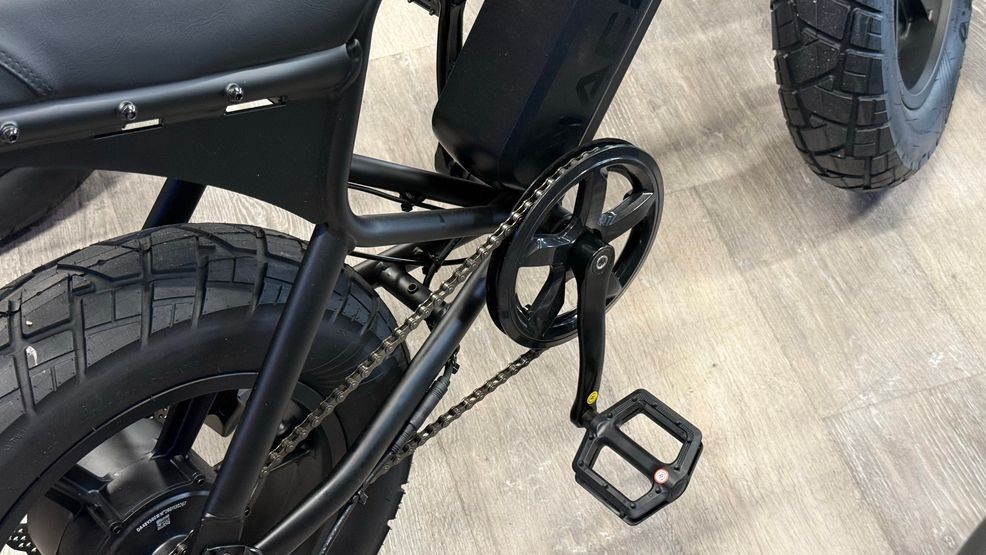
Under Florida law, a legal e-bike must have operable pedals, a motor of no more than 750 watts and fall into one of three classes. Class 3 e-bikes can provide pedal assistance up to 28 mph.
From neighborhood streets and bike paths to school routes, e-bikes are becoming a familiar sight across Palm Beach County and the Treasure Coast. But as their popularity grows, so do the crashes, complaints and questions surrounding who’s responsible when something goes wrong. (WPEC)
Unlike motorcycles or cars, legal e-bikes are generally treated like bicycles in Florida. Riders do not need a driver’s license, vehicle registration or auto insurance. Riders and passengers younger than 16, however, are required to wear helmets.
Amirian says one of the biggest misconceptions is that all electric-powered bikes are considered e-bikes.
“The e-motos, for example, you can see that they don’t have pedals, they’ve got pegs, and they look like dirt bikes,” Amirian said.
That distinction isn’t just technical—it can determine whether a vehicle is legal to operate on public roads or bike paths.
A string of serious local crashes
As e-bike use has increased, so have serious crashes involving young riders.
In June, a 17-year-old was hospitalized as a trauma alert after an e-bike crash involving a vehicle in West Palm Beach.
In April, two boys were airlifted after deputies said an e-bike rider lost control and struck another child in Wellington.
Last year, a 12-year-old Jupiter boy was killed after the e-bike he was riding was struck by a vehicle.
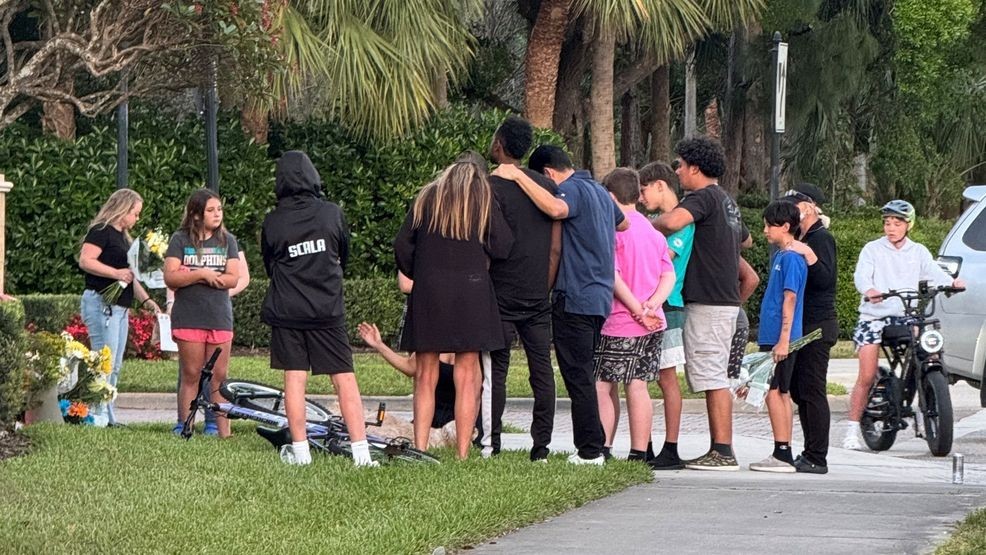
Coaches, friends, and family gathered March 14, to honor the boy’s memory at a makeshift memorial decorated with flowers and heartfelt messages. His coaches identified the boy as Rico Roundtree, a Jupiter Middle School student. (WPEC)
David Shiner, founder and managing attorney of Shiner Law Group, says the injuries can be life-changing.
“You get a 14-year-old riding an e-bike and think, ‘Oh, it’s a toy,’ but at 25 miles an hour, you hit your head on the concrete, you get hurt. You get hurt real bad,” Shiner said.
The crackdown
After months of educating riders and parents, the Martin County Sheriff’s Office shifted into full enforcement in April.
The agency cited repeated complaints involving reckless riding, illegal e-bikes, riders ignoring traffic laws, operating in restricted areas and harassing residents. During targeted operations, deputies towed several illegal bikes and notified parents.
The I-Team asked what prompted the change.
“What was kind of the breaking point?” CBS12 News reporter Katie Bente asked.
“We have these kids coming out, sometimes in packs, sometimes by themselves. They’re in the roadway, they’re obstructing traffic, they’re doing wheelies in the middle of the roadway,” Lt. David Rosko said.
Rosko said the sheriff’s office now cites riders who violate Florida’s e-bike laws.
“We’ve now gone into a full enforcement mode, where if we see somebody violating any of the e-bike statutes, we are citing them for it,” Rosko said.
Rosko also said many of the bikes deputies stop aren’t actually legal e-bikes under Florida law.
“A vast majority of the violations that we see nowadays are actually—they’re not your legal e-bikes,” he said.
Who’s responsible after a crash?
One of the biggest questions the I-Team wanted answered was who could be held responsible after a serious e-bike crash.
“Who could possibly be held responsible in these sort of instances?” Bente asked.
“Obviously, we would always think the car would be responsible, right?” Shiner responded. “But believe it or not, the parent itself can actually have some responsibility for that crash.”
A recent Palm Beach County jury verdict illustrates how complex those cases can become.
Earlier this month, jurors valued damages at more than $5.1 million after a now-12-year-old boy suffered catastrophic injuries when his e-bike collided with a vehicle leaving the Floresta Apartment Community in Jupiter in March 2024.
The family argued overgrown landscaping blocked the driver’s view and contributed to the crash.
Jurors ultimately assigned 40% of the fault to the apartment community, 40% to the boy’s mother and 20% to the boy.
The case highlights that responsibility after an e-bike crash may involve riders, drivers, parents, property owners or other parties depending on the facts.
Florida’s statewide response hit a roadblock
As local agencies increased enforcement, state lawmakers attempted to create a more uniform response.
Senate Bill 382 passed unanimously in both the Florida House and Senate.
The proposal would have created a statewide micromobility safety task force, required additional crash reporting and established new operating rules, including a 10 mph speed limit for e-bike riders traveling within 50 feet of pedestrians in certain areas.
Supporters said the bill would improve statewide safety standards and provide better crash data as e-bike use continues to grow.
Gov. Ron DeSantis vetoed the legislation.
In his veto message, DeSantis argued the speed restriction would be difficult for riders to judge while operating an e-bike and warned the proposal could lead to increased government surveillance.
“This bill will likely lead to enhanced surveillance by local governments against citizens,” DeSantis wrote.
Rosko said he believes the proposal would have been a positive first step.
“The law was going to be a step in the right direction, and that is really what we needed to start with. So unfortunately, it did not pass,” he said.
Balancing freedom and responsibility
No one interviewed by the I-Team argued e-bikes themselves are the problem.
Amirian said they give young people independence while encouraging them to spend more time outdoors.
“For years kids have been locked up in the room playing Roblox… everyone’s been like, ‘Get off your computer, get off your computer,’ and now the kids are finally doing it,” Amirian said.
Rosko agrees legal e-bikes can be a positive when they’re used responsibly, but says parents should understand exactly what they’re purchasing before handing one to a child.
“When you’re buying that for your eight-, nine-, 10-, 11-, 12-year-old kid, is that something that you’re going to trust your child to do—to travel at 28 miles an hour going down the sidewalk?” Rosko said.
Florida’s debate over e-bikes is far from over. For now, questions about enforcement, accountability and rider safety are being answered not by one statewide policy, but by local communities, courtrooms and, ultimately, the families deciding who gets on the bike.