
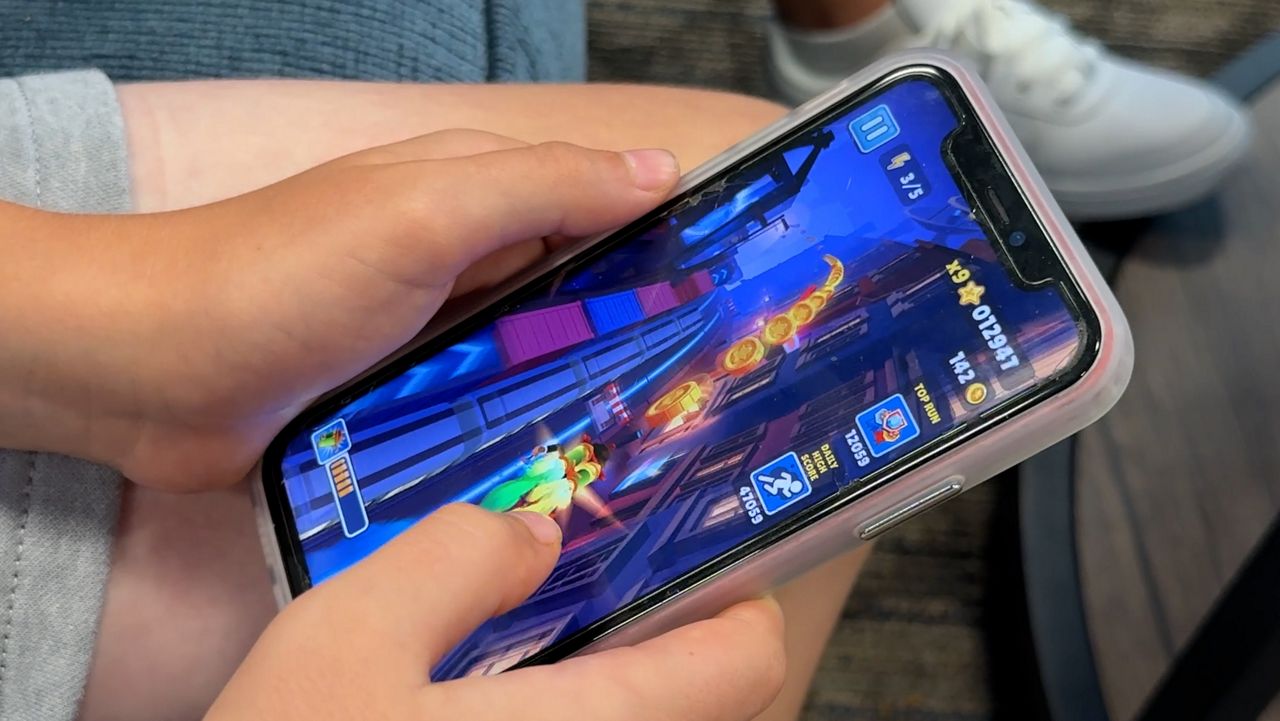
ORLANDO, Fla. — In less than a month, Central Florida students will be back in school. As the summer break starts to wind down, many parents are still trying to limit their children’s screen time.
Two local mental health experts are warning that when children and teens spend too much time on cellphones and electronics, it can lead to serious mental health concerns.
They say children and teens are becoming addicted to their cellphones, that it usually starts during middle school, and that parents have to find fun activities like this playground to get their children off their phones.
Jurate Wolfe started the Avalon AI Club to help her son and his friends use artificial intelligence safely and to manage the time they spend using electronics.
“If you don’t know how to use the tool, and if you’re not mindful, you can get addicted to it, like social media or anything else,” Wolfe said.
Wolfe gives the club members freedom to choose their activities while parents supervise. She gives her son the same leeway to choose how he uses his cell phone this summer.
“He has a certain amount of screen time, and he knows what he wants to accomplish, so he limits that screen time,” Wolfe said.
Jim West is a licensed mental health counselor in Central Florida. Some of his cases involve treating teens who are addicted to the rush they get from playing games, watching videos, and chatting on their cellphones.
“We’ve seen kids go to college and lose their scholarships because they’re just in their rooms playing online or you know, video games,” West said.
West has seen children who have stopped playing sports and don’t want to do things with their families.
“Their brain has been rewired to think the only thing fun is to be on their device,” West said.
West suggests parents sign up children for summer camps, team sports, or martial arts so they socialize in person and to set limits on their screen time.
“The brain resets and the addiction often times resets within two weeks if they put those boundaries in place,” he said.
Dr. Janie Lacy is a licensed psychotherapist. She says the prefrontal cortex in a teen’s brain, which controls decision-making and emotions, is not fully developed yet, so they may have trouble deciding to put down their phones.
“Teens are made to be wired to look for reward and then also validation from their peers. So my concern would be if their friends are playing these games, they’re going to want to be included,” Lacy said.
Lacy notes that parents should have children help make their summer activities plan so they can enjoy time off their phones, and parents should home in on what videos children and teens watch.